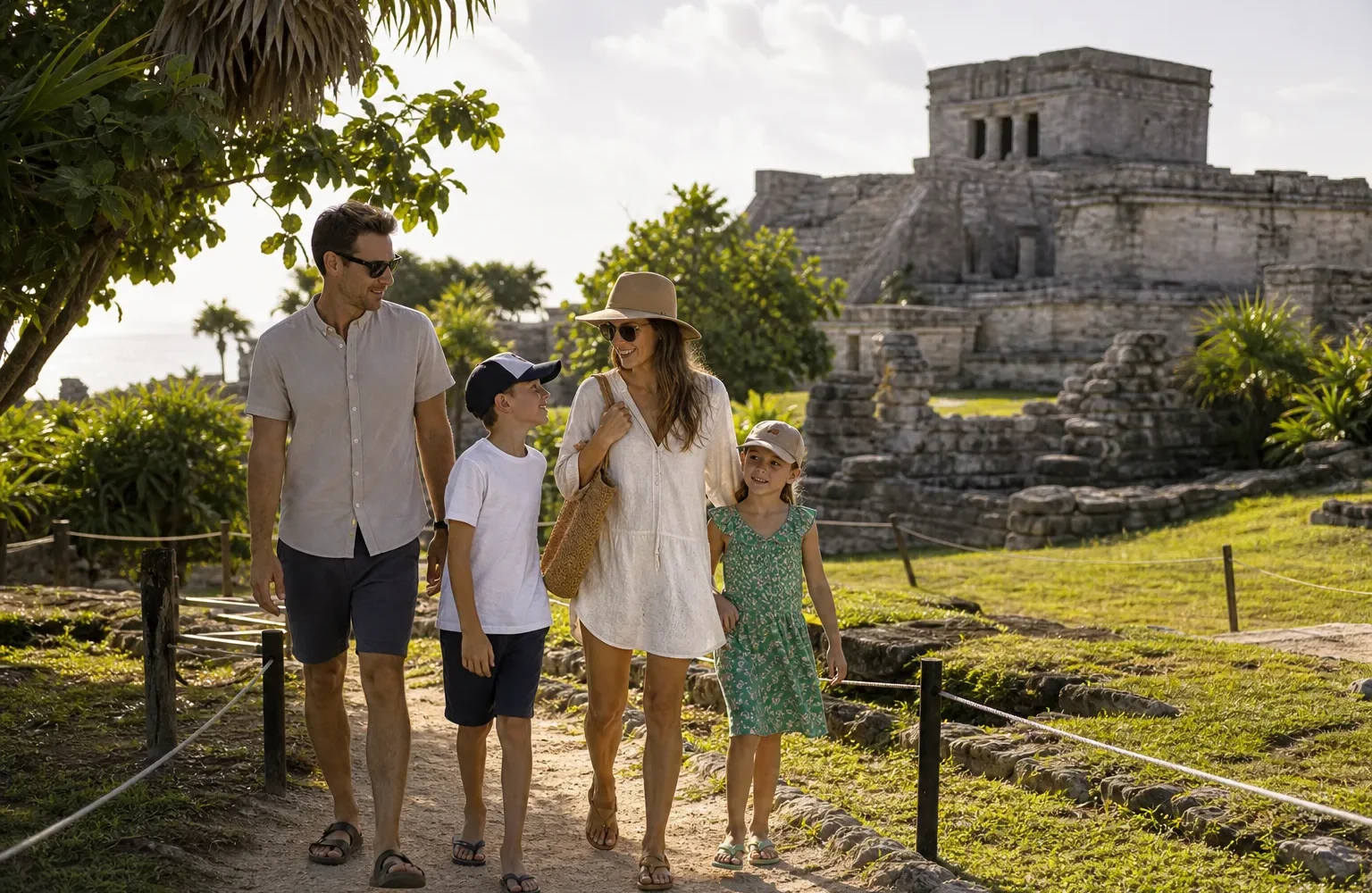
Plan four balanced days in Tulum with children, including an early archaeological-zone visit, flexible water activities, realistic rest periods, transport advice, packing tips, and important 2026 fee updates.
A successful Tulum family itinerary needs fewer moving parts than an adults-only escape. This four-day plan places one main activity in each morning, protects the afternoon for swimming or rest, and avoids stacking long transfers. It also leaves room to adjust for the forecast, children’s energy, and changing visitor arrangements around the archaeological zone.
- Plan one main outing each day and keep a simple backup option.
- Visit the Tulum archaeological zone early, then reserve the afternoon for rest.
- Confirm transfers, child-seat arrangements, parking, and pickup points before travel.
- Recheck archaeological-zone fees, final admission, and internal transport shortly before visiting.
- Pack water, sun protection, swim gear, dry clothes, and easy snacks for each outing.
- Do not assume that a stroller or wheelchair can use every route without assistance.
The schedule works best as a four-day core after arrival. Families staying longer can add a full rest day or a carefully chosen excursion. Families with toddlers may want to alternate every active morning with an unstructured one. Our Tulum with kids guide can help with broader decisions about pacing, family needs, and age-appropriate planning.

Tulum Ruins Tour (Private, Half Day)
On this private tour you will explore the amazing Tulum Ruins, located on the beautiful Tulum beach! Located in Tulum, these ruins are the only Mayan...

Tulum Ruins & Swim in a Cenote – VIP Private Experience
Explore the magnificent Tulum Mayan ruins during the optimal times to ensure a crowd-free experience. This extraordinary tour offers not only a visit...
Transportation deserves attention before the fun begins. Official communications in 2026 describe local mobility as an area undergoing active changes, including planned improvements to airport and town connections. Do not build your schedule around an unconfirmed route, frequency, or fare. Arrange airport and evening transportation with your accommodation or another licensed provider, particularly when carrying luggage or traveling with children.
Four days in Tulum at a glance
| Day | Main plan | Low-effort backup |
|---|---|---|
| Day 1 | Arrival, check-in, supplies, and a short orientation outing | Pool time and an early meal near your accommodation |
| Day 2 | Tulum archaeological zone at opening | Return for a nap, swim, or relaxed afternoon |
| Day 3 | One cenote or managed water attraction | Hotel pool or another familiar swimming setting |
| Day 4 | Choose one excursion or a slow local day | Meal, souvenir stop, and packing time |
Treat the table as a framework rather than a race against the clock. Pick accommodations, meals, and activities that reduce unnecessary crossings between town and the coastal area. If one outing takes longer than expected, remove the next item instead of compressing lunch, naps, or travel time. That small decision can rescue the mood of an entire day.
Day 1: Arrive, settle in, and make the next morning easy
Keep arrival day deliberately light. Travel delays, baggage collection, check-in, and hunger can consume more energy than expected. After reaching the hotel or rental, unpack swimwear, prepare a small day bag, and identify where everyone will eat breakfast. A short pool session or stroll is enough. Save any reservation-dependent activity for a full day.
Use the first evening to confirm the following morning’s departure time and transport. Ask for the precise pickup location, payment method, child-seat arrangement, and return plan. If you are traveling between the airport and the coast, the Tulum Airport to Hotel Zone Transportation Guide offers focused comparison help for that part of the journey.
Prepare one compact family day bag
- Refillable water bottles and simple snacks
- Sun protection appropriate for each family member
- Swimwear, towels, and a change of dry clothes
- Any required medicines and basic personal-care items
- A waterproof pouch for documents and electronics
- A lightweight carrier if stroller conditions are uncertain
Finish the evening with a meal close to where you are staying. This is not the night to cross town for a complicated reservation. Our Where to Eat in Tulum guide can help you narrow choices by area and dining style. Confirm current menus, dietary accommodations, reservation requirements, and travel time directly before setting out.
Day 2: Visit the Tulum archaeological zone first
Make the archaeological zone the first fixed event of the trip. INAH currently lists daily hours of 8:00 to 17:00, with final admission at 15:30. Arriving for the opening gives your family the widest possible margin before that cutoff and leaves the afternoon open. The early-start advice is a planning inference based on the official hours, not a promise of smaller crowds.

Before leaving, verify the operating hours, complete admission cost, parking process, entrance point, and any internal electric transport arrangements. Access and tariffs are changing as of July 2026, and official pages do not yet present one simple, consistent picture. Our Tulum Ruins Guide for First Timers can support the site-specific part of your planning, while current operating details should still be reconfirmed directly.

Tulum Ruins Guided Tour from Cancun and Riviera Maya
- Experience the ancient city of Tulum with our knowledgeable guides. - Enjoy our small group format and attention t...

Private Guided Cenotes and Underground River Exploration
Explore an underground river system and 2 cenotes at the same location. All the photos listed here you will see in p...

Tulum Instagram Photo Experience
Discover the most Instagrammable spots in Tulum carefully selected for this unique experience. Elevate your Instagr...
A child-friendly pace for the ruins
- Eat breakfast before departure rather than hoping to solve it at the entrance.
- Use the restroom when one is available and ask about the location of the next facility.
- Set a modest goal for the visit instead of trying to inspect every corner.
- Pause for water before children become tired or thirsty.
- Leave while the family still has enough energy for the return journey.
Detailed accessibility information was not available in the official material reviewed for this itinerary. The sources do not establish current step-free routes, stroller suitability, wheelchair hire, accessible restrooms, shade, or transfer distances. Families who need these features should contact the site or their operator shortly before travel and describe their requirements specifically rather than relying on a general assurance.
Keep the afternoon open
After the visit, return to your accommodation for lunch, a nap, or swimming. A flexible afternoon protects the day if entry takes longer than expected or internal transport requires extra waiting. Families still feeling energetic can choose a short outing nearby, but it should be easy to cancel. Avoid tying the afternoon to another expensive, timed reservation.
Parque del Jaguar forms part of the changing access picture around the archaeological zone. For more background on its visitor context, consult the Jaguar National Park Tulum Guide during planning. Confirm the actual entrance, transport, parking, and operating procedures shortly before your visit because a July 2026 government announcement may not yet be reflected across all visitor channels.
Day 3: Choose one manageable water activity
Choose one water-centered outing rather than combining several sites. A single cenote, supervised snorkeling experience, or managed aquatic attraction is enough for most families. Compare the activity’s total duration, transfer time, minimum ages, swimming requirements, flotation equipment, changing facilities, and cancellation policy before reserving. Ask what non-swimmers can do while others are in the water.
Cenotes vary, so do not select one based only on photographs. Our Best Cenotes Near Tulum guide provides a useful shortlist for further comparison. Contact the venue or tour operator for current information about access, stairs, water entry, supervision, lockers, toilets, and equipment. Families using mobility aids should request precise route details instead of assuming that facilities are step-free.
Questions to ask before booking
- What is the minimum age, and are children charged differently?
- Must every participant be a confident swimmer?
- Are correctly sized flotation devices included?
- How long is the drive in each direction?
- Are toilets, changing areas, food, and drinking water available?
- What happens if weather or water conditions affect the activity?
Bring dry clothes even if the plan appears simple. Wet swimwear can make a return drive feel much longer, especially for small children. Keep medicines and electronics in a waterproof pouch, and separate dry items inside the day bag. If the forecast or a child’s confidence changes, use the hotel pool or another familiar setting rather than forcing the original plan.
Day 4: Pick an excursion or protect a slow day
By the fourth day, your family will know its comfortable pace. Choose a longer excursion only if everyone has handled the previous days well. Otherwise, spend the morning swimming, enjoy an unrushed meal, and leave space for packing. A slow final day is often more useful than adding another lengthy round trip before departure.
Still comparing Tulum Family Itinerary?
Ask for tour ideas, hotel suggestions, or a simple trip plan that combines both.
Trip Helper
Option A: A managed aquatic park day
A managed attraction can simplify a water day by keeping activities in one destination, but families still need to compare transport, total walking, age rules, included equipment, meal arrangements, and return timing. The Xel-Ha Park From Tulum Guide can help you evaluate that particular day-trip idea. Verify all current conditions and costs with the operator before booking.
Option B: A flexible local day
Keep the family close to its accommodation and let each person choose one priority. That might mean swimming, a relaxed breakfast, a short shopping stop, or time with books and games. Set a firm return time for packing. If you have an early departure the next day, confirm the driver, pickup point, luggage capacity, and child-seat request before dinner.
How to choose where your family should stay
Choose accommodation around the trip you actually plan to take. A family prioritizing pool time and early nights has different needs from one scheduling several road trips. Compare room layout, sleeping arrangements, food access, refrigerator availability, laundry options, pool supervision rules, stairs, elevator access, and the precise pickup point for transfers. Request written confirmation of essential features before paying.

Location can affect the schedule as much as the room itself. Check realistic travel requirements between the property and your main activities, then reduce unnecessary backtracking. Ask the accommodation how guests currently reach the archaeological zone, airport, and coastal area. Local transport is in transition, so old route descriptions and fare assumptions may no longer be dependable.
Transportation choices for families
Prearranged transfers can reduce uncertainty when a family is carrying luggage or needs a child seat. Confirm that the provider is authorized, then request the meeting point, driver contact process, vehicle capacity, restraint arrangement, cancellation terms, and complete cost in writing. Repeat the confirmation shortly before travel, especially for airport pickup or an early departure.
A rental car offers control over departure times, but it also adds navigation, parking, documentation, and rental-contract responsibilities. Quintana Roo says a free digital Pase de Movilidad Turística is available through the Guest Assist platform and provides courtesy treatment for certain traffic citations. It does not replace valid documents, current rental terms, safe driving, or compliance with local traffic rules.
If renting, confirm child restraints, insurance terms, fuel policy, parking at the accommodation, and parking at each planned attraction. Inspect the vehicle and retain the required documents. Do not rely on the tourist mobility pass as permission to ignore a rule. Families who would rather not manage these details may find a licensed transfer simpler for selected travel days.
Budgeting for the archaeological zone in 2026
Do not calculate the family budget from a single admission number. The INAH page reviewed for this article lists an MXN 100 INAH ticket and separately identifies GAFSACOMM and CONANP charges. That presentation indicates multiple possible components rather than one uncomplicated total. Confirm which charges apply to every adult and child in your group before leaving.
A Quintana Roo government announcement dated July 17, 2026 described a different package. It said Parque del Jaguar access would become free, electric transport would cost MXN 20, and archaeological-zone admission would be reduced to MXN 80 for Mexican nationals and MXN 265 for foreign visitors. The research did not establish that these changes were already operational through a live visitor or ticketing page.
Tulum Ruins & Swim in a Cenote – VIP Private Experience
Explore the magnificent Tulum Mayan ruins during the optimal times to ensure a crowd-free experience. This extraordinary tour offers not only a visit...
Tulum Ruins Tour (Private, Half Day)
On this private tour you will explore the amazing Tulum Ruins, located on the beautiful Tulum beach! Located in Tulu...
Treat every July 2026 admission figure as provisional until the attraction confirms the amount, eligibility, implementation date, and included services for your visit.
Build a buffer into the day’s budget for transport, parking, food, water, and any separately collected conservation or access charges. Ask which payment methods are accepted and whether proof of nationality or age is required for a particular tariff. The available evidence does not establish current child discounts, so this itinerary does not assume them.

All-Inclusive! Tulum Ruins, Tequila Tasting + Swim in 3 Cenotes in Small Group!
At Authentic Tours Tulum we believe in giving back to our community by utilizing locations, restaurants, and employe...
Tulum Ruins Guided Tour from Cancun and Riviera Maya
- Experience the ancient city of Tulum with our knowledgeable guides. - Enjoy our small group format and attention t...
Private Guided Cenotes and Underground River Exploration
Explore an underground river system and 2 cenotes at the same location. All the photos listed here you will see in p...
A simple daily rhythm that prevents overload
| Part of day | Recommended approach |
|---|---|
| Early morning | Breakfast, water bottles, sunscreen, and the main departure |
| Late morning | Finish the main activity before attention and energy drop |
| Midday | Eat, cool down, and return for rest when practical |
| Afternoon | Choose swimming or one optional low-effort activity |
| Evening | Eat nearby and prepare clothing and transport for tomorrow |
This rhythm creates useful escape routes. A family can leave an activity early without losing the entire day, and a tired child does not need to push through a second reservation. Keep one familiar snack, one dry outfit, and one low-tech distraction within reach. Small comforts tend to matter most during waits and return journeys.

Final checks before each family outing
- Reconfirm opening hours, final entry, reservations, and all fee components.
- Save the pickup point and provider contact details offline.
- Ask about child seats, parking, and the final walking or transfer distance.
- Check the forecast and current activity conditions.
- Carry water, snacks, medicine, sun protection, and dry clothes.
- Confirm accessibility requirements directly with the site or operator.
The strongest Tulum family itinerary is not the one with the most reservations. It is the one that gets everyone to the main experience with enough energy to enjoy it. Start early when hours make that useful, schedule one significant outing per day, and keep a simple backup close to your accommodation. That structure gives the whole family room to stay curious without turning the vacation into a relay race.
Frequently asked questions
How many days does a family need in Tulum?
Four full days create a useful balance for many families: one arrival or orientation day, one archaeological-zone day, one water-activity day, and one flexible excursion or rest day. Add another day if your children need recovery time between outings or if you plan a longer excursion.
What time should families visit the Tulum archaeological zone?
Schedule it as the first fixed activity of the day. INAH lists an 8:00 opening, a 17:00 closing, and final admission at 15:30. An early start leaves more flexibility afterward, although it should not be interpreted as a guarantee of fewer crowds.
How much does the Tulum archaeological zone cost in 2026?
The official information reviewed is inconsistent. INAH lists an MXN 100 ticket plus separately identified GAFSACOMM and CONANP charges. A July 17, 2026 state announcement described proposed or newly announced rates of MXN 80 for Mexican nationals and MXN 265 for foreign visitors, along with free park access and MXN 20 electric transport. Confirm the operational total directly before visiting.
Is the Tulum archaeological zone suitable for strollers and wheelchairs?
The official sources reviewed do not provide enough detail to promise step-free routes, stroller suitability, wheelchair hire, accessible restrooms, shade, or specific transfer distances. Contact the site or operator shortly before travel and ask about the exact route and facilities required by your family.
Should a family rent a car in Tulum?
A car can provide scheduling flexibility, but families must manage child restraints, navigation, parking, documents, traffic rules, and rental terms. Quintana Roo offers a digital tourist mobility pass through Guest Assist, but it does not replace safe driving or compliance with the law. A licensed prearranged transfer may be simpler for airport and selected activity days.
Should airport transportation be booked in advance?
Advance arrangements are sensible when traveling with children, luggage, or child-seat requirements. Official 2026 communications describe Tulum mobility and airport connectivity as areas undergoing change, so do not rely on unverified routes, frequencies, or fares. Confirm the provider, meeting point, vehicle capacity, restraint request, and complete cost.
