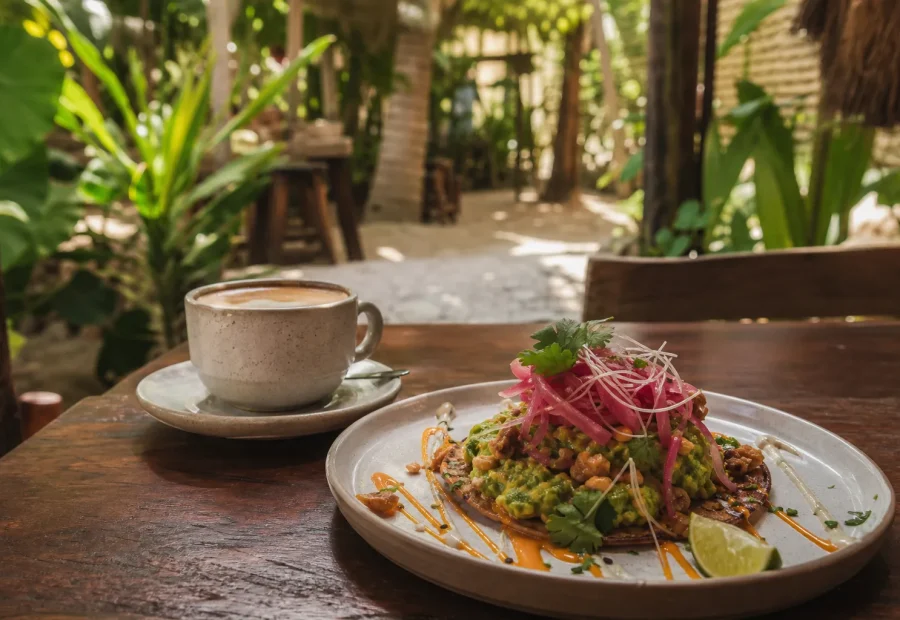
Find the right Tulum meal for every budget, from Pueblo tacos and seafood to thoughtful modern Mexican cooking on the Beach Road.
Tulum can be an excellent place to eat once you stop treating it as one dining district. The town stretches across several distinct zones, each with its own rhythm and price point. Pueblo mornings begin with griddles, stewed fillings, fresh tortillas, and strong coffee. Beach Road evenings lean toward candlelight, wood smoke, polished cocktails, and reservations made well ahead.
The useful question is not simply which restaurant has the loudest reputation. It is where to eat for this meal, with your budget, in the part of Tulum where you already plan to be. This guide organizes the options that way, pairing notable restaurants with practical advice about transport, timing, reservations, and the dishes that make sense here.
Key Takeaways
- Eat in Tulum Pueblo for the broadest range of tacos, regional cooking, seafood, bakeries, and good-value casual meals.
- Reserve notable Beach Road restaurants early, especially for dinner in the busiest winter and holiday periods.
- Tulum’s Michelin-recognized options include both ambitious tasting-style cooking and approachable restaurants with Bib Gourmand distinctions.
- Build your day around geography. Crossing between town and the hotel zone for every meal wastes time and taxi money.
- Carry pesos for small taquerías and markets, ask about accepted payment before ordering, and check current hours directly.
- Save room for Yucatán Peninsula flavors such as cochinita pibil, relleno negro, sopa de lima, recados, local seafood, and handmade tortillas.
How Tulum’s Food Scene Works
Tulum’s dining scene grew from several overlapping communities. Maya and Yucatecan cooking anchor many of the flavors. Families from other parts of Mexico brought regional dishes, seafood preparations, and taquería traditions. International chefs later added live-fire restaurants, natural wine bars, bakeries, vegan cafés, and destination dining rooms.
That mix creates genuine variety, but it also produces dramatic price differences. A morning taco in Pueblo and a candlelit Beach Road dinner may both be memorable for entirely different reasons. Service charges, cocktails, transport, and resort-zone pricing can make the second meal many times more expensive.
Menus and hours change more often than they do in larger cities. Seasonal demand, weather, road conditions, and staff schedules all play a role. Check the restaurant’s current official channel on the day you plan to visit, even if a map listing says it is open.
The Best Areas for Eating in Tulum
Tulum Pueblo
Pueblo is the strongest all-round choice. You will find taquerías, ceviche restaurants, contemporary Mexican kitchens, breakfast cafés, bakeries, and late-night counters within a relatively compact grid. Prices are generally friendlier than on the coast, and the atmosphere feels connected to daily life in town.
The main avenue is busy and noisy. Walk a few blocks away to find calmer streets and small dining rooms. Traffic crossings require attention, particularly after dark.
Aldea Zama and La Veleta
These residential areas have cafés, brunch spots, cocktail bars, and design-conscious restaurants. They can be convenient if your rental is nearby, but distances between venues are larger than they appear on a map. Construction and unlit streets still occur in places, so plan transport after dark.
Beach Road and the Hotel Zone
The hotel zone concentrates Tulum’s famous open-air restaurants, many built around live fire, tropical ingredients, and elaborate design. Expect higher prices, slow traffic, limited parking, and a need for reservations. Plan dinner near where you are spending the afternoon rather than commuting to the beach only for one plate.

Chichen Itza, Cenote, and Valladolid Tour
Explore Chichen Itza, an impressive Mayan archaeological complex. Visit a sacred sinkhole and enjoy a buffet meal...

Chichen Itza, Cenote & Valladolid Tour with Tequila and Lunch
Unlock the mysteries of the Mayans with this tour to Chichén Itzá, a magical cenote & Valladolid. Start this expe...

Early morning Chichen Itza Tour: Cenote and Tequila Tasting
Embark on an exclusive journey with us to uncover the marvels of Chichen Itza, a remarkable Mayan archaeological com...
Tankah, Soliman Bay, and the Coast North of Town
Restaurants attached to hotels and beach clubs can be scenic, but they are spread out. These meals make most sense when paired with a beach day or a stay in the same area. Confirm whether outside guests need a reservation or minimum spend.
Breakfast and Morning Coffee in Pueblo
Breakfast is a chance to eat beyond the familiar smoothie-bowl version of Tulum. Look for tacos or tortas filled with slow-cooked pork, eggs with salsa, chilaquiles, pan dulce, fresh fruit, and coffee grown in Mexican highlands.
Taquería Honorio is widely known for Yucatecan-style morning tacos, including cochinita pibil, lechón, and relleno negro when available. Arrive early because popular fillings can sell out. Current hours and payment practices can change, so verify them before crossing town.
For a slower breakfast, choose a café near your accommodation and order something rooted in local ingredients. Chaya, tropical fruit, cacao, pumpkin seed, habanero, and corn can appear in both traditional and contemporary forms. A good café should be able to explain what is made in house rather than presenting a menu that could belong to any beach town.
Coffee drinkers should ask which Mexican region the beans come from. Chiapas, Oaxaca, and Veracruz all have distinct growing areas. Expect careful pour-overs at specialty cafés and sweet café de olla at more traditional counters.
Casual Lunches, Tacos, and Seafood
Lunch is often the easiest meal to keep spontaneous. Pueblo has enough variety that you can walk a few blocks, read menus, and choose according to appetite. Taco stands are busiest when the griddle is moving quickly and ingredients are turning over.
El Camello Jr. remains one of the best-known names for ceviche and seafood in town. Portions can be generous, so ask about size before ordering several dishes. Fresh fish, shrimp cocktails, octopus, and mixed ceviche are common choices, but availability changes with supply.
At any seafood restaurant, notice temperature and turnover. Cold dishes should arrive properly chilled, hot dishes should be cooked through, and raw preparations are best ordered from a busy kitchen with confident handling. If you have a sensitive stomach, choose cooked fish or shrimp rather than skipping the experience entirely.
For tacos, follow the time of day. Slow-cooked breakfast fillings often disappear by early afternoon. Grilled meats become more prominent later, and some counters open only in the evening. Order one or two first, then return for more once you know your favorite.
Modern Mexican Restaurants Worth Planning Around
Tulum now has several restaurants recognized by the Michelin Guide. The current selection includes two Bib Gourmand restaurants and a group of Michelin-selected dining rooms, giving travelers useful reference points across different styles.
Mestixa holds a Bib Gourmand and blends Mexican ingredients with Asian techniques. Expect a compact, creative meal in town rather than a formal resort experience. Cetli, also a Bib Gourmand, is known for deeply considered Mexican and Maya cooking in an art-filled setting on the road toward Cobá.
On Beach Road, Hartwood helped define Tulum’s live-fire dining identity with a market-driven menu that changes according to available produce and seafood. Arca takes a similarly ingredient-led approach with refined contemporary Mexican cooking and smoke from the open kitchen. NÜ Tulum and Wild offer their own versions of modern Mexican dining in the hotel zone.
Casa Banana brings an Argentinian perspective to fire cooking, while Autor offers a more polished contemporary experience. Recognition is useful, but it should not replace matching the restaurant to your evening. Read the current menu, understand the price level, and reserve the one whose cooking genuinely interests you.

Still comparing Food Tours?
Ask for tour ideas, hotel suggestions, or a simple trip plan that combines both.
Trip Helper
Dinner on Tulum Beach Road
A Beach Road dinner can be beautiful. The air cools, lanterns appear under the palms, and wood smoke drifts across open dining rooms. It can also involve a slow taxi ride, expensive cocktails, mosquitoes, and a bill that surprises anyone who did not check the menu first.
Make the experience work by choosing one area and staying there. Spend the afternoon at a nearby beach club or hotel, change before dinner if facilities allow, and avoid crossing the full hotel zone during peak traffic. If you are coming from Pueblo, allow generous travel time.
Ask about deposits, cancellation rules, service charges, and seating when you reserve. Some restaurants are exposed to heat or rain; others have better shelter and airflow. A sunset reservation sounds appealing, but the sky darkens early for much of the year and the traffic before dinner may be at its slowest.
For logistics, road layout, and transport advice, read our Tulum Beach Road guide.
Vegetarian and Vegan Food
Vegetarian travelers can eat very well in Tulum, although not every vegetable-forward restaurant is good value. Look beyond branding and ask how a dish is built. A satisfying plate should have texture, acidity, protein, and regional flavor, not only edible flowers and avocado.
Traditional options may include squash, beans, corn, chaya, pumpkin seed sauces, grilled vegetables, rice, and fruit. Confirm whether beans, rice, sauces, or tortillas contain lard or meat stock. Cheese, crema, and eggs appear frequently unless a dish is explicitly vegan.
Contemporary kitchens often handle dietary restrictions well if told in advance. Beach Road restaurants with set or changing menus need notice because prep is complex and substitute ingredients may be limited. State allergies clearly rather than using preference language.
A Practical Restaurant Comparison
| Restaurant or style | Area | Best for | Price level | Planning note |
|---|---|---|---|---|
| Taquería Honorio | Pueblo | Yucatecan morning tacos | $ | Go early and verify current hours |
| El Camello Jr. | Pueblo | Casual seafood and ceviche | $$ | Ask about portion size |
| Mestixa | Pueblo | Creative Asian-Mexican plates | $$ | Bib Gourmand; reserve when busy |
| Cetli | Cobá road | Thoughtful Mexican and Maya cooking | $$ | Bib Gourmand; plan transport |
| Casa Banana | Beach Road | Argentinian live-fire cooking | $$$ | Reserve for dinner |
| NÜ Tulum | Beach Road | Contemporary Mexican dinner | $$$ | Check current menu and deposit rules |
| Arca | Beach Road | Ingredient-led live-fire cooking | $$$$ | Book ahead in high season |
| Hartwood | Beach Road | Market-driven destination dinner | $$$$ | Book early and allow for traffic |
The dollar signs compare Tulum options with one another, not with restaurants elsewhere in Mexico. Alcohol, service, and transport can materially change the total.
How Much to Budget for Food
Tulum does not have one meaningful daily food budget. Your total depends on neighborhood and style.
Value-focused day
Start with Pueblo tacos, choose a busy casual lunch, and return to town for dinner. Drink local water from a sealed or filtered source and limit cocktails. This approach keeps transport costs low and gives you the broadest taste of everyday food.
Mixed day
Have breakfast in town, eat lunch near your beach plans, then choose one polished dinner. This is often the best balance. You spend where atmosphere and technique matter most while keeping the rest of the day flexible.
Destination-dining day
Add a Beach Road tasting menu or several shared plates, cocktails, taxi rides, and possible deposits. Check menus before reserving and leave room in the budget for taxes or service practices stated by the restaurant.
Prices can shift with season and ingredient costs. Treat old online menus as a rough guide only. If no price is shown, ask before ordering a special or market-priced seafood dish.

Chichen Itza, Cenote and Valladolid Small Group Day Trip
Recently selected as one of the New World Wonders, Chichen Itza is without a doubt one of the most spectacular and i...

Tulum Ruins, Turtles in Akumal and Cenote tour
On this tour, you’ll explore the top attractions of the Riviera Maya. Begin with a visit to the ancient ruins of T...

Isla Mujeres Luxury Sailing: Adults Only or Family Friendly
Join us for the Luxury Sailing Adventure to Isla Mujeres aboard a state-of-the-art catamaran — with the option to...
Reservations, Timing, and Service
Reserve destination restaurants as soon as your itinerary is firm. Christmas, New Year, Easter, and peak winter weeks fill particularly quickly. For ordinary Pueblo meals, same-day planning is often enough, and spontaneous choices can be more rewarding.
Confirm reservations directly and keep a screenshot of any deposit or cancellation terms. If your table is on Beach Road, leave earlier than the map estimate suggests. One stalled section of traffic can add significant time.
Mexican meal times may run later than some visitors expect, but tourist restaurants serve across a broad window. A 6:00 p.m. dinner can be easier for families, while later bookings feel more atmospheric. Popular taco stands operate according to their specialty rather than an all-day schedule.
Service styles vary. Some bills suggest a tip, but a gratuity should not be silently added without explanation. Review the total, ask if service is included, and resolve questions politely before paying.

What to Order in Tulum
Menus change, but several regional flavors are worth recognizing:
- Cochinita pibil: Pork marinated with achiote and citrus, traditionally slow-cooked and served with pickled red onion.
- Relleno negro: A dark, smoky Yucatecan preparation built around charred chile seasoning, often served with turkey or pork.
- Sopa de lima: A fragrant broth with poultry, tortilla, and the citrus character of Yucatecan lime.
- Tikin xic: Fish seasoned with achiote and citrus, then cooked in a style associated with the peninsula’s coast.
- Salbutes and panuchos: Fried or griddled masa bases topped with meat, vegetables, pickled onion, and salsa.
- Aguachile and ceviche: Seafood cured or dressed with citrus and chile. Ask about heat level and choose a reputable, busy kitchen.
- Recados: Seasoning pastes made from spices, seeds, and chiles that give many Yucatecan dishes their depth.
Fresh tortillas deserve attention. At their best, they arrive warm, smell distinctly of corn, and support the filling without becoming tough. Ask for salsa guidance before pouring. Habanero can be floral and fruity, but its heat builds fast.
Food and Water Safety
Drink purified water and use it for brushing teeth if your accommodation advises it. Restaurants serving tourists generally use purified ice, but ask if you are unsure. A busy kitchen with high turnover is often a better signal than a polished dining room alone.
Wash or sanitize hands before eating. Choose raw seafood carefully, especially during very hot weather. Travelers who are pregnant, immunocompromised, or managing a medical condition should follow their clinician’s advice about raw fish, unpasteurized dairy, and undercooked eggs or meat.
Food allergies require clear communication. Learn the relevant Spanish terms, carry a translated allergy card, and explain the risk of cross-contact. Mole, recados, salsas, and desserts may contain nuts, seeds, dairy, gluten, or ingredients not obvious from the menu name.
Do not let fear flatten the trip into packaged snacks. Cooked-to-order tacos, grilled seafood, soups, and busy neighborhood restaurants can be practical choices when you use normal care.
Food Tours and Cooking Experiences
A good food tour shortens the learning curve. A local guide can explain morning specialties, regional ingredients, ordering customs, and the small counters that are easiest to miss. It is especially useful on your first full day because you can revisit favorite places later.
Compare tours by group size, walking distance, number of tastings, dietary accommodation, and neighborhood. A long list of stops is not automatically better. You need enough time to hear the story and taste each dish while it is fresh.
Cooking classes are a stronger fit for travelers curious about technique. Look for experiences that discuss masa, chile preparation, recados, or local produce rather than a generic menu built only around guacamole.
Our guide to the best Tulum food tours compares the experience in more detail.
A Three-Day Eating Plan
Day one: Learn Pueblo
Start with Yucatecan breakfast tacos, choose a seafood lunch, and have dinner at a contemporary restaurant in town. Walk between stops where practical so you understand the layout.
Day two: Match food to the beach
Eat a simple breakfast near your hotel, have lunch close to your beach plans, and reserve one Beach Road dinner. Keep the afternoon in the same section of the coast to reduce transport stress.
Day three: Go deeper
Choose a market visit, food tour, or cooking experience. Later, return to a favorite taco counter or book Cetli, Mestixa, or another restaurant whose regional cooking caught your attention.
This pattern gives you contrast without forcing every meal to become an event. It also leaves space for fruit stands, bakeries, and spontaneous snacks.
Families, Groups, and Dietary Needs
Families often have the smoothest meals in Pueblo, where earlier dining times, flexible ordering, and familiar dishes are easier to find. Bring a small activity for children because food is commonly prepared to order. Check for high chairs rather than assuming they are available.
Groups should reserve and ask whether one bill or separate checks are possible. Beach Road deposits can become complicated when plans change. Share the menu and cancellation policy with everyone before one person pays.
For dietary restrictions, contact ambitious restaurants in advance. Smaller taquerías may not have formal allergen systems, but staff can often explain ingredients if the request is specific and the counter is not at its busiest.
Frequently Asked Questions
Do I need restaurant reservations in Tulum?
Reserve well-known Beach Road and Michelin-recognized restaurants, particularly in peak season. Most casual Pueblo meals can remain flexible, although current opening hours should still be checked.
Is food expensive in Tulum?
It can be, especially in the hotel zone. Pueblo offers far more value and variety. A mixed plan with casual daytime meals and one destination dinner gives most travelers a better balance.
Where should I eat authentic local food?
Start in Pueblo with Yucatecan breakfast tacos, regional stews, masa-based snacks, and family-run Mexican kitchens. Authenticity is not limited to one dish or price point, so focus on ingredients, technique, and local clientele.
Can vegetarians eat well in Tulum?
Yes. Vegetarian and vegan options are widespread. Ask about lard, meat stock, cheese, and cross-contact when ordering traditional dishes.
Can I drink tap water in Tulum?
Use purified drinking water. Most accommodations provide it or explain their filtration system. Ask restaurants about ice if you have concerns.
What time do people eat dinner?
Tourist restaurants serve from early evening onward. A booking between 7:00 and 9:00 p.m. is common, while families may prefer an earlier table. Taco stands can follow very different schedules.
Are Michelin-listed restaurants the best places to eat?
They are useful for identifying ambitious, consistent cooking, but they represent only part of Tulum’s food culture. Some of the most satisfying meals are simple tacos, seafood, and regional breakfasts in Pueblo.
Conclusion
Eating well in Tulum is mostly an exercise in matching place, time, and appetite. Pueblo offers range and everyday flavor. Beach Road provides atmosphere and serious destination cooking when you plan for the cost and traffic. The most enjoyable itinerary makes room for both.
Begin with regional dishes, reserve only the meals that truly need structure, and keep a few openings for the counter with a busy griddle or the menu that changed that morning. Tulum’s best food experiences feel grounded in the peninsula, even when the cooking is inventive and the dining room looks toward the world.