Tulum Family Itinerary
Plan four balanced days in Tulum with children, including an early archaeological-zone visit, flexible water activities, realistic rest periods, transport advice, packing tips, and important 2026 fee updates.
Tulum guide archive
Plan gentler beaches, manageable cenotes, shaded breaks, and transport that works for children as well as adults.
The family archive covers easier outings, accommodation choices, and realistic ways to experience Tulum with children. The hub provides the core planning framework; the articles below explore individual ideas.
Always confirm age, height, swimming, and transport requirements directly with the operator before booking.
Plan four balanced days in Tulum with children, including an early archaeological-zone visit, flexible water activities, realistic rest periods, transport advice, packing tips, and important 2026 fee updates.

Plan four balanced days in Tulum with children, including an early archaeological-zone visit, flexible water activities, realistic rest periods, transport advice, packing tips, and important 2026 fee updates.

It turns out Tulum with kids can be easy, magical, and far less stressful than expected—if you know the few things most families miss.
Practical planning
Young travelers feel heat and sun quickly. Put exposed sights early and plan shade, water, food, and rest before anyone asks.
Cenote stairs, boat boarding, car seats, bathrooms, and walking distances matter more to families than a generic family-friendly label.
One nearby highlight often works better than a combination tour with repeated vehicle time and late meals.
Look for beaches with manageable conditions on the day and understand that Caribbean waves can change. At cenotes, ask about shallow areas, ladders, life jackets, water depth, changing rooms, and slippery paths. A visually spectacular cave may not suit every child.
Bring fitted sun coverage, refillable water, snacks where allowed, and a dry set of clothes. Follow local product rules before entering cenote water. Never rely on inflatable toys as safety equipment.
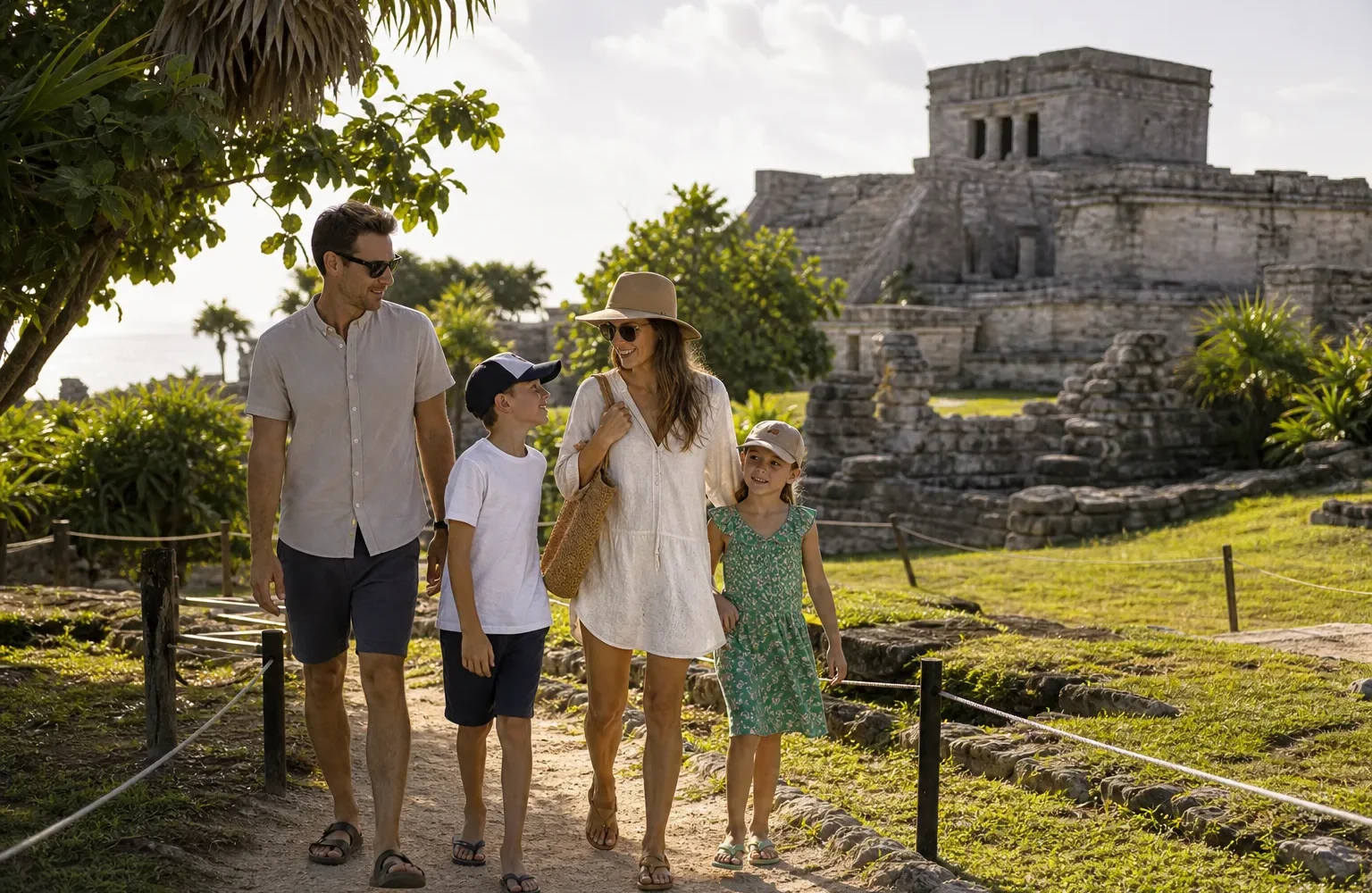
Visit archaeological sites at opening or as early as practical. Use comfortable shoes and carry more water than for a normal walk. Strollers may struggle on rough stone or forest paths, so ask about surfaces and consider a carrier for younger children.
For boat or wildlife tours, confirm minimum ages, life-jacket sizes, shade, travel time, bathroom access, and what happens if the weather changes. Private or small-group options can be worthwhile when naps and pacing matter.