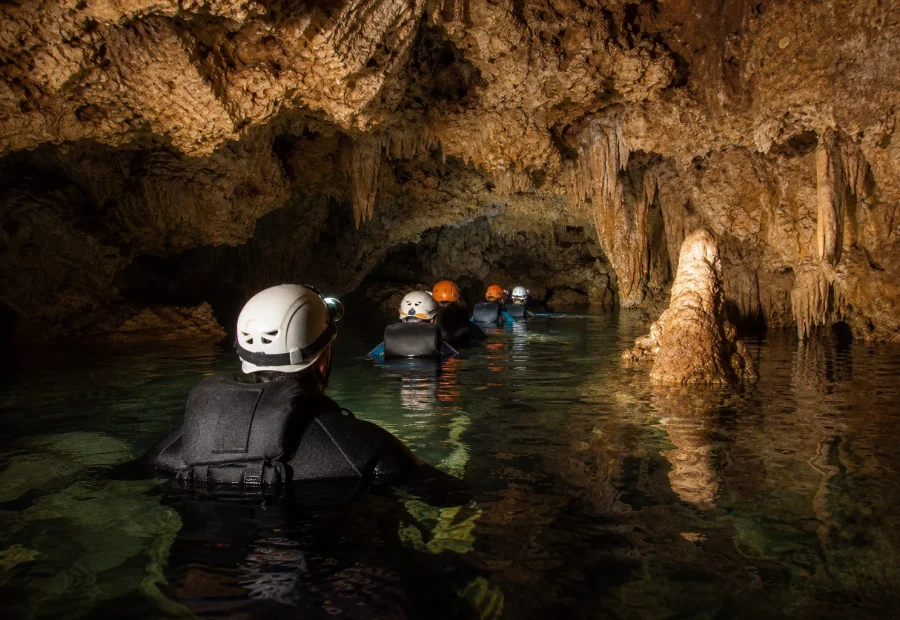
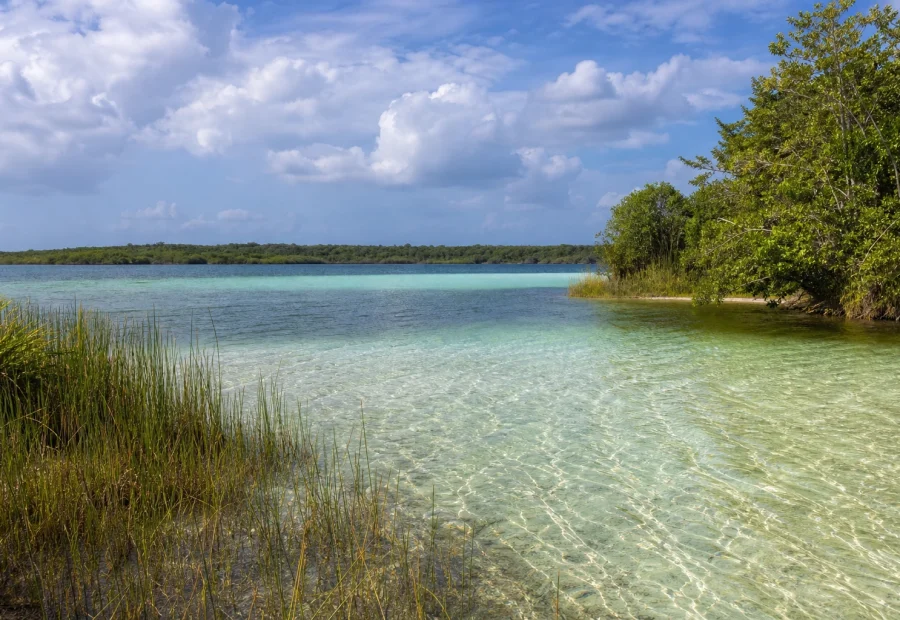
Plan a Casa Cenote visit with clear advice on transport, timing, snorkeling, diving, wildlife, safety, and what to bring.
Casa Cenote looks less like a dark sinkhole and more like a clear jungle river. Its narrow channel winds between mangrove roots near Tankah Bay, north of Tulum, with sunlight reaching much of the water. This Casa Cenote Tulum guide explains how to plan the visit, what snorkeling and diving feel like, and which practical details matter once you arrive.
The site suits confident swimmers, snorkelers, and first-time cenote divers who want an open-water setting. It is less comfortable for travelers seeking broad sun decks, shallow beach-style entry, or a highly polished park. Conditions, admission rules, and equipment policies can change, so treat the details below as a planning framework and confirm the current arrangements at the entrance.
Key Takeaways
- Casa Cenote, also called Cenote Manatí, is a long open-air freshwater channel beside Tankah Bay.
- Go near opening for clearer water, easier parking, and fewer snorkeling and dive groups.
- The water is deep enough that weak swimmers should use a life jacket and stay close to the entry area or a guide.
- Bring pesos, secure water shoes, a towel, and as little loose gear as possible.
- Snorkeling is the best-value activity for most visitors. Scuba diving requires an authorized dive professional and suitable training.
- Wildlife is never guaranteed. Give every animal space and follow staff instructions.

Tulum Area Experiences Guided Scooter Tour Snorkel/Swim Casa Cenote & Lunch
We begin this tour by picking you up and then head on our ATV'ing or E-Biking or Scootering adventure from Tulum the to Casa Cenote. We will enjoy sno...

Discover Scuba Diving at Casa Cenote No Certification Needed
Experience scuba diving for the first time with an easy, beginner-friendly session in one of Tulum’s most beautifu...

Tulum Area Experiences "Try" Scuba Diving Casa Cenote - Snacks - No experience
Easy and hassel free is how your first underwater scuba-diving experience will be in the beautiful Casa Cenote. This...
Casa Cenote at a Glance
| Detail | What to Expect |
|---|---|
| Location | Tankah area, north of Tulum and east of Highway 307 |
| Best for | Snorkeling, open-water swimming, beginner-friendly guided diving, mangrove scenery |
| Typical visit | About 1.5 to 3 hours without a separate beach or meal stop |
| Water | Mostly clear freshwater with a coastal connection and occasional mixing with saltwater |
| Entry | Simple platforms or ladders into water that becomes deep quickly |
| Facilities | Basic visitor services may include parking, changing areas, restrooms, equipment rental, and guides |
| Payment | Bring pesos and confirm the current admission price at the entrance |
Casa Cenote sits close enough to Tulum for a half-day outing. The final approach leaves Highway 307 and follows a local road toward the coast. Road surfaces, access controls, and parking arrangements can change, especially after heavy rain or maintenance.
The official-looking name can be confusing because Casa Cenote is also known as Cenote Manatí. The two names generally refer to the same mangrove-lined waterway. PADI describes the site as the mouth of a major underwater river system near the sea, which helps explain its unusual shape and the subtle changes divers notice in the water.
What Makes Casa Cenote Different
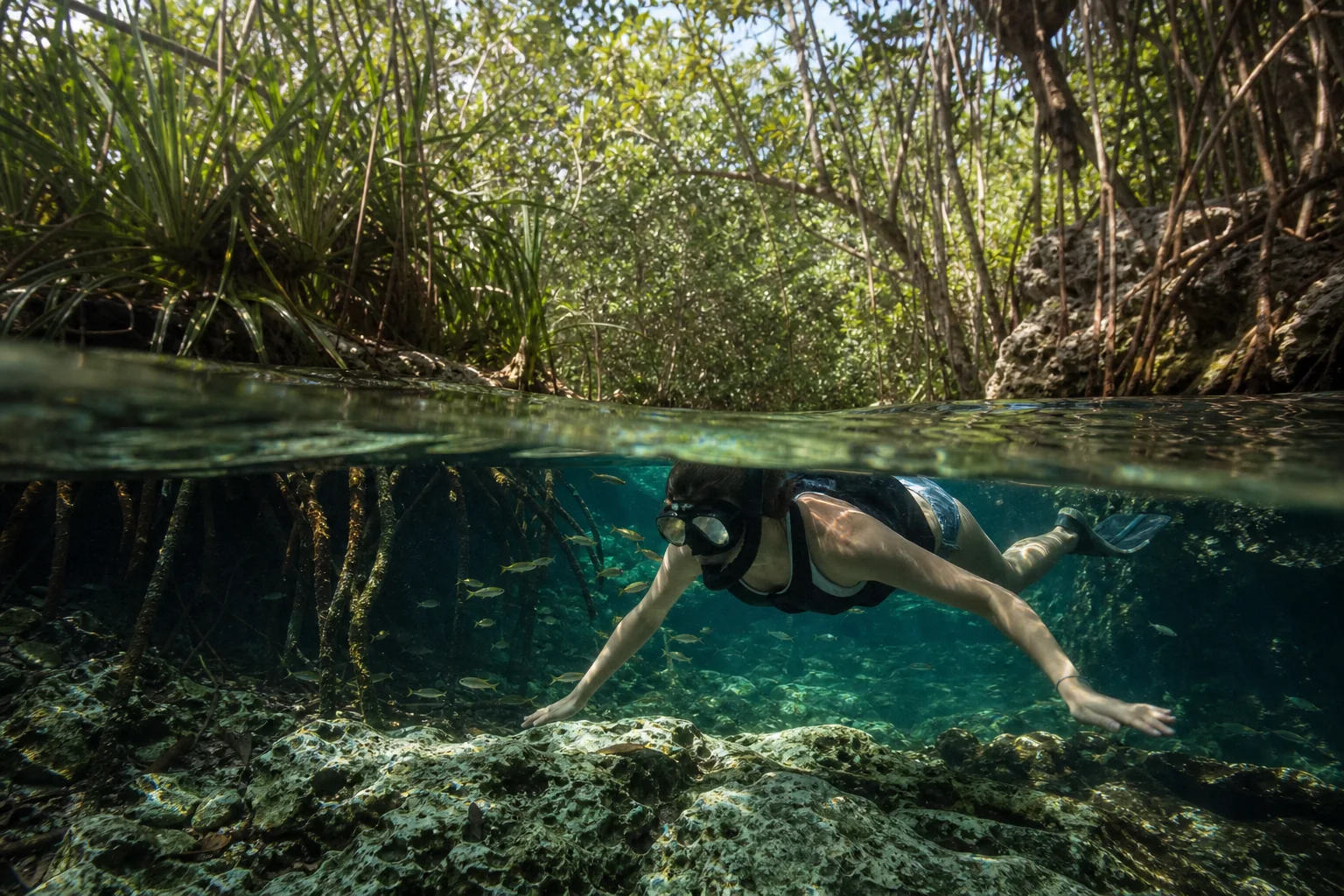
Many cenotes near Tulum are circular pools, collapsed caverns, or cave entrances. Casa Cenote is long, narrow, and open to the sky. Mangrove branches lean over the channel while roots reach down into clear water. Small fish move between the shadows, and pale limestone appears below patches of aquatic growth.
The coastal location creates another distinction. Fresh groundwater travels through the limestone and meets the sea nearby. Divers may notice a halocline, the wavering boundary where freshwater and saltwater mix. Snorkelers usually experience the site more simply as a clear channel with changing light, plant life, and occasional silvery fish.
This is not a beach lagoon. The banks are close, but the water can be deeper than expected. There is also limited room around the main entry compared with a large cenote park. The appeal comes from the water itself rather than elaborate platforms, restaurants, or landscaped grounds.
Is Casa Cenote Worth Visiting?
Casa Cenote is worth visiting if snorkeling is a priority and you enjoy natural settings with minimal staging. The channel gives you more distance to explore than a compact swimming hole, and sunlight makes the underwater scenery accessible without entering a cave.
It also works well when sea conditions are rough. A cenote visit can provide an alternative to reef snorkeling, although heavy rain can affect visibility and local operators may adjust access for safety.
Consider another cenote if your group wants shallow water, easy lounging, or extensive family facilities. Travelers who dislike deep water may feel more relaxed at a site with broad steps and a visible bottom near the entrance. Our best cenotes near Tulum guide compares several different swimming styles.
How to Get to Casa Cenote From Tulum
Casa Cenote is in the Tankah area north of central Tulum. The drive commonly takes about 20 to 30 minutes from Pueblo when traffic is moving, but your hotel location and the final local road can add time.
Rental Car
A rental car gives you the easiest control over timing. Follow Highway 307 north, then use the signed turn toward Tankah and Casa Cenote. Save the location offline before leaving, since mobile service can weaken near the coast. Drive slowly on the access road and watch for cyclists, pedestrians, potholes, and changing gate procedures.
Do not leave phones, bags, or passports visible in the car. Bring only what you need for the water and use a locker if one is available.

2 tanks Cenote Diving Adventure in Tulum for Certified Divers
Diving in a cenote is like floating in another universe. It’s like evolving on a turquoise planet full of sacred h...

Freediving Intro for Beginners in a Cenote in Tulum Mexico
The cenotes offer an unparalleled setting to facilitate the peace and relaxation we need to approach the underwater...

2 Cenotes Guided Snorkeling Adventure in Tulum
Booking this tour is choosing to be guided by an experienced scuba professional. All our guides are full cave divers...
Taxi
A taxi is practical for a short visit, but arrange the return before the driver leaves. The cenote is outside central Tulum, and an empty taxi may not be waiting when you finish. Confirm the total fare, pickup time, and whether the driver expects cash.
Scooter or Bicycle
A scooter can work for an experienced rider in good weather. The highway portion, turning traffic, and uneven local road require attention. Check the rental agreement, helmets, tires, lights, and insurance before departing.
Cycling from Tulum is a much bigger commitment than the map suggests. Heat, highway exposure, and the final coastal road make it unsuitable for many casual riders. A guided cycling trip with support is a safer choice than improvising the route.
Guided Tour
A tour can bundle transport, admission, equipment, and a guide. Compare the actual inclusions before booking. Some outings pair Casa Cenote with reef snorkeling, another cenote, or a nearby beach. A shorter dedicated snorkeling trip usually leaves more time in the water than a schedule with several rushed stops.
The Best Time to Visit Casa Cenote
Arrive near opening if you want the calmest experience. The main entry area is small, and several snorkeling or dive groups can make the channel feel busy. Earlier water is also less disturbed by fins, ladders, and repeated entries.
Late morning often brings stronger sunlight into the channel, which can improve color and underwater visibility. The trade-off is more visitors. If photography matters, choose a clear morning and give yourself enough time to wait for natural gaps between groups.
Rain does not automatically ruin the day, but a strong storm can affect the road, water clarity, and lightning safety. Ask the cenote or your dive operator about conditions after prolonged rain. During the hottest months, the water feels refreshing, but the exposed waiting and changing areas can still be hot.
What to Expect at the Entrance
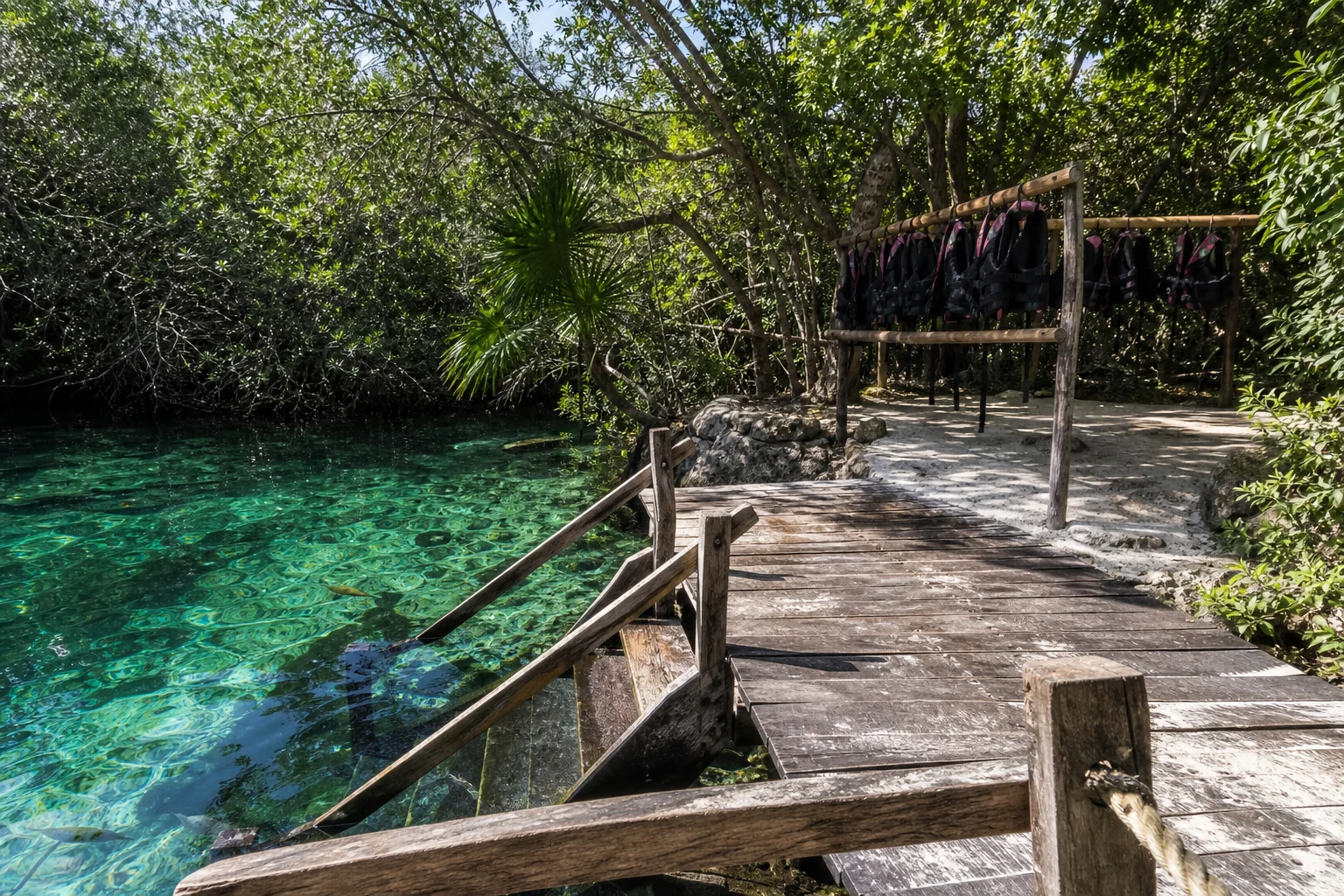
Casa Cenote has a more practical feel than a large adventure park. Expect a check-in point, posted rules, and a short walk to the main water access. Services can change, but visitors commonly find basic restrooms, changing space, equipment rental, and local guides.
Confirm these details before paying:
- The admission amount and accepted payment methods
- Whether a life jacket is included or required
- Whether fins, cameras, or personal flotation devices are allowed
- The cost of snorkel equipment, lockers, and guide services
- The final exit time for swimmers and divers
- Any temporary wildlife or water restrictions
Shower before entering when required. Avoid applying sunscreen or insect repellent immediately before swimming. Even products marketed as reef-safe can introduce residue into a small freshwater system.
Swimming and Snorkeling at Casa Cenote
Snorkeling is the strongest reason for most travelers to choose Casa Cenote. The open sky makes orientation easier than in a cavern, while the mangrove edge provides texture and habitat. Move slowly and look beneath roots, beside fallen branches, and across the pale bottom rather than racing to the far end.
The channel can feel calm, but do not confuse calm water with shallow water. Use a properly fitted life jacket if you tire easily or need to adjust your mask often. Stay out of the path of dive groups, and never follow divers beneath overhangs or into restricted areas.
If you bring your own mask, test the seal before the trip. A comfortable mask matters more than an expensive snorkel. Rental equipment is convenient, but fit and condition vary. Ask for another size if water leaks around your eyes or the fins pinch.
Allow 45 to 90 minutes in the water, depending on temperature, crowding, and your confidence. Take a break before fatigue becomes obvious. The return always feels longer when your mask is fogging and your shoulders are tired.
Still comparing Casa Cenote?
Ask for tour ideas, hotel suggestions, or a simple trip plan that combines both.
Trip Helper
Scuba Diving at Casa Cenote
Casa Cenote is often used for guided introductory dives and open-water-certified divers because much of the route remains within reach of daylight. PADI listings describe shallow diving at the site, but this does not make independent cenote diving appropriate.
Cenote and cavern environments require local knowledge, correct equipment, and strict route limits. Book through a reputable dive center, disclose your certification and recent experience honestly, and follow the guide’s decision if conditions change. A guide may cancel or modify the dive because of visibility, group ability, equipment, or water movement.
Ask the operator:
- Which certification and minimum age are required
- The planned maximum depth and route
- Group size and guide ratio
- Whether equipment, tanks, transport, admission, and insurance are included
- How recently the regulator, buoyancy device, and cylinders were serviced
- What happens if weather or site access changes
First-time divers should choose a formal discover-scuba program rather than a casual offer at the entrance. Certified divers who want a true cavern route should book an operator trained and equipped for that environment.
Wildlife and the Casa Cenote Crocodile Question
Casa Cenote supports fish, birds, mangrove organisms, and other wildlife. Visitors also hear frequent stories about a small resident Morelet’s crocodile often called Panchito. A sighting is not guaranteed, and online stories should not replace instructions from staff on the day.
Treat the possibility seriously without turning it into a spectacle. Never approach, corner, touch, or feed any crocodile. Leave the water immediately if staff direct you to do so. Keep children close, and do not enter closed mangrove passages in search of a photograph.
Wild animals decide where they move. The safest observation is distant, brief, and boring enough that the animal barely notices you.
What to Bring to Casa Cenote
- Swimsuit already worn under your clothes
- Towel and dry change of clothing
- Water shoes or sandals with reliable grip
- Well-fitting mask and snorkel if you own them
- Life jacket if you need a specific fit and personal devices are permitted
- Reusable drinking water for after the swim
- Pesos in small denominations
- Waterproof pouch for essential items
- Dry bag for wet clothing
- Hat and light cover-up for the waiting area
Leave jewelry, loose sunglasses, and unnecessary electronics at the hotel. A phone lanyard is not a substitute for a waterproof case. If you use an action camera, secure it without dragging a long stick through crowded water.
Safety and Water Quality
Follow posted rules even when another swimmer ignores them. Do not enter if the site is closed for weather, wildlife, maintenance, or water concerns. The cenote connects to a sensitive groundwater system, and conditions can change after storms.
Avoid swallowing the water. Skip the swim if you have open wounds, a recent stomach illness, or a condition that makes deep-water activity unsafe. Parents should supervise children directly rather than relying only on a flotation device.
Snorkel with a partner and agree on a turnaround point. Heat can still be a problem before and after the swim, so drink water and use shade. Alcohol and deep water are a poor pairing, even when the channel looks peaceful.
For scuba diving, use a recognized operator and complete the medical questionnaire honestly. Ear, sinus, heart, lung, or pregnancy concerns require professional medical advice before diving.

Cenote Triple Adventure Tour in Tulum
On this 4-hour tour, you will visit three different cenotes in the area. At each of them, you can free dive, snorkel...

Discover Scuba Diving in Tulum
An introduction to the magical underwater world. This small course consists of a 15-minute class, a 15-minute pract...

Tulum Mayan Ruins GPS Self-Guided Walking Audio Tour
Explore the most picturesque Mayan ruins in Mexico! Tulum perches on a cliff overlooking dazzlingly blue waters and...
Casa Cenote Compared With Other Cenotes Near Tulum
| Cenote Style | Best Choice For | Main Trade-Off |
|---|---|---|
| Casa Cenote | Long snorkeling route, mangroves, open-water diving | Deep water and a compact entry area |
| Gran Cenote style | Platforms, clear viewing areas, classic cenote scenery | Often busier and more structured |
| Cave or semi-open cenote | Rock formations, dramatic shafts of light | More stairs, darker water, and possible claustrophobia |
| Large open pool | Families, relaxed swimming, easier group supervision | Less underwater variety in some locations |
Choose Casa Cenote for movement and underwater observation. Choose a cave cenote for geology and atmosphere. Pick a large open pool when your group wants simpler entry and more time resting between swims.
How to Pair Casa Cenote With the Coast
Tankah Bay and the Caribbean sit close to the cenote, but access and spending rules vary by property. Do not assume that cenote admission includes a beach chair, restaurant credit, or unrestricted entry to private facilities.
A sensible half-day plan is to snorkel early, change into dry clothes, then eat nearby or return toward Tulum. If you add sea snorkeling, check wind, waves, and reef guidance first. Freshwater visibility at the cenote does not predict safe conditions offshore.
Travelers staying on the southern Beach Road should allow extra transfer time. Our Tulum Beach Road guide explains why short coastal distances can move slowly. If Casa Cenote is part of a larger first visit, the complete Tulum travel guide helps place it beside ruins, beaches, and regional day trips.
Who Should Visit and Who Should Skip It
Casa Cenote is a good match for:
- Confident swimmers who want more than a quick dip
- Snorkelers interested in mangrove habitat
- Certified divers booking a guided open-water or cavern experience
- Couples and small groups comfortable with basic facilities
- Travelers seeking a half-day nature stop north of Tulum
Consider another site if you need:
- A broad shallow area for toddlers
- Step-free water access
- Extensive shade, loungers, and food service
- A cave filled with stalactites
- A guaranteed wildlife encounter
Frequently Asked Questions
Is Casa Cenote the Same as Cenote Manatí?
Yes. Casa Cenote and Cenote Manatí are commonly used for the same mangrove-lined cenote in the Tankah area north of Tulum.
How Long Should I Spend at Casa Cenote?
Plan about 1.5 to 3 hours for check-in, changing, snorkeling, and a short break. Add more time if you book a dive, eat nearby, or combine the visit with the coast.
Can Beginners Snorkel at Casa Cenote?
Beginners can snorkel with a well-fitted life jacket and close supervision, but the water becomes deep quickly. A guide is worthwhile for anyone uneasy in open water.
Can I Visit Casa Cenote Without a Tour?
Yes, independent visits are common. A car or prearranged taxi makes transport easier. Confirm current admission, equipment, and guide rules at the entrance.
Is Casa Cenote Good for Children?
It can suit older children who swim confidently and follow instructions. The deep water and simple entry make it less convenient for toddlers or children who need a shallow play area.
Will I See a Crocodile?
No wildlife sighting is guaranteed. Follow current staff guidance, keep your distance from every animal, and never search closed mangrove areas for a closer look.
Do I Need to Book Casa Cenote in Advance?
Independent swimmers may be able to pay at the entrance, but policies can change. Reserve in advance for scuba diving, guided snorkeling, or a visit during a busy holiday period.
Conclusion
Casa Cenote earns a place in a Tulum plan when the goal is active snorkeling rather than lounging. Arrive early, carry pesos, use a life jacket if deep water gives you pause, and spend enough time moving slowly along the mangroves to notice what lives below them.
Choose a guided outing for diving or for a group that needs extra confidence. Independent travelers can keep the visit simple with a car or prearranged taxi, their own well-fitting mask, and a flexible return plan. That approach turns a Casa Cenote Tulum visit into a focused half day instead of another hurried stop on a cenote checklist.
Tulum Area Experiences Guided Scooter Tour Snorkel/Swim Casa Cenote & Lunch
We begin this tour by picking you up and then head on our ATV'ing or E-Biking or Scootering adventure from Tulum the to Casa Cenote. We will enjoy sno...
Discover Scuba Diving at Casa Cenote No Certification Needed
Experience scuba diving for the first time with an easy, beginner-friendly session in one of Tulum’s most beautifu...
Tulum Area Experiences "Try" Scuba Diving Casa Cenote - Snacks - No experience
Easy and hassel free is how your first underwater scuba-diving experience will be in the beautiful Casa Cenote. This...