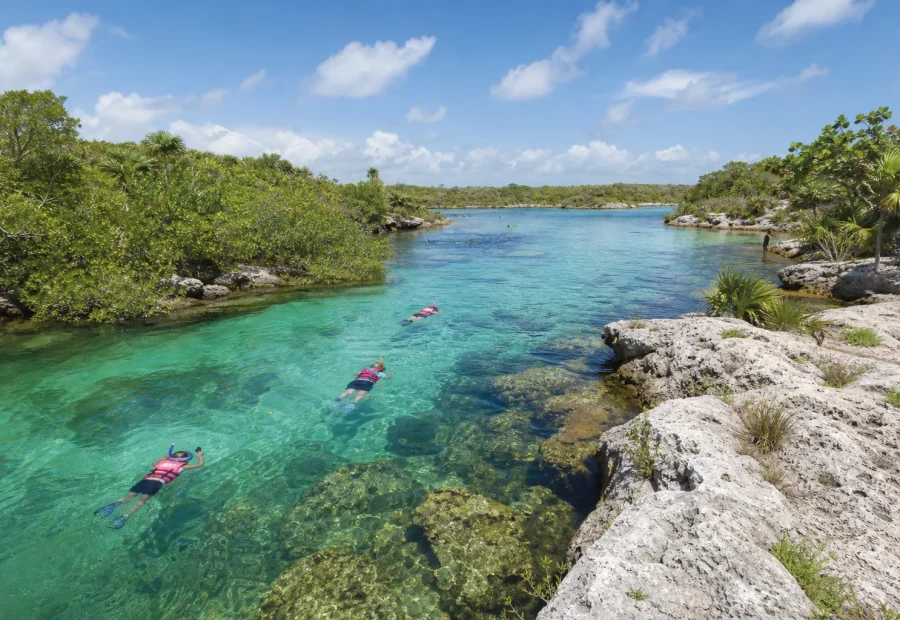
Plan a Kaan Luum and cenote tour from Tulum with practical guidance on itineraries, transportation, costs, booking questions, accessibility, packing, and responsible travel.
A Kaan Luum and cenote tour pairs two freshwater settings in one outing: an open lagoon south of Tulum’s urban area and a separate cenote selected by the operator. The combination sounds simple, but packages can differ in transportation, swimming time, meals, entrance charges, and group size. The best choice is the tour that explains those details clearly before collecting payment.
- Confirm the exact cenote, pickup point, departure time, and expected return time before booking.
- Ask for the complete price in writing, including admission charges, taxes, equipment, meals, and gratuities.
- Do not assume that online prices for Parque del Jaguar or the Tulum archaeological zone apply to Kaan Luum.
- Request current information about lagoon hours, swimming rules, payment methods, and closures directly from the operator.
- Travelers with mobility needs should obtain specific details about vehicles, paths, docks, toilets, and water access.
This excursion works best when you want a water-focused break without building a complicated route yourself. A tour can coordinate transportation and two stops, while an independent visit gives you more control over pacing. Current official information about Kaan Luum’s admission, operating hours, reservations, and site facilities was not available in the reviewed evidence, so confirmation close to departure is essential.

Tulum Guided Tour, Magical Cenote, Lagoon Snorkeling and Beachside Lunch
Get ready to enjoy a day full of history, culture and adventure. Walk through the ruins of Tulum - one of the last cities inhabited by the the Mayan p...

Tulum Ruins, Cenote Cave, and Turtle Swimming Tour
A guided tour of the Tulum Mayan ruins, swimming with sea turtles in Akumal and a jungle oasis cenote swim in the Ri...

Tulum Ruins, Turtles in Akumal and Cenote tour
On this tour, you’ll explore the top attractions of the Riviera Maya. Begin with a visit to the ancient ruins of T...
Use this guide as a framework rather than a fixed timetable. For a broader look at the destination itself, the Kaan Luum Lagoon from Tulum guide can help you decide how the lagoon fits into a longer itinerary. Your final plan should still follow the latest instructions supplied by the attraction and your chosen provider.
Is a combined lagoon and cenote tour worth booking?
A combined tour is most useful for travelers who value simple logistics. One reservation may cover the vehicle, route planning, and coordination between stops. That convenience matters when you do not want to negotiate separate rides or determine how long to allocate at each location. It can also make the day easier for groups that need to stay together.
The tradeoff is flexibility. A structured itinerary may limit how long you spend swimming, resting, or taking photographs. Operators can also choose different cenotes, so the phrase “lagoon and cenote tour” does not identify one standard product. If the cenote matters as much as Kaan Luum, do not book until the company names it and describes the activities there.
Independent travel may suit visitors who prefer an open schedule and are comfortable arranging transport. However, current parking conditions, ticket procedures, and payment methods at Kaan Luum were not verified by an attraction-controlled source. Self-guided visitors should confirm those points rather than relying on an old blog post or an undated social media comment.
What the itinerary may include
A bookable itinerary should identify both water stops and explain what happens at each one. At Kaan Luum, the visit may center on lagoon time, while the cenote portion could involve swimming, viewing the formation, or another operator-defined activity. Treat any activity not written into the booking confirmation as unconfirmed.
Ask how much time is allocated to each site. A long total tour duration can include pickups, road travel, ticketing, equipment distribution, and meal stops. The number that matters is usable time at the lagoon and cenote. Also ask whether the order can change because of weather, crowd management, closures, or operational decisions.
- Verify the full name of the cenote and both site addresses.
- Confirm pickup or meeting instructions, including the contact procedure for delays.
- Request the approximate time planned at each attraction.
- Ask which activities and equipment are included at each stop.
- Confirm the meal plan, water provision, and expected return point.
Choose the cenote as carefully as the lagoon
The cenote determines much of the day’s character. Before paying, ask if it is open-air, enclosed, or partly covered, and whether the activity involves easy surface swimming, stairs, jumping platforms, snorkeling, or deeper water. These details affect clothing, confidence, supervision needs, and the amount of physical effort required.
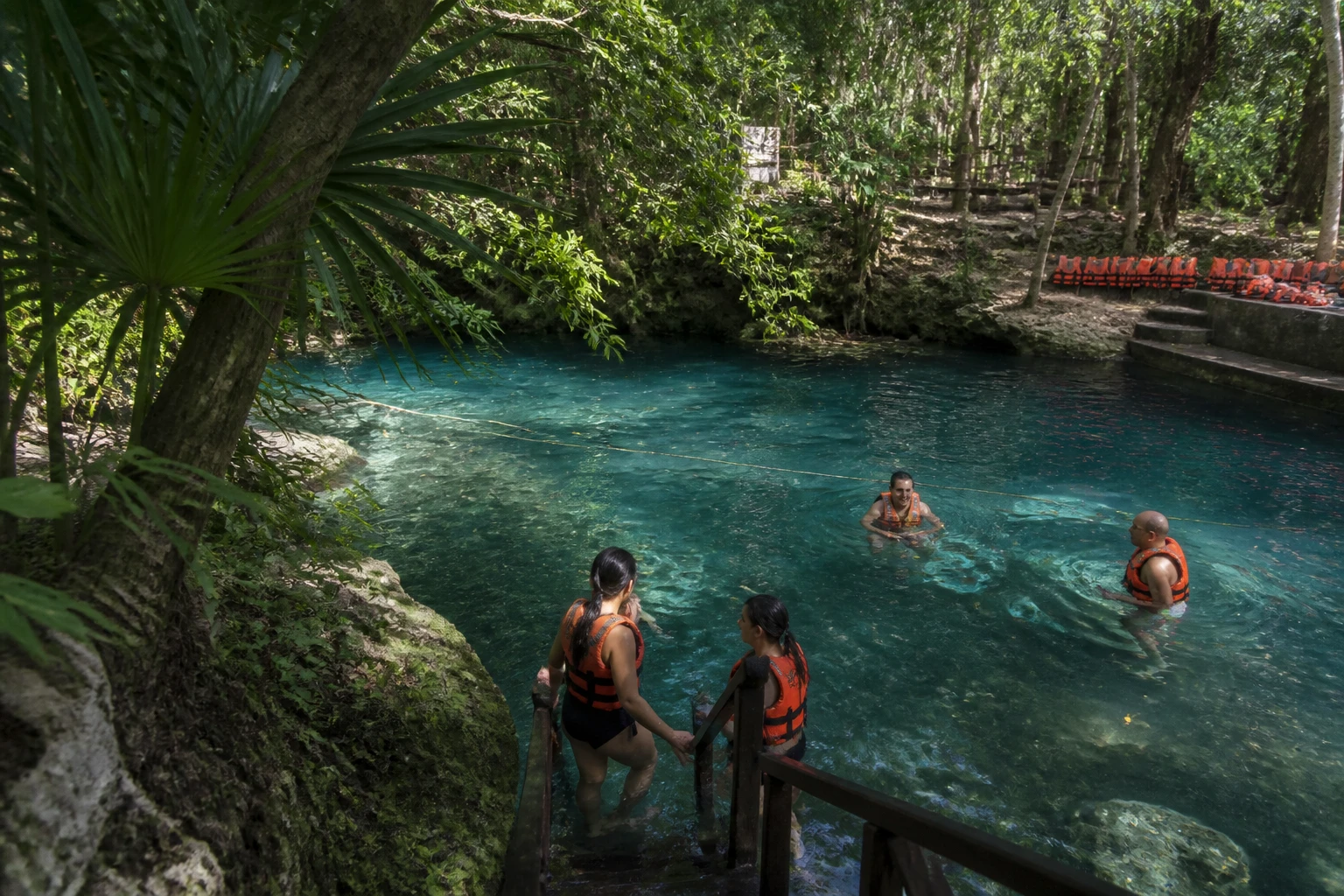
Families should ask about minimum ages, flotation devices, water depth, supervision, and toilet or changing facilities. Less confident swimmers should request a plain explanation of entry points and where they can remain within their comfort level. A life jacket may be included, required, rentable, or unavailable, so obtain a written answer rather than assuming.
Travelers still comparing locations can consult the best cenotes near Tulum for the differences among popular choices. Cenote Escondido is another nearby freshwater option worth researching if you prefer to organize a separate visit. A combined tour remains the simpler choice when one coordinated booking matters more than selecting every detail yourself.
Tulum Ruins, Cenote Cave and Swimming with Turtles From Tulum
A guided tour of the Tulum Mayan ruins, swimming with sea turtles in Akumal and a jungle oasis cenote swim in the Ri...
Private tours versus shared departures
| Tour format | Potential advantage | Question to ask |
|---|---|---|
| Private | More control over group composition and possibly the schedule | Which parts of the timing can actually be changed? |
| Shared | May divide transportation and guide costs among more travelers | What is the maximum group size and vehicle type? |
| Self-guided | Greater control over departure and time at each stop | What are the current entry and payment procedures? |
| Hotel-arranged | Convenient communication through the accommodation | Who operates the tour and handles cancellations? |
Private does not automatically mean fully customizable. A supplier may still follow fixed opening windows, route constraints, or activity rules. Ask which elements are flexible and which are not. Shared trips require equally clear answers about group size, pickup sequences, language, storage space, and waiting time for other passengers.
The municipal visitor guidance for Tulum advises travelers to use qualified tourism and transportation providers and to follow conservation and access rules. Look for an identifiable business, a clear contact method, written terms, and a receipt or booking record. If the seller avoids basic questions about the operator or total price, keep looking.
How much does a Kaan Luum and cenote tour cost?
There is not enough verified evidence to state a standard tour price or current Kaan Luum admission fee. One locally indexed private-tour PDF listed a “Tulum Vibes” itinerary with Kaan Luum and Gran Cenote at MXN 4,900 per person, with a two-person minimum. That is one operator-specific example, not a market average or the lagoon’s entry charge.
Because that price is volatile, confirm availability, taxes, inclusions, payment terms, and cancellation rules directly. A quote that appears higher may include private transportation, tickets, equipment, or food. A lower quote may exclude them. Comparing only the headline number can turn an apparent bargain into a string of additional payments.
- Admission to Kaan Luum and the selected cenote
- Hotel pickup, central meeting point, or no transportation
- Private vehicle or shared transport
- Guide service and language
- Life jackets, masks, lockers, towels, or other equipment
- Food, drinks, taxes, gratuities, and cancellation protection
Recent federal measures involving free access to Parque del Jaguar and reduced charges associated with the Tulum archaeological zone and protected area concern different attractions. They do not establish the cost of entering Kaan Luum or joining this tour. Keep those budgets separate when planning a multi-attraction trip.
Transportation and pickup details to confirm
Kaan Luum lies south of Tulum’s urban area, but the evidence does not support a fixed travel time. Journey length can depend on the starting neighborhood, pickup sequence, traffic, and route chosen by the operator. Ask for a realistic pickup window and return estimate based on your actual accommodation, not a generic “Tulum” departure.

Hotel pickup may mean the lobby, a roadside entrance, or a designated central point. This distinction matters in areas where a vehicle cannot conveniently reach the property. Request a written meeting location, the vehicle or driver identification procedure, and a phone or messaging contact. Save the information offline in case mobile reception becomes unreliable.
Travelers staying outside the main pickup zone should ask about supplements before paying. Those beginning elsewhere can review Tulum tours to compare other organized departures, while visitors arranging the wider journey may find the Tulum Airport to Hotel Zone transportation guide useful for arrival planning. Neither transfer should be assumed to be part of the excursion unless it appears in the confirmation.
Still comparing Kaan Luum And Cenote Tour From Tulum?
Ask for tour ideas, hotel suggestions, or a simple trip plan that combines both.
Trip Helper
Build a realistic schedule
Avoid placing a flight, long-distance transfer, or nonrefundable dinner immediately after the expected return. Tour schedules can shift when pickups take longer, a site changes access, or weather interrupts swimming. A buffer protects the rest of your day and reduces pressure on the driver and guide.
Ask if the quoted duration begins at pickup, at the first attraction, or when the full group assembles. Also confirm whether lunch is a scheduled stop or a quick snack. These details help you judge how much of the excursion is active sightseeing and how much is transit or waiting.
If your Tulum stay is short, place this excursion on a day with few other commitments. The 3 Days in Tulum Itinerary offers one framework for balancing freshwater stops with the area’s other experiences. Do not combine activities simply because they appear close on a map. Pickup procedures and admission rules can consume more time than expected.
What to bring for two freshwater stops
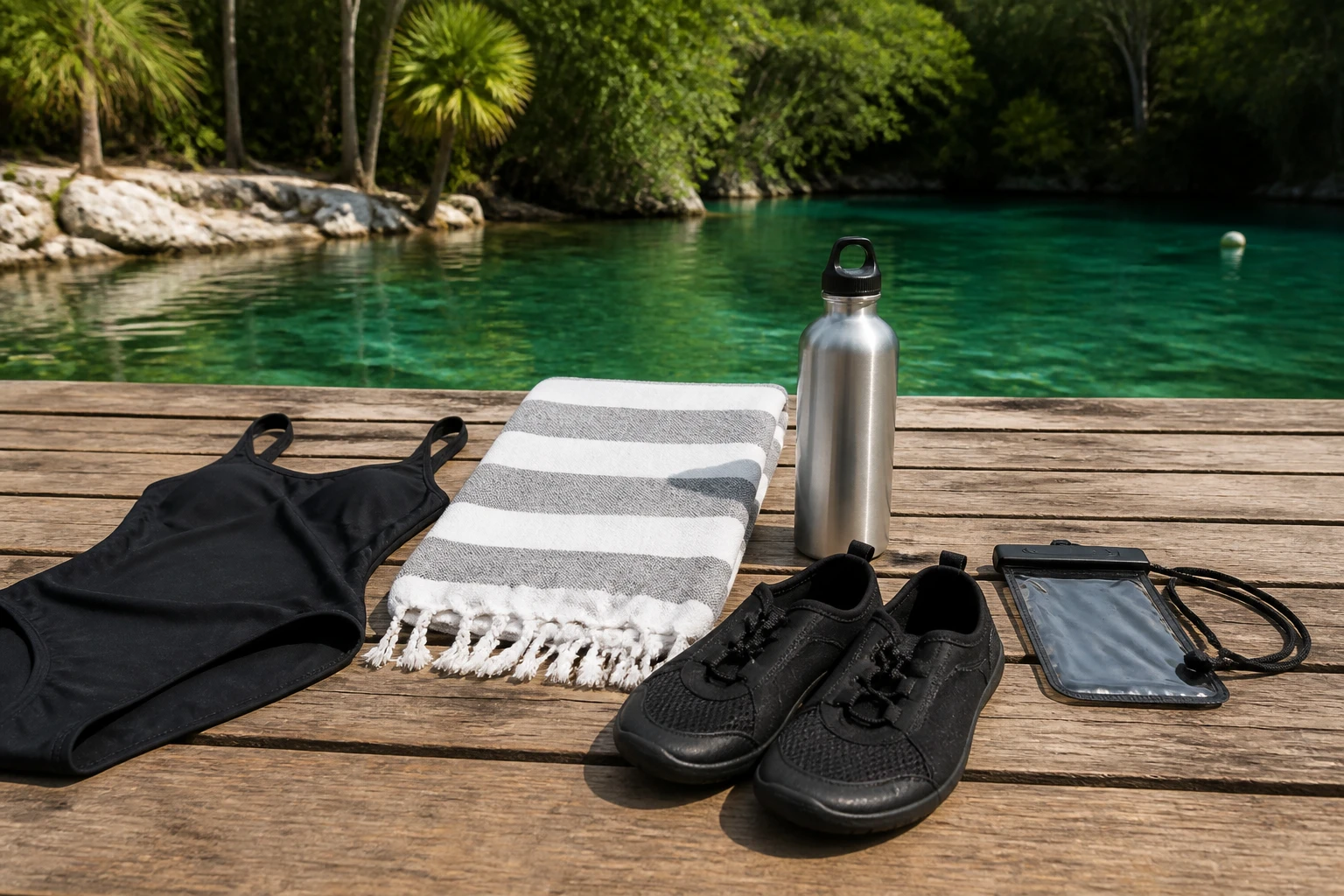
Pack for repeated transitions between vehicle, path, changing area, and water. A small, organized bag is easier to manage than loose belongings. Keep electronics and documents in a dependable waterproof pouch, but remember that a pouch is not a substitute for following storage rules at either attraction.
- Swimsuit and a dry change of clothes
- Towel, unless the operator confirms one is supplied
- Secure footwear suitable for wet surfaces
- Refillable water bottle if the provider allows it
- Waterproof pouch for phone, cash, and documents
- Any personal medication needed during the outing
Ask the operator about sunscreen, insect repellent, cameras, food, and single-use items before packing them. Site rules may restrict products or objects near the water. Follow the instructions given at each location, even if they differ. Conservation rules protect the setting and may also prevent delays at entry.
Swimming safety and responsible booking
Tell the operator about weak swimming ability, relevant medical conditions, pregnancy, or injuries before booking. Ask what flotation equipment is supplied and which activities can be skipped. Never treat a guide’s presence as permission to exceed your own ability. Conditions and site rules should determine where and how you enter the water.
Municipal guidance encourages visitors to trust their instincts and use qualified providers. Confirm the business name, emergency contact procedure, insurance information if offered, and cancellation policy. Share the itinerary with someone outside the group, and keep enough information to identify the operator and vehicle.
Follow posted restrictions and staff instructions at both stops. Do not cross barriers, disturb vegetation, leave waste, or pressure a guide to ignore a rule for a photograph. A responsible tour should make compliance easy and should explain changes when conditions require an altered plan.
Accessibility requires direct confirmation
Do not assume that Kaan Luum or the selected cenote offers step-free access. The reviewed authoritative sources did not verify wheelchair-accessible toilets or changing areas, transfer assistance, dock conditions, path surfaces, or adaptive swimming arrangements. A general statement that a tour is “easy” does not answer these practical questions.
Contact the supplier before paying and describe each traveler’s needs precisely. Ask for the number and type of steps, walking distance, path material, handrails, vehicle boarding height, seating, toilet layout, and assistance available. Request current photographs when useful, but avoid images containing personal data from other guests.
Also ask what happens if one person cannot enter the water. A suitable alternative might involve a safe waiting area or a shorter visit, but neither should be presumed. Obtain the answer in writing and check whether an accessibility-related cancellation follows the standard policy.
Tulum Ruins, Cenote Cave and Swimming with Turtles From Tulum
A guided tour of the Tulum Mayan ruins, swimming with sea turtles in Akumal and a jungle oasis cenote swim in the Ri...
Weather, closures, and changing conditions
Current site-controlled information about temporary closures and operating rules was not available in the reviewed evidence. Ask the operator when it checks conditions, how it communicates a closure, and whether the response is a refund, reschedule, replacement stop, or shortened itinerary. The written policy matters more than a verbal promise.
Request the tour’s weather policy rather than guessing what will happen after rain. Ask which conditions cancel water activities and who makes that decision. If the excursion continues with a substitute cenote, confirm whether you can decline the change and what financial terms apply.
Check messages before leaving your accommodation and keep your schedule flexible. If poor conditions would make the outing unsuitable for you, choose a booking with terms you understand. Travel insurance may have its own definitions and exclusions, so read the relevant policy rather than assuming every weather disruption is covered.
Protecting the lagoon landscape
Municipal planning material describes mangrove and tule vegetation around Kaan Luum. It also identifies nearby forest-cover loss and development as risks to water quality and the surrounding landscape. Visitors can reduce their own impact by staying within designated areas, carrying out waste, and following product restrictions near the water.
Choose a provider that explains site rules rather than treating them as an inconvenience. Ask how the company manages waste, group behavior, and restricted areas. Responsible conduct is especially important at a freshwater destination whose appeal depends on the health of its water and surrounding vegetation.
A final booking checklist
- Get the exact cenote name and complete itinerary.
- Confirm pickup point, pickup window, return estimate, and operator contact.
- Request the total price with admissions, taxes, equipment, meals, and supplements itemized.
- Read the cancellation, weather, closure, and substitution policies.
- Disclose swimming, health, age, and mobility considerations before payment.
- Reconfirm hours, access rules, and departure details shortly before the tour.
A well-documented booking removes most of the uncertainty from this excursion. You should know where you are going, how you will get there, what you will do, and what the full day will cost. If a provider cannot answer those basic questions, another tour or a separately planned lagoon visit may be the better choice.
Frequently asked questions
How far is Kaan Luum from Tulum?
Kaan Luum Lagoon is south of Tulum’s urban area. A reliable fixed travel time was not established by the reviewed evidence, so ask the operator for an estimate based on your specific pickup location and the day’s pickup sequence.
Which cenote is included with a Kaan Luum tour?
There is no single standard pairing. One indexed private itinerary paired Kaan Luum with Gran Cenote, but other products may use another site. Confirm the full cenote name and planned activities before booking.
How much is a Kaan Luum and cenote tour?
No verified market average is available. One operator-specific private itinerary was advertised at MXN 4,900 per person with a two-person minimum. That figure is not Kaan Luum’s admission fee and should not be treated as standard pricing. Confirm current rates and inclusions directly.
What are Kaan Luum’s current hours and admission fee?
The reviewed research did not find a reliable attraction-controlled source confirming current hours, admission, reservation requirements, payment methods, or temporary closures. Verify each detail with the venue or tour operator close to departure.
Is a Kaan Luum tour wheelchair accessible?
Accessibility could not be verified. No authoritative source reviewed confirmed step-free routes, accessible toilets or changing areas, transfer support, dock conditions, or adaptive swimming arrangements. Ask the supplier detailed questions before paying.
Should I book a private or shared tour?
Choose a private tour if group control and possible schedule flexibility justify the cost. Choose a shared tour if you accept fixed timing and traveling with other guests. In both cases, confirm group size, transportation, inclusions, cancellation terms, and usable time at each stop.
Do Parque del Jaguar access changes apply to Kaan Luum?
No conclusion about Kaan Luum should be drawn from those measures. The July 2026 federal announcement concerned Parque del Jaguar, the Tulum archaeological zone, and the associated protected area, not Kaan Luum Lagoon.
What should I bring on the tour?
Bring swimwear, a dry change of clothes, secure footwear, a towel unless supplied, water if permitted, medication, and a waterproof pouch. Ask about sunscreen, repellent, camera, food, and equipment rules before packing.
Tulum Guided Tour, Magical Cenote, Lagoon Snorkeling and Beachside Lunch
Get ready to enjoy a day full of history, culture and adventure. Walk through the ruins of Tulum - one of the last cities inhabited by the the Mayan p...
Tulum Ruins, Cenote Cave, and Turtle Swimming Tour
A guided tour of the Tulum Mayan ruins, swimming with sea turtles in Akumal and a jungle oasis cenote swim in the Ri...
Tulum Ruins, Turtles in Akumal and Cenote tour
On this tour, you’ll explore the top attractions of the Riviera Maya. Begin with a visit to the ancient ruins of T...