Plan a Kaan Luum Lagoon trip from Tulum with practical guidance on transport, timing, swimming, safety, facilities, and nearby stops.
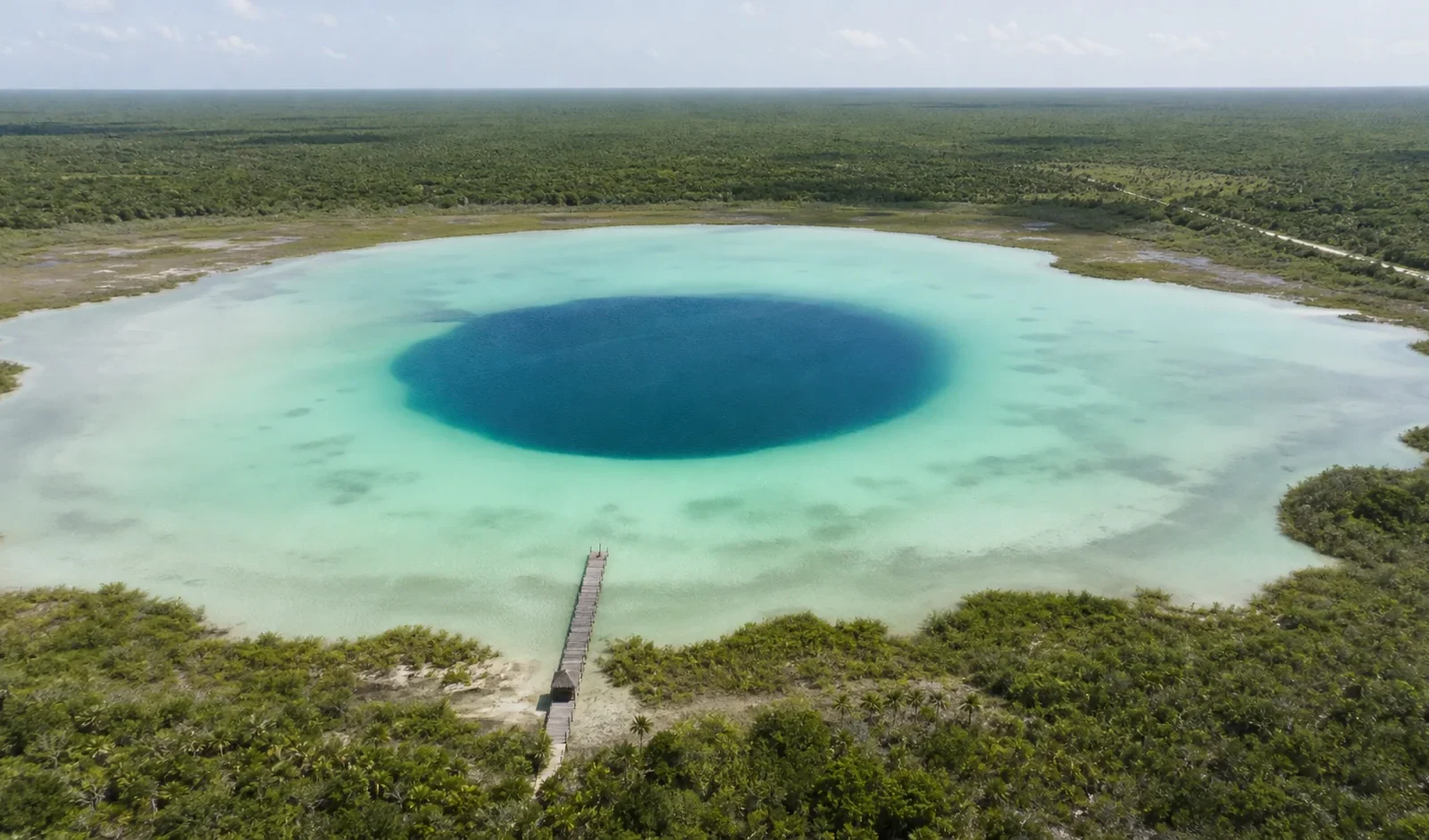
Kaan Luum Lagoon looks almost graphic from above: a pale turquoise sheet of water wrapped around the dark circle of a deep cenote. At ground level, the experience is gentler. The lagoon is broad, warm, and shallow near shore, with wooden docks extending over clear water and low green forest lining the horizon.
Its proximity to Tulum makes Kaan Luum easy to underestimate. This is not a full-service beach club or a wilderness expedition. It is a simple freshwater outing that works best when you arrive early, understand the swimming boundaries, and bring what you need for a few relaxed hours.
Key Takeaways
- Kaan Luum is roughly 10 kilometers southwest of Tulum, reached from Highway 307 by a short side road.
- Visit near opening time for calmer water, softer light, and fewer people on the docks.
- The pale shallows are the main swimming area. The deep central cenote is visibly darker and restricted for casual swimmers.
- Bring pesos, purified water, a hat, a towel, a dry bag, and only the sun or insect products permitted by current lagoon rules.
- Facilities are simple, and posted admission, parking, camera, or activity fees may change.
- Two to three hours is enough for most visitors, making the lagoon easy to combine with a relaxed lunch or another nearby stop.
Kaan Luum Lagoon at a Glance
| Detail | Practical answer |
|---|---|
| Distance from Tulum | About 10 kilometers southwest |
| Driving time | Roughly 15 to 25 minutes in normal traffic |
| Best arrival | Near opening time |
| Typical visit | About 2 to 3 hours |
| Water | Shallow freshwater around a much deeper central cenote |
| Best for | Swimming, floating, photography, and a low-key half day |
| Less suitable for | Travelers seeking a beach, extensive facilities, or all-day entertainment |
| Bring | Pesos, water, hat, towel, dry bag, swimsuit, and change of clothes |
The lagoon is also written as Laguna Kaan Luum. You may see several spellings online, but they refer to the same freshwater attraction south of Tulum.
Is Kaan Luum Worth Visiting?
Yes, if you want an easy nature break and enjoy warm, shallow water. The color difference between the lagoon and the central cenote is striking, and the wide horizon feels very different from a forest cenote enclosed by rock or roots.
Kaan Luum is less compelling if you expect a long list of activities. The experience is intentionally simple: swim, float, sit on the dock, look across the water, and leave before the midday sun becomes tiring. There may be swings, hammocks, or rental activities available, but these details can change and should not be the sole reason for visiting.
The lagoon can become busy. On a crowded afternoon, dock space feels limited and the water loses some of its calm atmosphere. Timing matters more here than a complicated itinerary.
Why the Water Has Two Colors
Most of Kaan Luum is shallow. Sunlight reflects from the pale limestone bottom and creates the bright turquoise color visible from the docks. Near the center, the bottom drops into a much deeper cenote, turning the water a dense navy blue.
The contrast is natural, not a painted or constructed boundary. A buoy line or other markers generally separate the swimming area from the central opening. Rules may be adjusted according to conditions, so follow the boundaries in place during your visit.
The dark center can look mysterious from shore, but it is not a casual plunge pool. Depth, overhead geological features, and changing water conditions make specialized access very different from ordinary lagoon swimming. Never cross a restriction to get a photograph.

Chichen Itza, Cenote, and Valladolid Tour
Explore Chichen Itza, an impressive Mayan archaeological complex. Visit a sacred sinkhole and enjoy a buffet meal...

Chichen Itza, Cenote & Valladolid Tour with Tequila and Lunch
Unlock the mysteries of the Mayans with this tour to Chichén Itzá, a magical cenote & Valladolid. Start this expe...

Early morning Chichen Itza Tour: Cenote and Tequila Tasting
Embark on an exclusive journey with us to uncover the marvels of Chichen Itza, a remarkable Mayan archaeological com...
How to Get to Kaan Luum From Tulum
By car, follow Highway 307 south from Tulum. Watch for the Kaan Luum turnoff and leave enough distance to slow safely. The final approach follows a smaller road through the forest to the entrance and parking area.
A taxi is convenient for the outbound journey, but agree on the fare and return plan before leaving town. Ask whether the driver will wait, return at a specific time, or provide a reliable contact. Mobile service near natural attractions is not always dependable.
Cycling is possible for experienced riders, but Highway 307 traffic, heat, limited shade, and the turnoff make it a serious road ride rather than a relaxed bike-path outing. Wear high-visibility gear, use a helmet, carry repair supplies, and start early if you choose this option.
Colectivo travel may cover the highway portion, followed by a walk along the access road. Confirm the exact drop-off and return pickup with a local source on the day. This option is inexpensive but less comfortable in strong sun or with children.
Tours sometimes combine Kaan Luum with cenotes or other nature stops. Check how much actual lagoon time is included, since a packed itinerary can turn a peaceful visit into a quick photo stop.
The Best Time to Visit
Arrive close to opening time. Morning light gives the shallows a clean turquoise tone, docks are less crowded, and the temperature is more comfortable. Wind often increases later, roughening the reflections and making paddle activities harder.
Weekdays are generally calmer than weekends and Mexican holiday periods. December through April usually brings drier weather and stronger visitor demand. The wetter months are hotter, greener, and more likely to include afternoon storms.
Clouds do not ruin the visit, but the water color looks less vivid without direct sun. Lightning is a different matter. Leave exposed docks and follow staff instructions when a storm approaches.

Entrance, Parking, and Facilities
Kaan Luum operates as a managed natural attraction, and visitors should expect an admission charge. Additional posted fees may apply for parking, cameras, drones, or specific activities. These policies and amounts can change, so bring pesos and read the current entrance board carefully.
Facilities are basic rather than resort-like. Restrooms and changing areas may be available, along with simple food or drink service depending on the day. Do not assume there will be lockers, a full restaurant, showers, or reliable card payment.
Ask staff about the current rules for sunscreen, insect repellent, food, and reusable containers before entering the water area. If lockers are unavailable, keep valuables to a minimum and use a waterproof pouch you can carry with you.
The official Tulum municipal tourism site is a useful starting point for destination information, but local operating details should still be confirmed directly.
Swimming in the Shallow Lagoon
The main swimming zone is broad and often shallow enough for adults to stand, although depth changes across the lagoon. The water is usually warm and can feel almost bath-like under midday sun.
Enter from designated docks or steps rather than trampling the shoreline. Limestone and algae can make wet surfaces slippery. Move slowly, use handrails where available, and keep sandals secured.
Floating is part of the appeal. If life jackets are required or offered, choose one that fits properly. Inflatable devices may be available for rent, but policies vary. Do not bring a large float without confirming it is allowed.
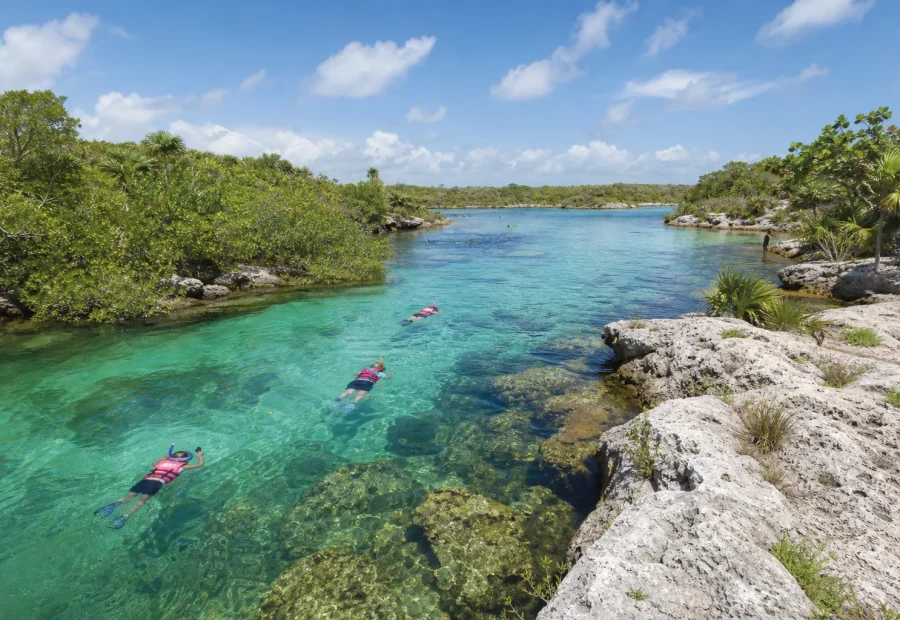
Visibility depends on wind, recent rain, and the number of swimmers. The lagoon can remain beautiful even when the water is not perfectly clear, but travelers seeking a classic cavern-cenote snorkeling scene should choose a different site.
Still comparing Kaan Luum Lagoon?
Ask for tour ideas, hotel suggestions, or a simple trip plan that combines both.
Trip Helper
The Deep Central Cenote and Safety Boundaries
The dark center is the most recognizable feature, and it deserves caution. Casual swimming is generally kept outside the central cenote by ropes or buoys. Respect them even if other visitors do not.
Do not judge safety by the stillness of the surface. Deep natural water can involve temperature changes, limited visibility, entanglement hazards, and conditions that are invisible from a dock. Specialized diving or freediving should occur only when currently authorized and supervised by qualified local professionals.
Children and weak swimmers need direct supervision. A shallow lagoon is not uniformly shallow, and a child can move beyond standing depth quickly. Keep them within arm’s reach near docks and insist on a correctly sized flotation device when appropriate.
Alcohol and swimming are a poor combination. Save drinks for after the water portion of your day, and leave the lagoon if you feel overheated, dizzy, or unwell.
What to Bring
Kaan Luum is easier when you arrive self-contained. Pack light, but do not rely on buying every essential at the entrance.
Bring:
- Pesos in small denominations
- Purified drinking water in a reusable bottle
- Swimsuit and quick-drying towel
- Hat and lightweight sun-protective clothing
- Dry bag or waterproof phone pouch
- Change of clothes
- Strapped sandals or water-friendly footwear
- Any medically necessary items
- A small bag for your own rubbish
Check current product rules before applying sunscreen or repellent. Freshwater systems are sensitive, and a product marketed as reef-safe is not automatically approved for every lagoon or cenote. Physical sun protection is the simplest choice.
Photography at Kaan Luum
Morning gives photographers the best combination of softer light and open dock space. A circular polarizing filter can reduce glare, but rotate it carefully because the effect can make parts of a wide sky look uneven.
Keep the horizon level and use the dock as a leading line toward the dark center. A person in the shallows adds scale, while a low camera angle can emphasize the transparent water close to shore.
The famous overhead view requires a drone, and drone use may be restricted or carry a separate fee. Never launch without explicit current permission. Protected landscapes, visitor privacy, and aircraft rules still apply even when social media shows aerial footage.
Waterproof phone cases are useful, but test the seal before traveling. Secure wrist straps and avoid placing electronics loose on a wet dock.

Visiting With Children or as a Non-Swimmer
Kaan Luum can work well for families because the near-shore water is warm and relatively shallow. Success depends on shade, supervision, and timing. Arrive early, keep the visit short, and carry more drinking water than you think you need.
Ask whether child-sized life jackets are available before relying on them. Bring a familiar flotation device only if the site allows outside equipment. Docks have edges, gaps, and slippery surfaces, so toddlers need constant hands-on attention.
Non-swimmers can enjoy the view and may be comfortable sitting at the edge or entering a designated shallow section with a life jacket. Explain your ability to staff and stay well away from the central boundary. There is no need to prove anything in natural water.
Shade can be limited on the main docks. Older travelers, infants, and anyone sensitive to heat may be happier with a 90-minute morning visit than a long afternoon stay.

Chichen Itza, Cenote and Valladolid Small Group Day Trip
Recently selected as one of the New World Wonders, Chichen Itza is without a doubt one of the most spectacular and i...

Tulum Ruins, Turtles in Akumal and Cenote tour
On this tour, you’ll explore the top attractions of the Riviera Maya. Begin with a visit to the ancient ruins of T...

Isla Mujeres Luxury Sailing: Adults Only or Family Friendly
Join us for the Luxury Sailing Adventure to Isla Mujeres aboard a state-of-the-art catamaran — with the option to...
Accessibility and Mobility Considerations
The lagoon’s flat setting may look easy, but the full route can include unpaved ground, steps, narrow dock sections, wet surfaces, and limited handrails. Current improvements and access arrangements can change.
Travelers with limited mobility should contact the attraction or a knowledgeable local operator for specific details about parking distance, restroom access, entrance steps, and wheelchair movement on the docks. A taxi or private driver can reduce the walking required before the entrance.
Bring a companion if balance is a concern. Water shoes can help with grip, but no footwear fully prevents slips on algae or wet timber. Move deliberately and avoid the busiest dock edges.
What to Pair With Kaan Luum
Because most visits last two or three hours, the lagoon fits neatly into a half-day plan.
Tulum Pueblo lunch
Return to town for tacos, seafood, or a relaxed café meal. This is the easiest combination and leaves the afternoon open. Our guide to where to eat in Tulum can help choose the neighborhood.
Another cenote
Pair Kaan Luum with a forest or cave cenote for contrast, but choose one nearby and verify its closing time. The best cenotes near Tulum guide explains the differences.
Muyil and Sian Ka’an
Travelers with their own transport can continue south toward Muyil. This creates a full nature-and-culture day, but the lagoon boat experience deserves time. Start early and avoid trying to fit both destinations into a short afternoon.
A quiet evening in town
Kaan Luum is a good morning after a late night because it requires little structure. Return to your hotel during the hottest hours, then explore Pueblo after sunset.
Tour or Independent Visit
Visit independently if you have a car, want to control your timing, and are comfortable arranging a taxi return. Kaan Luum does not require extensive interpretation to enjoy, so the independent option is straightforward.
A tour makes sense when transport is the main concern or when the lagoon is paired thoughtfully with another stop. Guides can also explain the freshwater geology and local ecology, adding context beyond photographs.
Before booking, check:
- Exact time at Kaan Luum
- Other stops and the order of the day
- Whether admission and activity fees are included
- Group size and type of vehicle
- Pickup location and total travel time
- Water, towels, life jackets, and lunch inclusions
Avoid tours that promise too many major attractions in one day. The value of Kaan Luum is its spacious, unhurried feel.
Environmental Rules and Respectful Visits
Lagoons and cenotes are connected to the peninsula’s groundwater. What enters the water does not simply disappear. Follow posted product rules, avoid litter, and never leave food where wildlife can reach it.
Stay on established docks and paths. Shore plants stabilize soil and provide habitat, while repeated foot traffic widens damaged areas. Do not collect stones, plants, or shells.
Keep music low or use headphones. A wide-open lagoon carries sound, and other visitors may have come for the natural setting. Support the site by paying posted fees and following staff instructions rather than looking for unofficial access.
Frequently Asked Questions
How far is Kaan Luum from Tulum?
The lagoon is roughly 10 kilometers southwest of Tulum. Driving usually takes about 15 to 25 minutes, depending on your starting point and traffic.
Can you swim at Kaan Luum?
Yes, swimming is the main activity in the pale shallow area. The deep central cenote is restricted for casual swimmers, so stay outside the marked boundary.
How long should I spend there?
Two to three hours is enough for most visitors. Arrive early and leave before the strongest afternoon heat unless you have a specific activity planned.
Is Kaan Luum suitable for children?
It can be, particularly for children who enjoy shallow water. They still need constant supervision and an appropriate flotation device because depth changes and docks are slippery.
Are there restaurants at the lagoon?
Food and drink offerings may be limited and can vary. Bring purified water and plan your main meal elsewhere unless you confirm a current on-site option.
Can I use a drone?
Do not assume so. Drone use may be restricted, require permission, or carry a fee. Ask staff and follow all current aviation and privacy rules.
Is Kaan Luum a cenote?
Kaan Luum is a shallow lagoon with a deep cenote opening near its center. The two water depths create the distinctive turquoise and dark-blue pattern.
Conclusion
Kaan Luum offers a simple pleasure that is increasingly rare around a busy destination: warm freshwater, a broad horizon, and enough space to slow down for a morning. Its beauty depends less on elaborate facilities than on the natural contrast between pale shallows and the deep cenote at the center.
Go early, respect the swimming boundary, bring your own essentials, and keep the rest of the day flexible. With those choices in place, the lagoon becomes an easy and memorable counterpoint to Tulum’s beaches, ruins, and crowded roads.