Shop for Tulum souvenirs with a sharper eye. This guide explains how to assess craftsmanship, ask about origins, avoid risky natural materials, keep useful receipts, plan for customs, and fit shopping around a visit to the Tulum ruins.
Souvenir shopping in Tulum can be more rewarding when you slow down and look beyond the first colorful display. A thoughtful purchase should suit your budget, survive the journey home, and come with a clear explanation of who made it and what it contains. This guide focuses on practical buying skills rather than unverified store rankings, market schedules, or promises of authenticity.
- Ask who made an item, where it was produced, and what materials were used.
- Inspect seams, edges, fasteners, finishes, and repeated patterns before paying.
- Request an itemized receipt, especially for anything whose material or origin could be questioned.
- Avoid coral, shells, feathers, skins, bone, horn, and other wildlife-derived goods unless lawful origin and any required permits are completely clear.
- Check your home country's import rules before buying food, plants, seeds, or animal-derived products.
- Confirm current opening times, payment methods, accessibility, and return policies directly with each venue.
The simplest approach is to decide what kind of object you want before entering a shop. A useful textile, small piece of art, ceramic object, or non-biological decorative item is usually easier to evaluate and pack than a mysterious natural specimen. Mexican customs and environmental authorities regulate wildlife products, while food and plant goods may face separate sanitary controls.

All-Inclusive! Tulum Ruins, Tequila Tasting + Swim in 3 Cenotes in Small Group!
At Authentic Tours Tulum we believe in giving back to our community by utilizing locations, restaurants, and employees native to our area. Our guides...

Tulum Ruins Guided Tour from Cancun and Riviera Maya
- Experience the ancient city of Tulum with our knowledgeable guides. - Enjoy our small group format and attention to detail through the Mayan’s mos...
How to choose a souvenir worth carrying home
Start with three tests: personal value, workmanship, and transportability. Ask yourself if the object connects to your trip, if its construction justifies the purchase, and if it can travel without breaking, leaking, staining, or creating a customs problem. This quick filter helps prevent an impulsive buy from becoming a suitcase puzzle later.
Handle an item only after receiving permission. Look at the back, underside, interior, and attachment points, since these areas often reveal more than the polished front. On textiles, examine hems and loose threads. On jewelry, check clasps and joins. On ceramics, look for cracks, unstable bases, or rough edges. For framed or mounted work, inspect how the components are secured.
Ask specific questions instead of asking if it is authentic
“Is this authentic?” often produces a simple yes. Better questions invite details that you can compare with the object in your hands. Ask for the maker's name, the place of production, the technique, the primary material, and whether any part was made elsewhere. A confident explanation does not prove every claim, but vague or changing answers are a good reason to pause.
- Who made this, and where was it made?
- Which parts were made by hand?
- What is the main material?
- Does the finish require special care?
- Is this the exact item I will receive?
- Can the material and place of origin appear on the receipt?
Souvenir categories and what to inspect
No category is automatically handmade, local, durable, or legally simple. Judge each piece individually and avoid treating a seller's description as proof. The following checks help you compare objects without relying on brand names or unsupported claims about a particular merchant.
| Item type | Inspect before buying | Packing consideration |
|---|---|---|
| Textiles | Stitching, hems, dye transfer, pulls, and care instructions | Fold around clean clothing or place in a separate bag |
| Ceramics | Cracks, chips, glaze condition, base stability, and weight | Wrap each piece separately and protect empty spaces |
| Jewelry | Clasp, joins, sharp edges, stated metal, and removable parts | Use a small rigid container and retain the receipt |
| Artwork | Surface condition, dimensions, signature claims, and mounting | Confirm it fits your luggage without bending |
| Wood objects | Splits, finish, loose sections, and declared wood type | Check destination-country rules if the wood is untreated |
| Food or botanical goods | Sealed packaging, ingredients, origin, and material type | Check current sanitary and import rules before purchase |
Textiles and wearable pieces
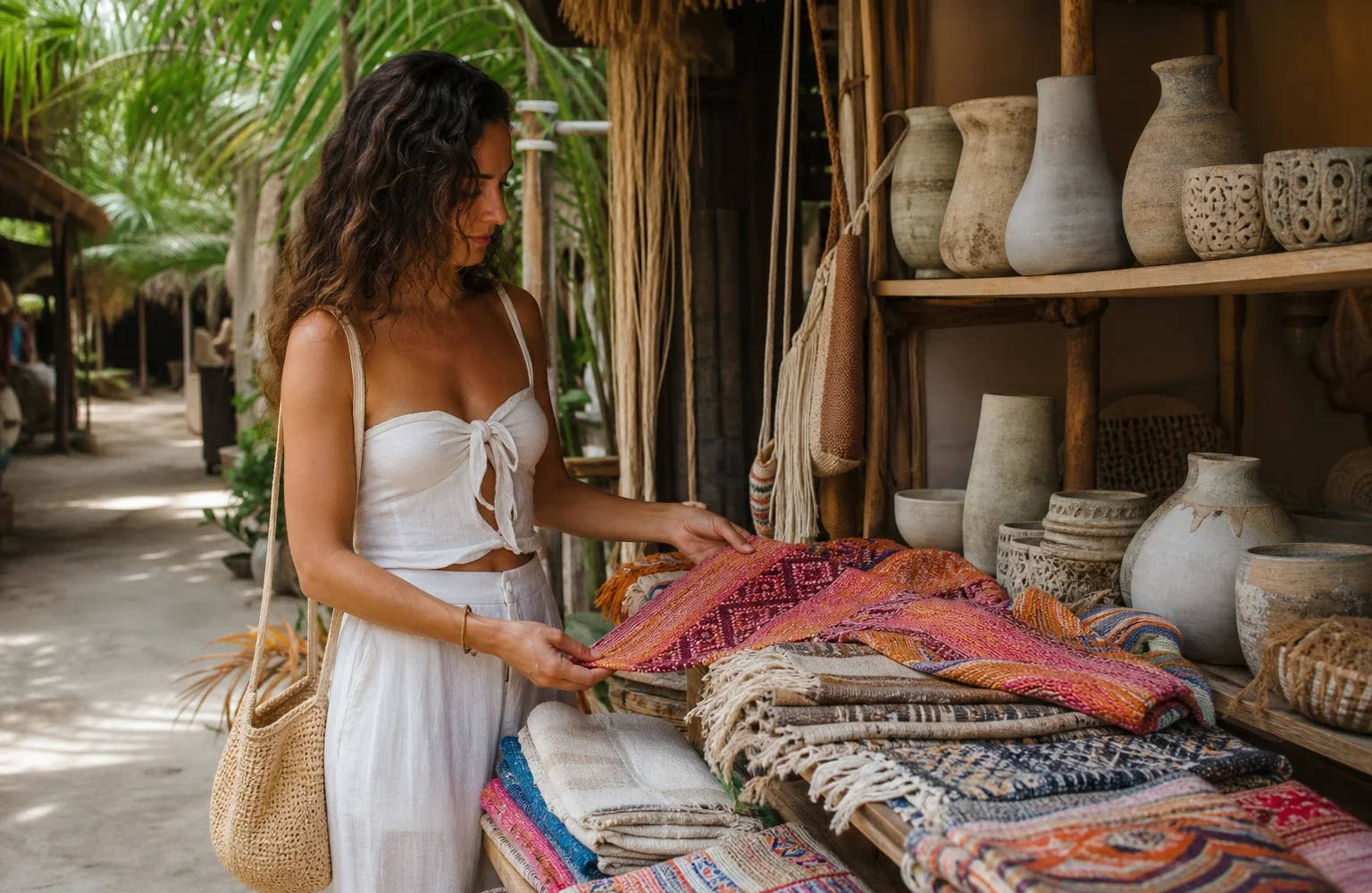
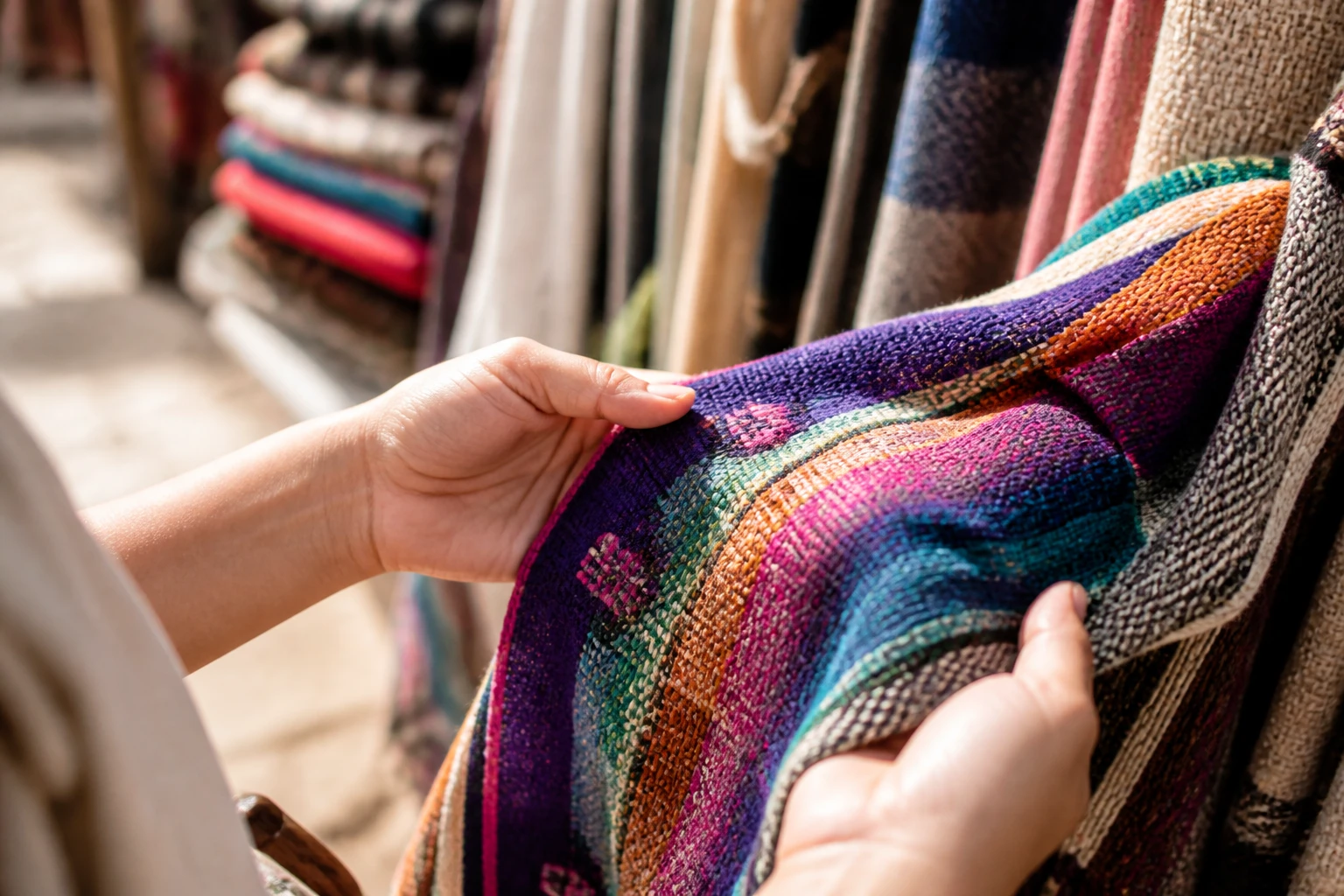
For clothing, bags, and woven pieces, compare the front and back of the work. Check whether seams lie flat and whether handles carry weight evenly. Ask about fiber content and cleaning instructions. If color transfer concerns you, ask the seller about the dye and care method rather than testing the item without permission. Confirm sizing by measurement when possible, since labels alone may not tell the full story.
Ceramics and fragile decor
Place a ceramic object on a flat surface to see if it stands securely. Inspect rims, handles, and narrow joints, then ask whether the piece is intended for decoration or food use. Do not assume every glaze or finish is suitable for serving food. If the seller cannot explain its intended use, reserve the item for display.
Jewelry and small accessories
Ask the seller to identify the stated metal, stone, fiber, or other material in plain language. Check clasps several times and inspect any glued settings. If a piece includes shell, coral, feather, bone, skin, tooth, horn, or another animal-derived component, the purchase can raise legal-origin and border questions. A decorative label is not a substitute for documentation.

Tulum Instagram Photo Experience
Discover the most Instagrammable spots in Tulum carefully selected for this unique experience. Elevate your Instagr...

Private Guided Cenotes and Underground River Exploration
Explore an underground river system and 2 cenotes at the same location. All the photos listed here you will see in p...
Tulum Ruins Guided Tour from Cancun and Riviera Maya
- Experience the ancient city of Tulum with our knowledgeable guides. - Enjoy our small group format and attention t...
Natural souvenirs that can create legal trouble
Coral, certain shells, feathers, wildlife specimens, animal parts, and products made from protected species can be regulated. Mexican authorities oversee trade and cross-border movement of wildlife products. Do not buy or remove these materials unless the exact species, lawful origin, and any applicable permits are clear. Finding an object for sale does not establish that it may legally cross a border.
This caution also applies to objects that resemble natural specimens but have unclear composition. Ask directly what the material is. If the seller cannot identify it or document its provenance, choose another piece. Non-biological materials accompanied by a receipt are generally simpler to transport, although that is a risk-management principle rather than a guarantee of admission by customs.
All-Inclusive! Tulum Ruins, Tequila Tasting + Swim in 3 Cenotes in Small Group!
At Authentic Tours Tulum we believe in giving back to our community by utilizing locations, restaurants, and employees native to our area. Our guides...
Tulum Ruins Guided Tour from Cancun and Riviera Maya
- Experience the ancient city of Tulum with our knowledgeable guides. - Enjoy our small group format and attention t...
When the material is mysterious, leave the mystery in the shop. A souvenir should recall the trip, not begin a customs investigation.
Food, seeds, plants, and untreated natural materials
Food, plant, animal, aquatic, and fishery products may be subject to sanitary controls. Before purchasing edible goods, seeds, dried plants, untreated wood, bone, horn, feathers, or similar materials, consult current guidance for both Mexico and your destination country. Return-country rules can be stricter or simply different, so a product that may be sold locally is not automatically admissible at home.
How receipts and seller details protect your purchase
Request a detailed receipt rather than relying only on a card slip. Ideally, it should identify the item, material, amount paid, date, and seller. For wildlife-derived goods, Mexican customs guidance says travelers must be able to demonstrate legal origin when buying, possessing, transporting, importing, or exporting specimens, products, or by-products of wild flora or fauna.
Keep the receipt with the object while traveling, and save a photograph separately. If a seller makes a specific claim about the maker, material, or origin, ask for that wording on the receipt. Documentation cannot override a prohibition or replace a required permit, but it gives you a clearer record of what was represented at the time of sale.
Prices, payment, and bargaining without guesswork
Reliable current evidence was not available for typical Tulum souvenir prices, accepted payment methods, or merchant bargaining policies. Treat any citywide price chart as a rough opinion unless it comes directly from a seller for the exact item. Compare similar pieces, decide your maximum spend privately, and confirm the final total and currency before approving payment.
Ask whether the displayed amount includes all charges and whether returns or exchanges are permitted. If paying electronically, review the amount on the terminal before authorizing it and keep the transaction record. If a price feels uncomfortable, decline politely. Walking away is more useful than turning a small purchase into a long argument.
Set a souvenir budget by purpose
Divide your budget into keepsakes, gifts, and one possible larger purchase. Add a small packing allowance if fragile goods may require protective materials. This method gives you room to browse while preventing a single early purchase from consuming the entire budget. It also helps you compare value based on construction and personal meaning rather than urgency.
Where to shop without relying on an outdated market list
The available official research does not verify specific souvenir districts, recurring artisan-market schedules, individual seller quality, store hours, or payment policies. For that reason, this guide does not label one area as cheapest or most authentic. Confirm details directly on the day you intend to shop, especially if a particular market or maker is central to your plans.

Travelers arranging time in the town can use a Tulum Pueblo travel guide to understand that part of the destination before adding a shopping stop. Those staying nearer the coast may find a Tulum Beach Road guide useful for broader route planning. In either case, contact the intended venue for its current location and hours rather than building a schedule around an old social post.
Still comparing Tulum Souvenir Shopping?
Ask for tour ideas, hotel suggestions, or a simple trip plan that combines both.
Trip Helper
Accessibility questions to ask before leaving
No reliable evidence in the research verifies step-free entrances, accessible restrooms, seating, parking, aisle width, or other accessibility provisions across Tulum's souvenir venues. Contact each shop or market directly. Ask about the exact entrance, surface conditions, steps, door width, restroom availability, seating, and the distance between a drop-off point and the sales area.
If speaking by phone is difficult, request written confirmation through the venue's current contact channel. Describe the feature you need rather than asking only if a place is “accessible,” since that word can cover very different conditions. Have a backup shopping option in case the actual layout differs from the description.
Combining shopping with the Tulum archaeological zone
If you plan to visit the archaeological zone and shop on the same day, protect the site's fixed schedule first. As checked through July 22, 2026, INAH lists the Tulum archaeological zone as open daily from 8:00 a.m. to 5:00 p.m., with last entry at 3:30 p.m. Check again shortly before visiting because operating information can change.
INAH's page lists a MXN 100 ticket-office charge as well as separate GAFSACOMM and CONANP charges. The evidence does not establish whether every listed charge applies to every visitor, so confirm the current total when planning. These site-access costs are separate from anything charged by souvenir vendors. A Tulum ruins guide for first timers can help organize the archaeological portion of the day.
INAH states that Mexican nationals and foreign residents of Mexico receive free admission to archaeological zones on Sundays. This benefit is not general free admission for international visitors without Mexican residency. Eligible visitors should verify the documentation requirements before relying on the discount.
Packing souvenirs for the journey home
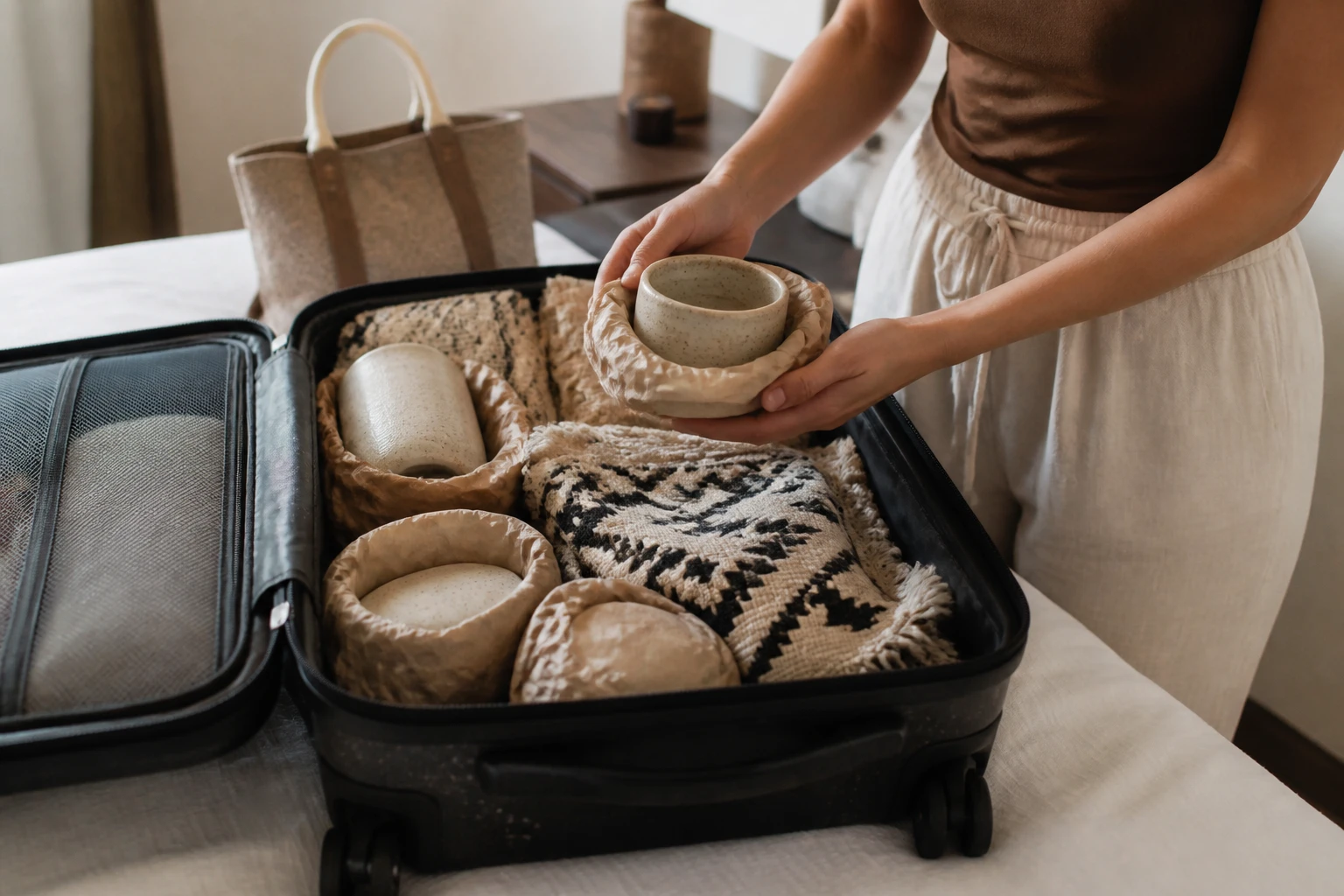
Measure larger purchases before paying and consider your baggage limits, available space, and onward transportation. Photograph fragile pieces before wrapping them. Place small parts in a labeled pouch, protect sharp edges, and keep receipts accessible. Avoid sealing documentation inside layers that may need to be opened during inspection.
- Confirm the object's dimensions, weight, material, and intended use.
- Photograph the item and its receipt.
- Wrap fragile surfaces individually so pieces do not strike each other.
- Fill empty spaces inside sturdy objects with soft, clean material.
- Place documentation where it can be reached without unpacking everything.
- Recheck airline baggage rules and destination-country customs requirements.
A detailed first-timer guide to Tulum can help coordinate baggage, transportation, and the rest of your trip, while this shopping checklist handles the purchase itself. If you expect to buy something large or fragile, leave room in your luggage before departure rather than hoping the suitcase will develop new dimensions on the final night.
A final checklist before paying
- I know what the object is made from.
- I have asked where it was produced and who made it.
- I inspected the underside, seams, edges, joins, or fasteners.
- I understand the final amount, currency, and return policy.
- I can pack the item without damaging it or my other belongings.
- I checked import rules for any food, plant, shell, feather, bone, horn, skin, coral, or wildlife-derived material.
- I requested a detailed receipt and any legally required documentation.
The best souvenir is one you understand. Give yourself time to inspect it, hear the maker's or seller's explanation, and think about the trip home. Clear materials, sound construction, useful documentation, and a genuine personal connection matter more than a rushed claim that something is rare or unmissable.
Frequently asked questions
What souvenirs should I avoid buying in Tulum?
Avoid coral, shells, feathers, animal parts, wildlife specimens, and goods made from potentially protected species unless the exact material, legal origin, and any required permits are clear. Food, seeds, plants, untreated wood, bone, horn, and other biological materials may also face sanitary or destination-country import controls.
How can I tell if a Tulum souvenir is handmade?
Ask who made it, where it was produced, which steps were completed by hand, and what materials were used. Inspect seams, backs, edges, joins, and repeated details. These checks help you assess the seller's explanation, but no single visual clue proves that an item is handmade or locally produced.
Should I keep receipts for souvenirs bought in Mexico?
Yes. Request a detailed receipt identifying the item, material, date, amount, and seller. Mexican customs guidance says travelers handling wildlife specimens or products must be able to demonstrate legal origin. A receipt does not replace a required permit or make a prohibited object admissible.
Can I bring food or plant souvenirs home from Tulum?
Possibly, but admissibility depends on the product and the rules of your destination country. Food, plant, animal, aquatic, and fishery products can face sanitary controls. Check current Mexican guidance and your return-country import rules before buying or packing them.
Are Tulum souvenir markets open every day?
This research did not find authoritative, current confirmation of recurring market schedules or individual store hours. Verify the date, location, and operating time directly with the specific venue shortly before visiting.
Are souvenir shops in Tulum wheelchair accessible?
Accessibility varies, and the research did not verify step-free access, restrooms, seating, parking, or aisle widths at specific venues. Contact the intended shop or market and ask about the precise features you require.
Can I shop and visit the Tulum ruins on the same day?
Yes, if you plan around the archaeological zone's schedule and confirm travel logistics locally. As checked through July 22, 2026, INAH lists daily hours of 8:00 a.m. to 5:00 p.m., with last entry at 3:30 p.m. Confirm current hours and the total of separately listed access charges before visiting.
All-Inclusive! Tulum Ruins, Tequila Tasting + Swim in 3 Cenotes in Small Group!
At Authentic Tours Tulum we believe in giving back to our community by utilizing locations, restaurants, and employees native to our area. Our guides...