Compare Tulum cooking classes by format, menu, location, duration, accessibility, and value. This practical guide explains what to confirm before booking and how to fit a class into your trip.
A cooking class can add a flavorful, hands-on chapter to a Tulum trip, but the local options do not follow one standard format. Available operator pages describe everything from a home-based session with coordinated pickup to a private class shaped around the selected menu. The best choice depends on your budget, location, dietary needs, and appetite for participation.
Tulum cooking classes at a glance
- Confirm the menu, language, start time, duration, group arrangement, and exact meeting point before paying.
- Expect meaningful differences between residential classes and private, menu-dependent experiences.
- Do not assume a destination-wide average price. Compare the final quote and everything it includes.
- Discuss allergies, dietary restrictions, mobility needs, and transportation requirements directly with the operator.
- Keep the operator’s contact details and use a clearly documented meeting or pickup arrangement.
Begin by deciding what kind of afternoon or evening you want. A residential kitchen may feel more personal, while a private class may offer greater control over the menu. Neither format is automatically better. The useful question is whether the setting, schedule, instruction, meal, and transportation fit the rest of your Tulum plans.

All-Inclusive! Tulum Ruins, Tequila Tasting + Swim in 3 Cenotes in Small Group!
At Authentic Tours Tulum we believe in giving back to our community by utilizing locations, restaurants, and employees native to our area. Our guides...
Choose the class format before comparing menus
The reviewed listings illustrate two distinct models. Rivera Kitchen Tulum describes a home-based class inside the gated Residencial Riviera Tulum, with pickup coordinated from a meeting point in town. Its published duration is three to four hours. Ginger Tulum advertises a private-style cooking class whose details depend on the chosen menu.
These examples show why a broad search result can be misleading. One listing may describe a fixed session with transportation logistics, while another may require a conversation about the menu before the experience is defined. Request a written outline rather than relying on a short booking label such as “cooking class” or “private experience.”
| Format question | Why it matters | What to confirm |
|---|---|---|
| Home or residential kitchen | The setting may feel intimate, but access and transportation require extra attention. | Address, gate procedure, pickup point, stairs, bathroom access, and return transport |
| Private or bespoke class | The experience may offer menu flexibility at a premium price. | Menu choices, minimum group size, final per-person quote, and included services |
| Hands-on participation | The phrase “cooking class” does not reveal how much each guest prepares. | Individual workstation, shared tasks, demonstrations, and knife or stove work |
| Meal-centered session | Eating time may account for part of the advertised duration. | Number of dishes, beverages, meal service, and total finish time |
Private, shared, and residential experiences
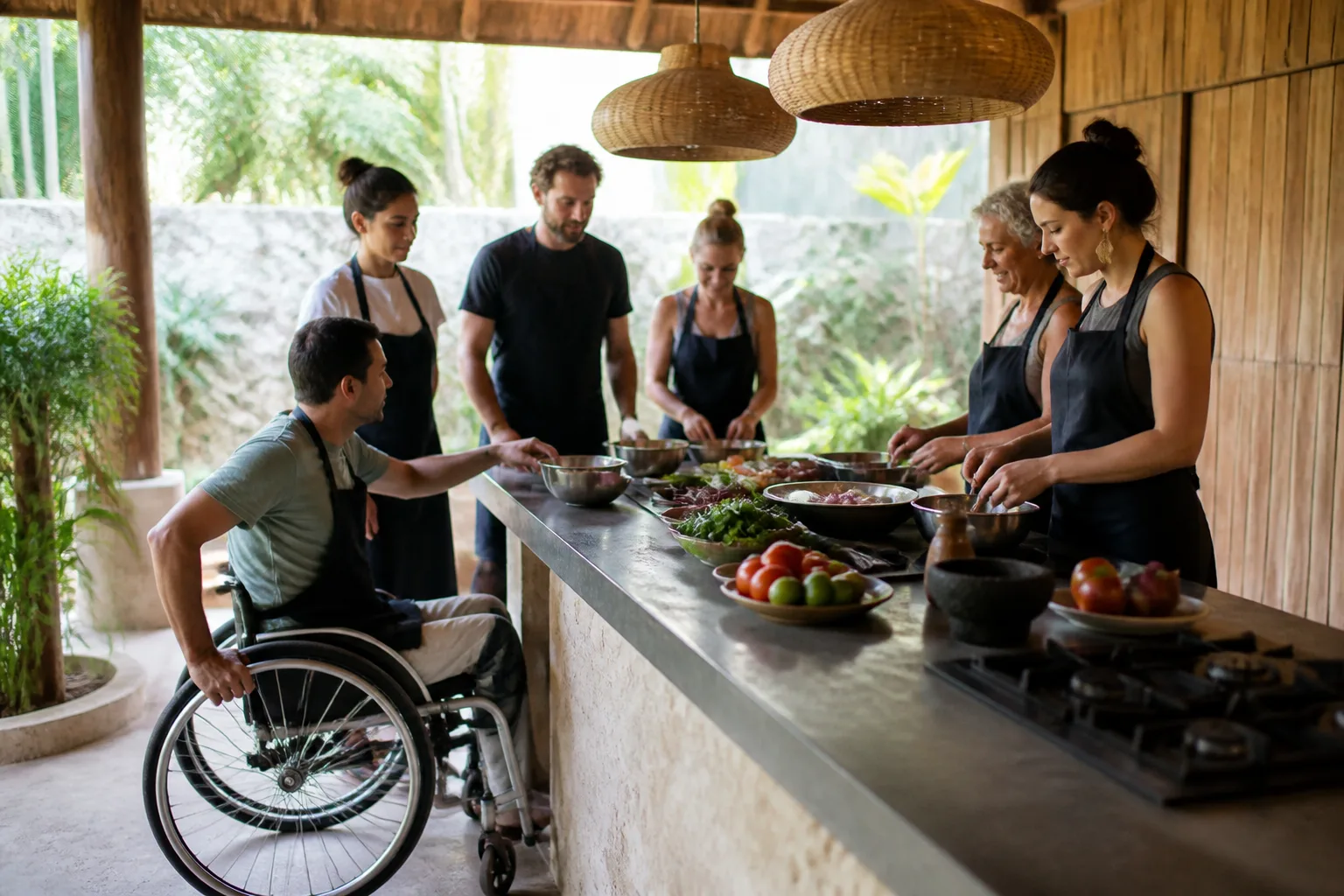
Ask whether your booking creates a fully private session or simply reserves places in a shared group. Also confirm the maximum group size and who will provide instruction. Couples may value menu control and an unhurried meal, while solo travelers may prefer the social rhythm of a shared table. Families should ask about minimum ages, supervision, and which tasks are suitable for children.
Ask what you will actually cook
A clear menu is one of the strongest tools for comparing classes. Ask for the current dish list and find out whether you will prepare every component or watch some steps as demonstrations. A polished description may sound generous without explaining how much time guests spend chopping, grinding, mixing, cooking, plating, and eating.
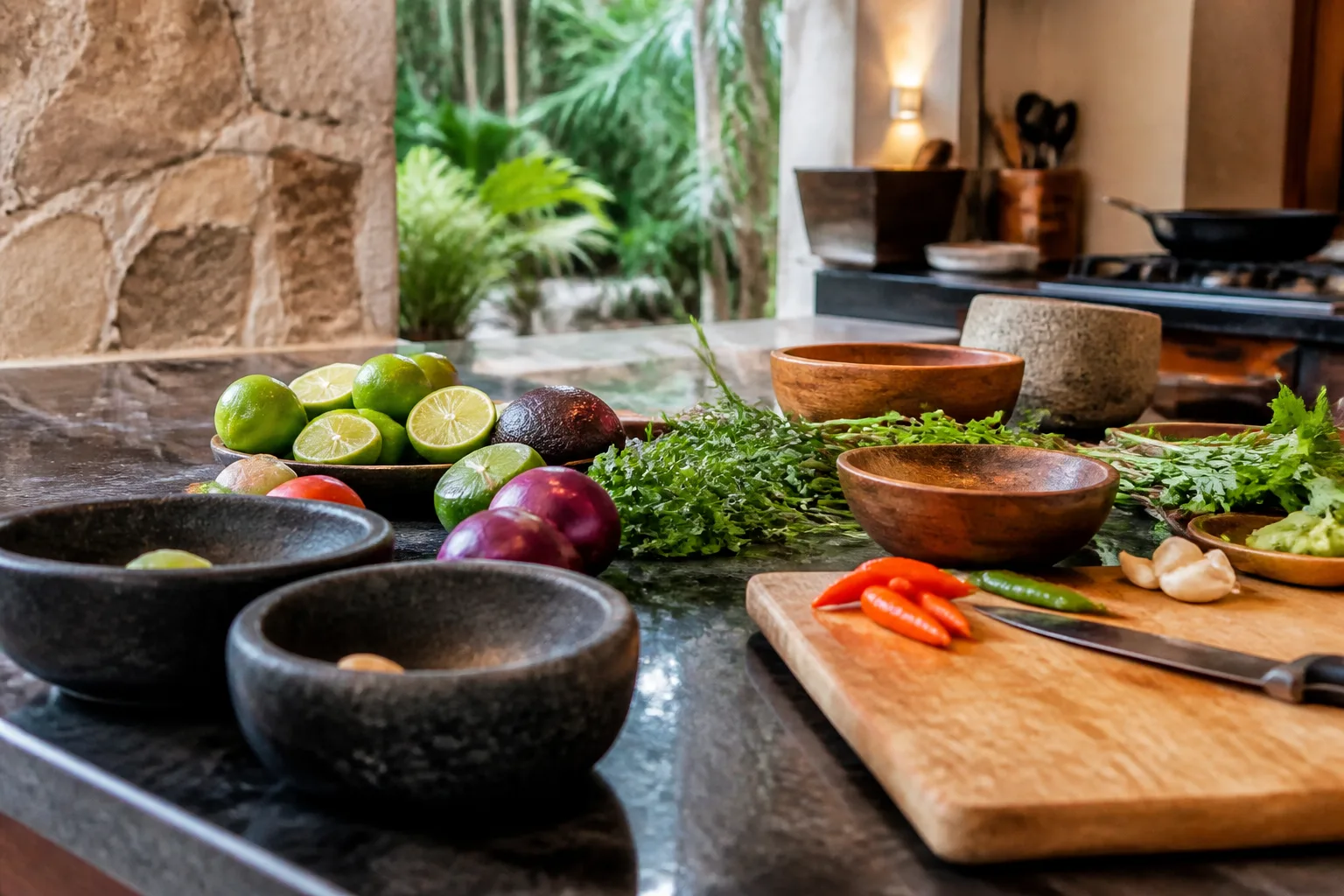
Menu flexibility can affect both price and preparation. Ginger Tulum states that its class depends on the selected menu, so travelers should settle those details before treating an initial description as final. Confirm substitutions, beverages, dessert, printed or digital recipes, and whether the quoted menu applies to every person in the group.
- Which dishes and sauces are included?
- Will every guest have hands-on tasks?
- Are ingredients, drinks, recipes, and the final meal included?
- Can the menu be adjusted for allergies or dietary preferences?
- Will instruction be available in your preferred language?
- How much of the scheduled time is cooking versus dining?
Cooking class or food tour?
A class suits travelers who want to practice techniques and spend several hours around one kitchen or table. A tasting route emphasizes movement and variety instead. If you would rather sample multiple stops, compare the market and neighborhood experiences covered in Best Tulum Food Tours. Travelers building a broader dining plan can also consult Where to Eat in Tulum for restaurant-focused ideas.
Understand prices without relying on a false average
Published pricing is too limited and inconsistent to support a reliable average for Tulum cooking classes. Ginger Tulum lists a minimum of US$200 per person, with the price dependent on the chosen menu. That figure is useful as evidence that a bespoke class can be a premium purchase, but it should not be treated as the standard price across the destination.
Compare the complete cost of the experience you are considering. Request the final price for your date, party size, and menu. Ask which currency will be charged, what taxes or service costs apply, and whether a deposit is refundable. The reviewed Rivera Kitchen page supplies duration and pickup information but no surfaced price, which reinforces the need to request a direct quote.

Tulum Ruins Guided Tour from Cancun and Riviera Maya
- Experience the ancient city of Tulum with our knowledgeable guides. - Enjoy our small group format and attention t...
All-Inclusive! Tulum Ruins, Tequila Tasting + Swim in 3 Cenotes in Small Group!
At Authentic Tours Tulum we believe in giving back to our community by utilizing locations, restaurants, and employe...
What creates value
Price alone reveals little about value. Consider the instructor-to-guest ratio, menu complexity, transportation, ingredient coverage, drinks, recipes, total duration, and how much cooking you will do. A shorter class with individual attention may suit one traveler better than a longer session built around demonstrations. Put each quote into the same checklist before comparing it.
Budget travelers should decide how much of the trip’s activity allowance one premium meal experience can use. The broader Tulum on a Budget Travel Guide can help frame that decision alongside other daily expenses. Avoid paying until the cancellation terms and all inclusions are available in writing.
Plan the meeting point and transportation
Location matters because “in Tulum” does not necessarily mean a storefront in the center. Rivera Kitchen describes a residential venue in a gated community and coordinates pickup from a meeting point in town. Travelers should confirm both the pickup location and the kitchen address, along with the procedure for entering the property.
Do not assume pickup begins at your hotel. Ask whether transportation is included, optional, or limited to a designated point. Record the vehicle description, driver contact, pickup time, grace period, and return location. If you are arranging your own ride, request a recognizable entrance and instructions for passing through any gate or reception area.
Staying near the beach
Travelers based by the coast should leave a schedule buffer rather than stacking the class tightly behind another reservation. A town pickup can be less convenient for guests staying along the beach hotel corridor. Use the Tulum Hotel Zone Guide to understand that area’s layout, then ask the class provider for realistic transfer guidance for your specific starting point.
Staying in town
A town-based meeting point may be simpler for guests already staying in Tulum Pueblo, but the exact location still matters. Ask for a map pin through your normal communication channel, a written landmark, and the name of the person meeting you. The Tulum Pueblo Travel Guide provides useful context for planning time in the town before or after the class.
Fit a three-to-four-hour class into your itinerary
At least one reviewed operator publishes a duration of three to four hours, but that should not be assumed for every class. Confirm when instruction begins, when the meal is served, and when return transportation is expected to finish. Add your own transfer time on both sides of the booking.
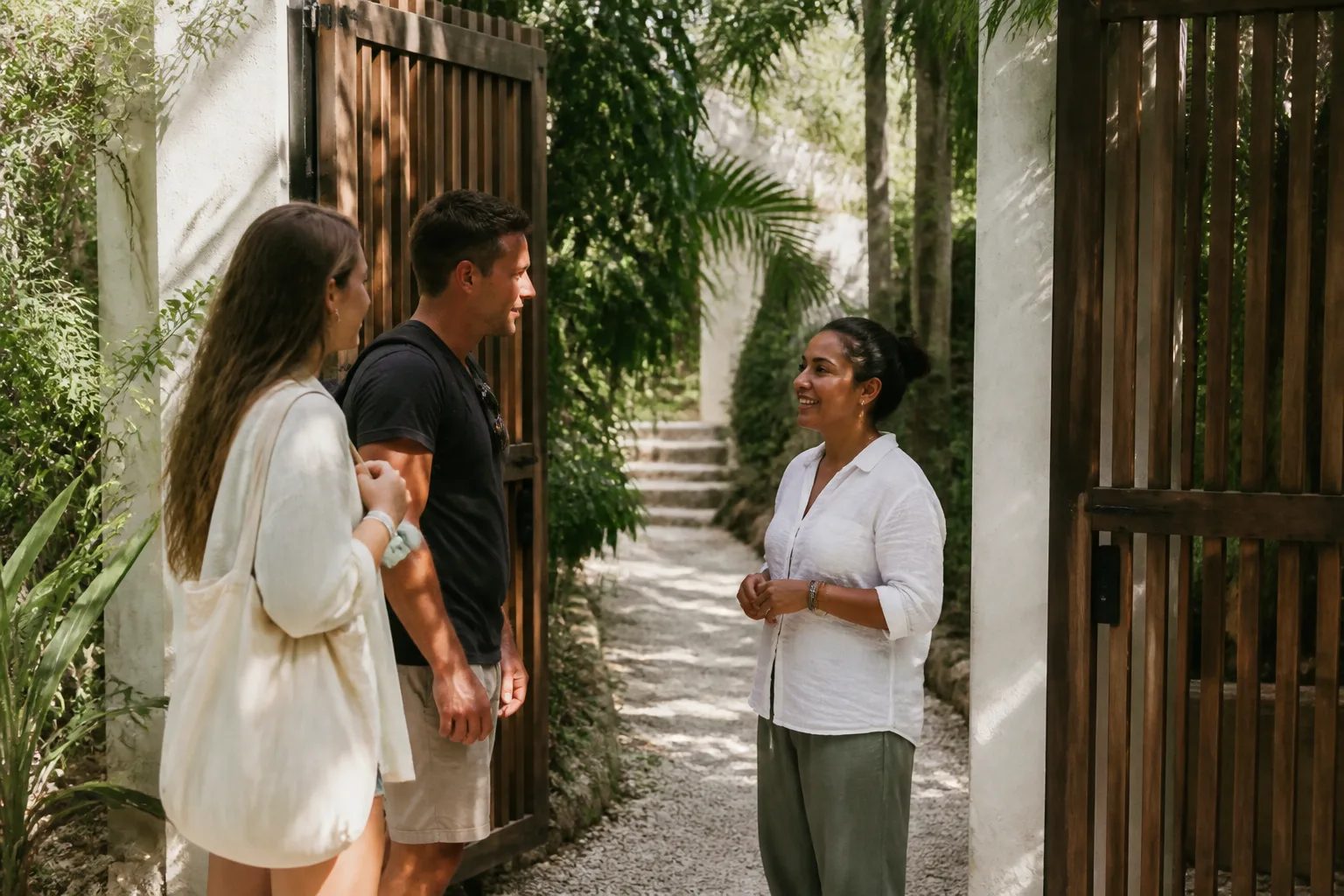
Avoid scheduling a class immediately after an excursion with an uncertain return. A delayed pickup can turn the opening lesson into a frantic search for the correct gate. A better plan gives you time to return to your accommodation, wash up, change clothes, and contact the operator if transportation details have shifted.
- Choose a date without a tightly timed activity immediately beforehand.
- Obtain the confirmed start time and estimated finish time.
- Calculate travel time to the meeting point rather than only to the kitchen.
- Add a buffer for finding the host, entering a gated property, and organizing the return.
- Keep the rest of the evening flexible until the operator confirms the complete schedule.
Still comparing Tulum Cooking Class?
Ask for tour ideas, hotel suggestions, or a simple trip plan that combines both.
Trip Helper
Discuss dietary needs before paying
Send dietary requirements in writing before booking. Name the specific allergy, intolerance, religious restriction, or preference rather than using a broad label alone. Ask which dishes can be modified and whether the adjustment changes the menu for the whole group. A willingness to substitute an ingredient does not automatically answer questions about shared surfaces, cookware, or utensils.
Travelers concerned about cross-contact should request a direct explanation of kitchen practices. The reviewed operator material does not establish dietary cross-contact procedures. Ask about shared cutting boards, knives, pans, oils, grills, storage containers, and preparation surfaces. If the answer is unclear, do not assume the kitchen can safely accommodate a serious allergy.
Plant-based travelers can compare the proposed class menu with the dining options discussed in Best Vegan Restaurants in Tulum. For the class itself, confirm details such as stocks, sauces, garnishes, cooking fats, and shared equipment. A vegetable-centered dish is not enough information for someone following a strict vegan diet.
Check accessibility in detail
Accessibility features were not established in the reviewed cooking-class listings. A residential venue may involve gates, entrance steps, narrow circulation areas, or transportation constraints, but none of these conditions should be assumed without confirmation. Contact the operator with a specific list of requirements and ask for clear answers about both the vehicle and the kitchen.
- Is the route from the vehicle to the kitchen step-free?
- Can the pickup vehicle carry a wheelchair or mobility device?
- Is there an accessible bathroom on the same level?
- Can a seated guest use a suitable table or workstation?
- Are counters, sinks, and cooking equipment reachable for the guest?
- Can a companion or support person attend, and how is that booking priced?
Also discuss fatigue, heat sensitivity, hearing, vision, and the need for rest breaks. Ask how long guests usually stand and whether seating remains available during preparation. A provider’s general assurance that a class is accessible is less useful than a description of doorways, surfaces, steps, bathroom access, workstation height, and vehicle capacity.
Use clear safety and communication habits
The U.S. State Department advisory issued May 29, 2026 places Mexico at Level 2, “Exercise Increased Caution.” Its Quintana Roo section includes Tulum and notes that shootings between rival gangs have injured and killed bystanders. This is destination-level guidance, not evidence that cooking classes are inherently unsafe or that any named operator has a poor safety record.
Use a named, prearranged meeting point and avoid poorly documented, last-minute arrangements. Save the operator’s name, phone number, booking confirmation, kitchen location, and transportation details. Share the plan with someone in your party or at home, especially when the venue is inside a residential property rather than an obvious commercial space.
The advisory suggests Quintana Roo’s Guest Assist app for emergency numbers, tourist information, legal advice, help reporting lost passports, and complaints about service providers. Check current government travel guidance again near departure because destination conditions and official recommendations can change.
What to wear and bring
Choose clothes that allow comfortable movement around a workstation. Closed-toe shoes are a sensible precaution around knives, hot cookware, and possible spills. Tie back long hair, avoid dangling sleeves, and leave delicate clothing or jewelry at your accommodation. If you need an apron, ask whether one is provided rather than assuming it is included.
- Booking confirmation and operator contact details
- Address, meeting-point instructions, and transportation plan
- Closed-toe shoes and practical clothing
- Any medication needed for a known allergy
- A reusable water bottle if the operator permits it
- A note listing dietary or accessibility requirements in the relevant language
Check the day’s forecast and ask whether any part of the session takes place outdoors. If you plan to continue elsewhere afterward, remember that cooking aromas have a remarkable talent for following you. A spare top can be useful before an evening reservation, particularly after a long session near a stove.
All-Inclusive! Tulum Ruins, Tequila Tasting + Swim in 3 Cenotes in Small Group!
At Authentic Tours Tulum we believe in giving back to our community by utilizing locations, restaurants, and employe...
Tulum Ruins Guided Tour from Cancun and Riviera Maya
- Experience the ancient city of Tulum with our knowledgeable guides. - Enjoy our small group format and attention t...
A booking checklist for Tulum cooking classes
The safest way to compare options is to send the same questions to each provider. Keep the replies with your booking confirmation. If a major detail remains vague, ask again before paying. Menus, prices, timing, and transportation arrangements can change, so current written answers matter more than an old description or screenshot.
- Request the current menu and a description of hands-on tasks.
- Confirm whether the class is private or shared, plus the maximum group size.
- Ask for the teaching language, exact start time, and estimated finish time.
- Obtain the complete price for your date, party, and selected menu.
- Confirm the meeting point, pickup coverage, kitchen address, and return arrangement.
- Disclose dietary restrictions and ask about cross-contact procedures.
- Verify steps, bathroom access, seating, workstation height, and adapted transport if needed.
- Read the cancellation, refund, late-arrival, and weather policies.
- Save the host’s contact information and share your itinerary with someone you trust.
How to make the final choice
Choose the provider that answers your practical questions clearly, not simply the one with the longest menu description. A strong fit will have a suitable location, manageable schedule, transparent final price, appealing dishes, clear participation level, and credible answers about dietary needs or accessibility.
For a short trip, place the class on a day with enough breathing room to enjoy the meal rather than watching the clock. The One Day in Tulum Itinerary can help travelers see how quickly major activities fill a schedule, although a three-to-four-hour cooking session may deserve most of an afternoon or evening by itself.
Tulum cooking classes reward careful comparison because the formats are genuinely different. Confirm the details that matter to you, keep transportation organized, and arrive ready to work. The most satisfying souvenir may be a technique you can repeat at home, ideally without recreating the vacation traffic on the way to your own kitchen.
Frequently asked questions
How long is a cooking class in Tulum?
Duration varies by operator. Rivera Kitchen Tulum publishes a duration of three to four hours, but that is not a destination-wide standard. Confirm the start time, cooking time, meal time, finish time, and transportation schedule for the specific class you are considering.
How much do Tulum cooking classes cost?
There is not enough comparable published pricing to state a reliable average. Ginger Tulum lists a minimum price of US$200 per person, dependent on the chosen menu, but this represents one premium, private-style option rather than the whole market. Request a current final quote for your date and group.
Are Tulum cooking classes private?
Some may be private or customized, while others may use a different arrangement. Ginger Tulum advertises a private-style, menu-dependent class. Ask whether your booking is exclusively for your party, whether other guests can join, and what maximum group size applies.
Do cooking classes include hotel pickup?
Do not assume hotel pickup is included. Rivera Kitchen Tulum describes pickup coordinated from a meeting point in town for its residential class. Confirm the exact pickup point, whether transportation costs extra, which areas are covered, and where you will be dropped off afterward.
Can Tulum cooking classes accommodate allergies or vegan diets?
Accommodation depends on the provider, menu, and kitchen practices. Send requirements before paying and request details about substitutions and cross-contact. The reviewed listings did not establish cross-contact procedures, so travelers with serious allergies should seek precise answers about shared equipment and preparation surfaces.
Are Tulum cooking classes wheelchair accessible?
Accessibility was not established in the reviewed operator material. Ask about step-free entry, accessible transportation, bathroom access, doorway clearance, seating, and workstation height. Residential venues and pickup vehicles require separate confirmation because accessibility in one part of the experience does not guarantee accessibility throughout it.
Is it safe to attend a cooking class in Tulum?
Current U.S. guidance places Mexico at Level 2 and includes destination-level cautions for Tulum and Quintana Roo. This does not indicate that cooking classes themselves are unsafe. Use a documented booking, a named meeting point, saved operator details, and current government travel advice.
All-Inclusive! Tulum Ruins, Tequila Tasting + Swim in 3 Cenotes in Small Group!
At Authentic Tours Tulum we believe in giving back to our community by utilizing locations, restaurants, and employees native to our area. Our guides...