Learn how to compare Tulum bike rentals, inspect a bicycle, choose sensible routes, ride to Jaguar Park and the ruins, and handle traffic, heat, locks, fees, and changing access rules.
A bicycle can make short journeys around Tulum feel refreshingly direct, but renting one requires more thought than choosing a color and pedaling toward the palms. Road conditions, traffic exposure, heat, equipment quality, parking, and changing attraction rules all affect the experience. This guide explains how to compare Tulum bike rentals, inspect the bicycle, plan a realistic route, and decide when another form of transportation makes more sense.
Tulum cycling essentials at a glance
- Ask for the complete rental price in Mexican pesos, including deposits, delivery, late returns, and any optional equipment.
- Confirm that a properly fitting helmet, reliable lock, lights, and roadside assistance are included or available before paying.
- Inspect the brakes, tires, chain, saddle, gears, frame, and lock, then record any existing damage with the operator.
- Favor the most separated route available, avoid riding after dark, and do not treat highway junctions as casual cycling territory.
- Start early when combining Jaguar Park with the archaeological zone, and verify current access hours and total charges before leaving.
- Choose a taxi, shuttle, or other transport if the route involves uncomfortable traffic, poor visibility, a highway crossing, or more heat than you can manage.
Cycling works best for travelers who are comfortable balancing, signaling, watching traffic, and pedaling in hot conditions. Official material confirms bicycle use on trails in Parque Nacional del Jaguar, but it does not document every surface, gradient, bike rack, child seat, adaptive cycle, or step-free connection. Treat each route as a separate decision rather than assuming that every attraction or district has continuous protected access.

Tulum Ruins Guided Tour from Cancun and Riviera Maya
- Experience the ancient city of Tulum with our knowledgeable guides. - Enjoy our small group format and attention to detail through the Mayan’s mos...

All-Inclusive! Tulum Ruins, Tequila Tasting + Swim in 3 Cenotes in Small Group!
At Authentic Tours Tulum we believe in giving back to our community by utilizing locations, restaurants, and employe...

Chichen Itza, Cenote, and Valladolid Tour
Explore Chichen Itza, an impressive Mayan archaeological complex. Visit a sacred sinkhole and enjoy a buffet meal...

Chichen Itza, Cenote & Valladolid Tour with Tequila and Lunch
Unlock the mysteries of the Mayans with this tour to Chichén Itzá, a magical cenote & Valladolid. Start this expe...
Is renting a bike in Tulum right for you?
A rental bike is most useful when your plans involve short daytime trips and you can adjust the day around traffic, weather, and energy levels. It also helps when your accommodation provides secure overnight storage. Before committing to a multi-day rental, trace each intended trip and identify the sections where you would need to mix with vehicles, cross a major road, or find a place to lock the bicycle.
Your base matters. The streets, destinations, and practical needs around town differ from those near the coast. A Tulum Pueblo travel guide can help you understand the town center before planning local errands by bicycle, while a Tulum Hotel Zone guide is more useful when your days revolve around coastal accommodations and businesses. Do not assume a route that looks short will feel equally easy once traffic, heat, and parking enter the picture.
When to choose another form of transportation
Skip the bicycle when you are uneasy in mixed traffic, cannot obtain working lights or a secure lock, plan to return after dark, or must travel through a major highway junction. A January 2026 safety intervention identified the Federal Highway 307 and Aldea Tulum junction as a location with a high incidence of crashes. That does not describe every road in Tulum, but it is a firm reason to treat highway-linked rides cautiously.
Families should check equipment before involving children. Current official material does not confirm the availability of child seats, trailers, small helmets, or family-sized bicycles. Ask operators directly, test every attachment, and reconsider the ride if the route includes fast traffic or uncertain crossings. The broader Tulum with kids guide can help families compare cycling with other ways to structure a day.
How to compare Tulum bike rentals
There is no verified official source in the supplied research for current rental rates, deposits, insurance, delivery charges, e-bike policies, or named operators. Prices quoted in old posts may no longer reflect what is charged. Request a written, all-in quote in pesos and compare the same rental period, equipment, assistance, and liability terms across operators before making a decision.

| Question to ask | Why it matters |
|---|---|
| What is the full price in pesos? | Clarifies taxes, delivery, equipment, and other additions before payment. |
| Is an ID or payment deposit held? | Shows what the operator retains and when it should be returned. |
| What equipment is included? | Confirms the lock, helmet, lights, basket, and repair items you will receive. |
| What happens after a puncture or breakdown? | Defines roadside assistance, replacement options, and contact procedures. |
| Who pays for damage or theft? | Reveals your potential liability and any exclusions. |
| What is the exact return deadline? | Prevents confusion about late fees and after-hours returns. |
| Where may the bicycle be stored overnight? | Helps you confirm that your accommodation has an acceptable secure location. |
Standard bicycle or e-bike?
A conventional bicycle is simpler to inspect and does not depend on a charged battery. An e-bike may reduce pedaling effort, but it adds questions about battery range, charging, water exposure, permitted routes, breakdown support, and theft liability. The supplied research does not establish current local e-bike policies or prices. Ask the operator where that specific model may be used and what happens if the battery or motor fails.
Tulum Ruins Guided Tour from Cancun and Riviera Maya
- Experience the ancient city of Tulum with our knowledgeable guides. - Enjoy our small group format and attention t...
All-Inclusive! Tulum Ruins, Tequila Tasting + Swim in 3 Cenotes in Small Group!
At Authentic Tours Tulum we believe in giving back to our community by utilizing locations, restaurants, and employe...
Delivery and hotel rentals
Convenient delivery can save time, but convenience should not replace inspection. Meet the operator in enough daylight to test the bicycle and ask who will collect it. Confirm the delivery location, pickup window, contact method, extra charges, and procedure if nobody arrives. Hotel-provided bicycles deserve the same brake, tire, lock, and fit checks as rentals from a dedicated shop.
Inspect the bicycle before you pay
Take a brief test ride where you can stop safely. The saddle should allow comfortable control when starting and stopping. Squeeze both brake levers, turn the handlebars, shift through the available gears, and listen for rubbing or grinding. Check that the wheels rotate without a pronounced wobble and that the tires appear properly inflated. If anything feels unreliable, ask for another bicycle rather than accepting a promise that it will improve on the road.
- Photograph or record existing scratches, dents, and damaged accessories with the operator present.
- Confirm that both brakes stop the bicycle predictably during a slow test.
- Check the tires for low pressure, cuts, embedded objects, or obvious wear.
- Test the lock and make sure you understand how it closes and opens.
- Fit the helmet so it sits level and does not slide across your forehead.
- Switch on the front and rear lights, even if you intend to return before sunset.
- Save the operator’s contact method and ask what to do after a breakdown or theft.
Get the agreement clear
Read the rental terms before handing over identification or authorizing a deposit. Check the stated condition of the bicycle, return deadline, damage rules, theft responsibility, assistance coverage, and any restrictions on where it may be ridden. Ask for clarification if the spoken explanation differs from the written terms. Keep your payment record and any condition photos until the rental is formally closed.
Planning a safer cycling route
Plan the outbound and return journeys before setting off. Select the most separated available option, minimize major junctions, and identify places where you can stop without blocking traffic. The research does not verify a continuous protected bicycle network connecting Tulum Pueblo, the hotel zone, beaches, and every attraction. A line on a navigation app should therefore be treated as a suggestion, not proof of a comfortable bicycle route.
Riders heading toward the coast should review a Tulum Beach Road guide for destination context, then assess current traffic and access conditions separately. If a section looks more intense than expected, stop in a safe place and change plans. Walking the bicycle briefly, turning around, or arranging a ride is better than continuing through a junction that exceeds your confidence.
Road habits that reduce risk
- Ride predictably and avoid abrupt turns.
- Use clear hand signals only when you can maintain control.
- Watch for opening doors, turning vehicles, uneven edges, and people entering the roadway.
- Keep enough space to brake without striking the rider ahead.
- Do not use headphones that block surrounding traffic sounds.
- Avoid riding after dark, especially near highways or major junctions.
- If the safest available route still feels unsafe, use another form of transportation.
Heat, hydration, and realistic pacing
Cycling in heat can turn an easy-looking outing into tiring work. Begin early when possible, carry drinking water, use sun protection, and schedule pauses away from moving traffic. Do not plan the day around your fastest possible pace. Leave enough energy for the return journey, especially if you will also spend hours walking through a park or archaeological site.
Still comparing Tulum Bike Rental And Cycling?
Ask for tour ideas, hotel suggestions, or a simple trip plan that combines both.
Trip Helper
Cycling in Jaguar Park
INAH states that Parque Nacional del Jaguar has trails visitors may use on foot, by bicycle, or in electric vehicles operating on a route. This confirms cycling as an option within the park, but it does not mean bicycles are allowed on every trail or throughout the archaeological zone. Follow posted instructions and staff directions at the access point. The Jaguar National Park Tulum guide offers broader context for planning time inside the park.

An INAH notice lists Jaguar Park hours as 8:00 a.m. to 7:00 p.m., with last access at 5:00 p.m. These hours are changeable and should be checked shortly before visiting. An early start gives you more flexibility if you also want to see the ruins, handle ticketing, locate approved bicycle areas, and adjust for heat or crowds.
Questions to ask at park access
- Which trails currently allow bicycles?
- Must rental bicycles be left at a designated area before entering the archaeological zone?
- Where is bicycle parking, and may you use your own lock?
- Are any paths temporarily closed or restricted?
- What are the current last-access and closing times?
- Which official ticket windows sell each required admission component?
Combining a bike ride with the Tulum ruins
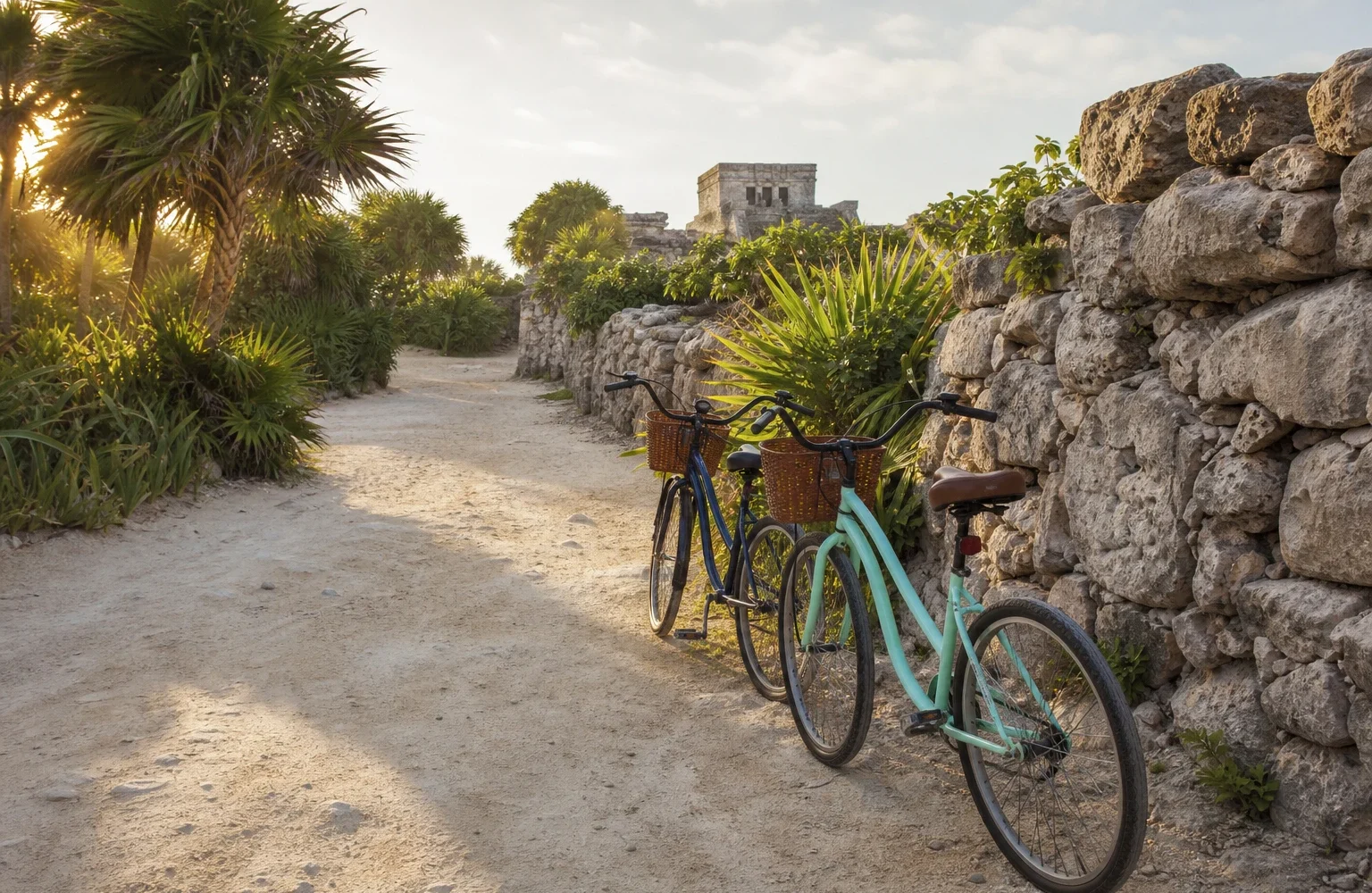
The official INAH listing gives the Tulum Archaeological Zone hours as 8:00 a.m. to 5:00 p.m., with last admission at 3:30 p.m. Because the archaeological zone closes earlier than the wider park schedule, plan around the ruins first. Reconfirm the times on the day, since schedules and access arrangements can change. A Tulum Ruins guide for first timers can help you organize the visit itself.
INAH lists a MX$210 general visitor charge for the archaeological zone, but it warns that charges imposed by other entities are not included. The total cost may therefore involve more than one component. Verify the current total at the official ticket windows rather than treating the INAH amount as the complete price of a park-and-ruins visit.
INAH specifically advises visitors to purchase entry directly from official INAH, GAFSACOMM, and CONANP ticket offices to avoid fraud or resale schemes. Cyclists should allow time to find the correct official sales point and ask where the bicycle must be secured before entering controlled areas. Do not leave valuables on the bicycle, even when it is locked.
The Sunday admission trade-off
INAH says archaeological-zone admission is free on Sundays for Mexican nationals and foreign residents in Mexico. This is not a general free-entry offer for international visitors, and GAFSACOMM and CONANP charges still apply. The offer may also attract more eligible visitors, so cyclists who prefer a less complicated arrival may want to compare Sunday with another morning. Always verify current eligibility and charges at official ticket offices.
Locking, parking, and theft responsibility
Ask the rental operator to demonstrate the lock and explain what the agreement requires. When a designated rack is available, secure the bicycle according to local instructions and take removable belongings with you. Avoid attaching the bicycle where it blocks a walkway, entrance, vehicle space, or emergency access. Because the supplied official material does not confirm bicycle-parking locations at each attraction, verify parking arrangements on arrival.
Before leaving the shop, understand the financial consequences of theft. Ask whether the lock must be returned, whether a police report is required, how liability is calculated, and whether any protection has exclusions. Do not assume the word “insurance” removes all responsibility. Current local coverage terms were not verified in the research and can differ by operator.
All-Inclusive! Tulum Ruins, Tequila Tasting + Swim in 3 Cenotes in Small Group!
At Authentic Tours Tulum we believe in giving back to our community by utilizing locations, restaurants, and employe...
Tulum Ruins Guided Tour from Cancun and Riviera Maya
- Experience the ancient city of Tulum with our knowledgeable guides. - Enjoy our small group format and attention t...
What to carry on a Tulum bike ride
- A properly fitted helmet and the rental’s working lock
- Front and rear lights, plus reflective details if available
- Drinking water and sun protection
- A charged phone stored securely, with the operator’s contact details saved
- A payment method and only the identification needed for the day
- Any basic repair item supplied by the operator, provided you know how to use it
- A lightweight layer or bag suitable for changing conditions, without loose straps near the wheels
Keep the load compact and balanced. A swinging tote or loose towel can interfere with steering or wheels. If the bicycle has a basket, check its attachment and weight limit with the operator rather than overloading it. Carry valuables when you park, and protect electronics from water and impacts.

A simple plan for rental day
- Confirm the route, current attraction access, official hours, weather, and a backup transportation option.
- Collect the bicycle in daylight and complete a slow test ride.
- Record existing damage and confirm the price, deposit, assistance, liability, and return deadline.
- Ride the least exposed practical route and reassess conditions at major junctions.
- Lock the bicycle only in an appropriate location and remove valuables.
- Begin the return trip with spare time before darkness or the rental deadline.
- Complete the handover with the operator and retain records until any deposit is released.
The best cycling day is flexible. A bicycle can be an enjoyable tool for exploring, but it should not become a promise you feel compelled to keep when traffic, equipment, access rules, or heat change the calculation. Inspect carefully, start early, use official ticket offices, and switch transportation when the route stops matching your ability or comfort.
Frequently asked questions
How much does it cost to rent a bike in Tulum?
No current official rental-rate source was verified in the supplied research, so a dependable daily price cannot be stated. Ask each operator for the complete price in Mexican pesos, including taxes, delivery, deposits, equipment, late returns, roadside support, and damage or theft liability.
Can you ride a bicycle in Jaguar Park?
INAH says Jaguar Park has trails that visitors may use on foot, by bicycle, or in electric vehicles operating on a route. This does not establish that bicycles are allowed on every path or inside all controlled areas. Follow current signs and staff instructions.
Can you ride a bicycle inside the Tulum archaeological zone?
The evidence confirms bicycle use on trails in Jaguar Park, not blanket permission to cycle throughout the archaeological zone. Ask staff where bicycles must be parked before entering and follow posted access rules.
What time should I cycle to the Tulum ruins?
An early start is practical. INAH lists the archaeological zone as open from 8:00 a.m. to 5:00 p.m., with last admission at 3:30 p.m., while a notice lists Jaguar Park from 8:00 a.m. to 7:00 p.m., with last access at 5:00 p.m. Reconfirm both schedules before visiting.
Is it safe to cycle everywhere in Tulum?
Do not assume every district and attraction is connected by a continuous protected route. Quintana Roo’s mobility authority identified the Highway 307 and Aldea Tulum junction as a location with a high incidence of crashes. Favor separated routes, avoid riding after dark, and use other transportation for highway-linked sections that exceed your comfort.
Do Tulum bike rentals include helmets and locks?
Availability was not verified across local operators. Confirm the exact helmet, lock, lights, repair equipment, and assistance included before paying. Test every item and request a replacement if it does not work or fit properly.
Is Sunday free at the Tulum ruins?
INAH says archaeological-zone admission is free on Sundays for Mexican nationals and foreign residents in Mexico. It is not a general offer for international visitors, and separate GAFSACOMM and CONANP charges still apply. Verify eligibility and the current total at official ticket offices.
Is cycling in Tulum suitable for travelers with limited mobility?
Official information does not provide enough detail to certify trail surfaces, gradients, adaptive-cycle access, step-free connections, or accessible rental equipment. Cycling is best treated as an option for travelers comfortable balancing, pedaling in heat, and handling variable road environments. Ask operators and attractions about specific needs before booking.
All-Inclusive! Tulum Ruins, Tequila Tasting + Swim in 3 Cenotes in Small Group!
At Authentic Tours Tulum we believe in giving back to our community by utilizing locations, restaurants, and employees native to our area. Our guides...
Tulum Ruins Guided Tour from Cancun and Riviera Maya
- Experience the ancient city of Tulum with our knowledgeable guides. - Enjoy our small group format and attention t...

Early morning Chichen Itza Tour: Cenote and Tequila Tasting
Embark on an exclusive journey with us to uncover the marvels of Chichen Itza, a remarkable Mayan archaeological com...

Chichen Itza, Cenote and Valladolid Small Group Day Trip
Recently selected as one of the New World Wonders, Chichen Itza is without a doubt one of the most spectacular and i...