Plan a Tulum beach vacation with practical guidance on public access, seasonal sargassum, beach safety, transportation, lodging areas, archaeological-zone fees, and what to confirm before your trip.
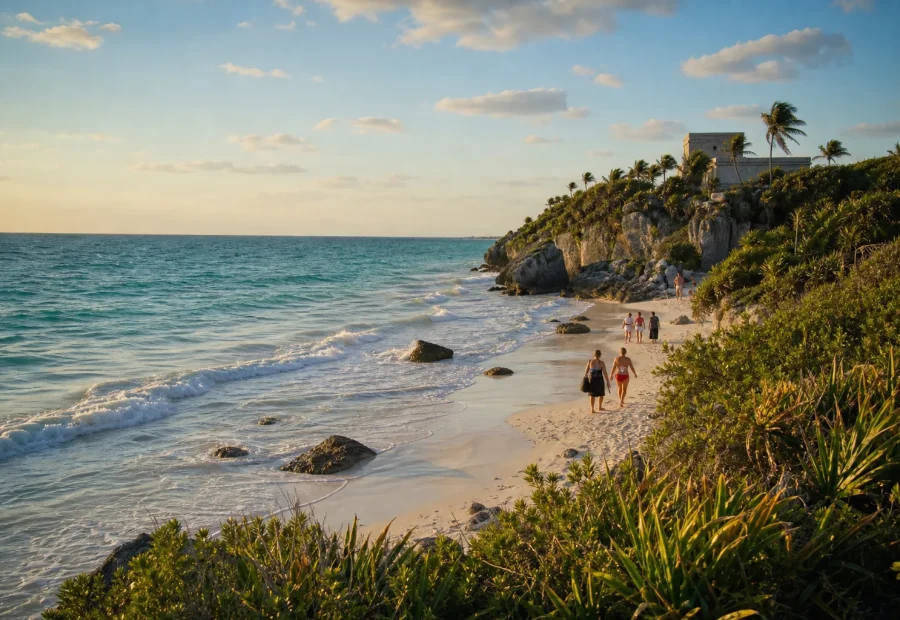
A Tulum beach vacation pairs Caribbean water and pale sand with practical decisions about access, transportation, seaweed and where to stay. The coast is open to all through designated public access points, but reaching the sand does not make every nearby service or attraction free. A flexible daily plan works best, especially during the months when sargassum is more likely to arrive.
Use this guide to build a beach trip around current conditions rather than postcard promises. Check the sea that morning, follow beach flags, keep a backup activity ready and confirm any mobility requirement before paying a deposit. Those small steps can turn an uncertain beach day into an easy change of plans.
- Tulum has 10 public beach-access points, and access to the coast through them is free for national and international visitors.
- Sargassum is more likely between April and August, but conditions can differ by beach and by day.
- Beach access, Parque del Jaguar entry and Tulum Archaeological Zone admission are separate arrangements.
- Obey posted signs and beach flags, and avoid prolonged direct contact with accumulated sargassum.
- Confirm transfers, parking, accessibility and attraction rules shortly before traveling because current details can change.
Choose the right base for your beach vacation
Start by deciding how often you want to be beside the water. A beachfront or beach-road stay can simplify sunrise walks and spontaneous swims. A stay farther inland may suit travelers who want to divide their time among restaurants, cenotes, ruins and the coast. Compare the total routine, not only the room: daily transport, meal choices, luggage handling and the effort required to reach a public entrance all matter.
The Tulum Hotel Zone guide can help you understand the lodging area along the coast, while the Tulum Pueblo travel guide explains the inland town base. If you are still comparing both, the guide to where to stay in Tulum for first-time visitors offers a broader decision framework. Ask each property exactly how guests reach the beach and whether access depends on a separate business or service.
Questions to ask before booking accommodation
- Is the property directly on the beach, or does it use a separate access point?
- If beach access is off-site, how do guests get there?
- Are loungers, towels, meals or parking separate purchases?
- What is the cancellation policy if travel plans change?
- Can the property provide written accessibility details for rooms and the route to the sand?
- How does the property communicate daily seaweed or swimming conditions?
Understand public beach access and separate admission fees
A federal tourism announcement dated July 17, 2026, identifies 10 public beach-access points in Tulum and says coastal access is free for national and international visitors. This is the clearest starting point for beach planning. Free entry to the coast does not automatically include parking, transportation, food, chairs, shade or services operated nearby.
Keep Parque del Jaguar and the Tulum Archaeological Zone separate in your budget. The July 2026 announcements describe free entry to Parque del Jaguar, but the federal and state wording differs on who qualifies. Reconfirm the rule before visiting. The archaeological zone has its own admission: MX$80 for Mexican nationals, with free Sunday admission for Mexican nationals, and MX$265 for international visitors under the announced arrangement.
| Place or service | Announced arrangement | Planning note |
|---|---|---|
| Tulum public beach access | Free through 10 public access points | Nearby commercial services may cost extra. |
| Parque del Jaguar | Announced as free, but official wording differs on eligibility | Reconfirm the current rule before arrival. |
| Tulum Archaeological Zone | MX$80 for Mexican nationals and MX$265 for international visitors | Mexican nationals receive free Sunday admission under the announcement. |
| Electric park transport | Announced at MX$20 | Treat this as park-area mobility, not a citywide transit fare. |
Prices and access policies are volatile, so check them again shortly before your visit. Bring a payment method accepted by the attraction and enough time to understand where each line or checkpoint leads. The Jaguar National Park Tulum guide and the Tulum ruins guide for first timers provide useful context for planning a combined coast-and-archaeology day without treating the park, ruins and beach as one ticketed site.

All-Inclusive! Tulum Ruins, Tequila Tasting + Swim in 3 Cenotes in Small Group!
At Authentic Tours Tulum we believe in giving back to our community by utilizing locations, restaurants, and employe...

Tulum Ruins Guided Tour from Cancun and Riviera Maya
- Experience the ancient city of Tulum with our knowledgeable guides. - Enjoy our small group format and attention t...

Private Guided Cenotes and Underground River Exploration
Explore an underground river system and 2 cenotes at the same location. All the photos listed here you will see in p...
Plan around sargassum without letting it control the trip
Tulum's municipal tourism guidance identifies April through August as the period when sargassum is more likely along the Mexican Caribbean. That does not mean every beach will be covered throughout those months. Wind, currents and cleanup activity can produce different conditions along the same coastline, so a single old photograph or review is not a dependable forecast for your swimming day.

Mexico's Navy reported that the atypical 2025 arrival led to a permanent response strategy for 2026 across Quintana Roo, including Tulum. Collection, readiness and deployment efforts support active mitigation, but they do not guarantee clear sand or water at a particular location. Check current municipal or official local reports shortly before heading out, then ask your accommodation for a same-day observation.
A flexible plan for a seaweed day
- Check current beach conditions before leaving your accommodation.
- Choose a public access point based on the latest local information, not an old social media post.
- Look at the water and posted flags before swimming.
- If conditions are unpleasant, switch to ruins, a museum, a cenote or a meal in town.
- Check again later because beach conditions can change.
A backup does not need to feel like a consolation prize. The best cenotes near Tulum can help you compare inland swimming options, while the SFER IK Museum Tulum guide introduces a cultural alternative. Cenotes and museums have their own admission, reservation, safety and transportation considerations, so verify those details directly before setting out.
Swim safely and read the beach before entering
The most important safety information is often already in front of you. Follow posted signs and beach flags, and do not assume calm-looking water is automatically suitable for swimming. Municipal visitor guidance also recommends using qualified tourism and transportation providers. If you rent equipment or a vehicle, use a certified agency and confirm that insurance is included.
Avoid prolonged direct contact with accumulated sargassum because it can cause skin reactions in some people. Do not let children play in large piles, and wash exposed skin if irritation develops. Municipal guidance also states that pets are prohibited on Tulum beaches, so arrange appropriate care rather than arriving with an animal and expecting an exception.
Quintana Roo health authorities reported in April 2025 that monitored public beaches, including Tulum locations, were suitable for recreational use at that time. That result is historical and should not be read as clearance for July 2026 or a future trip. Consult the latest official water-quality notices and heed any restriction posted at the beach.
Build a realistic daily beach routine
Make the first beach decision before breakfast. Review current conditions, identify your access point and decide how you will return. An early start can leave room to change plans if the water, flags or seaweed do not match your expectations. Pack for a self-contained outing rather than assuming every entrance has the facilities you need.
What to carry to the beach
- Drinking water in a reusable bottle
- Sun protection and a lightweight cover-up
- A towel and dry bag for electronics
- Footwear suitable for warm sand and approach paths
- Any personal medication you may need
- A small bag for carrying your waste away
Leave valuables at your accommodation when possible and keep essential items with you. Do not block access routes or cross barriers to create a shortcut. If you plan to use a beach club, compare its current reservation rules and what a booking includes. The Tulum beach clubs guide can help frame that decision, but confirm terms directly because commercial policies can change.
Still comparing Tulum Beach Vacation Planning?
Ask for tour ideas, hotel suggestions, or a simple trip plan that combines both.
Trip Helper
Get around the coast with fewer surprises
Transportation deserves its own plan. The available official evidence does not verify current airport-transfer routes, schedules, fares, pickup points or accessibility. Avoid building a tight arrival-day itinerary around unconfirmed information. The Tulum Airport to Hotel Zone transportation guide covers the subject in more detail, but you should still verify current arrangements with the airport, your hotel or the operator before departure.

Within Parque del Jaguar, a July 17, 2026 state announcement reports an electric transportation price of MX$20. Federal information also describes electric mobility in the park and a planned south-access parking facility. This evidence applies to park-area movement. It does not prove that Tulum has a comprehensive public transportation network or that every planned parking improvement is complete.
For ordinary beach days, ask where a driver can legally drop off and collect passengers, how you will contact them for the return, and what happens if mobile service is unreliable. Drivers and rental agencies should be qualified, and rented vehicles should come through certified agencies with insurance. The Tulum Beach Road guide provides additional orientation for the coastal corridor.
Treat accessibility as a detail to verify in writing
The available official materials mention electric mobility in Parque del Jaguar and a parking project intended to reduce walking distances. They do not provide verified specifications for wheelchair-accessible beach entrances, vehicle lifts, boardwalk slopes, accessible restrooms or accommodations inside the archaeological area. A shorter route is not automatically an accessible route.
Travelers with mobility needs should request written confirmation from their hotel, transportation provider and each attraction before booking. Ask about the complete route, including thresholds, sand, steps, restroom access and transfer assistance. Describe the mobility device and its dimensions when relevant. If an answer is vague, request photographs without relying on them as a substitute for measurements or formal specifications.
Create a beach budget with room for changing plans
Begin with the expenses that remain even when beach access is free: accommodation, local transportation, meals, drinking water and any equipment or shade you choose to rent. Add attraction admission only for the days you plan to visit. Keep a separate amount for a backup activity if sargassum or beach flags change the day.
Do not treat a public beach entrance as proof of free parking, furniture or food. Likewise, do not assume archaeological admission includes every park-area service. Verify prices close to your visit because the official arrangements announced in July 2026 are recent and may be revised. Travelers watching expenses can also use the Tulum on a budget travel guide to organize broader trip costs.
A simple three-day beach-centered plan
Day 1: Learn the coast
Start with a public access point after checking current conditions. Keep the first session unhurried and learn how long your route takes in practice. After the beach, explore your lodging area and confirm transportation for the next morning. This first day is also a good time to ask staff how they share beach-flag and sargassum updates.

Day 2: Pair the ruins with the shore
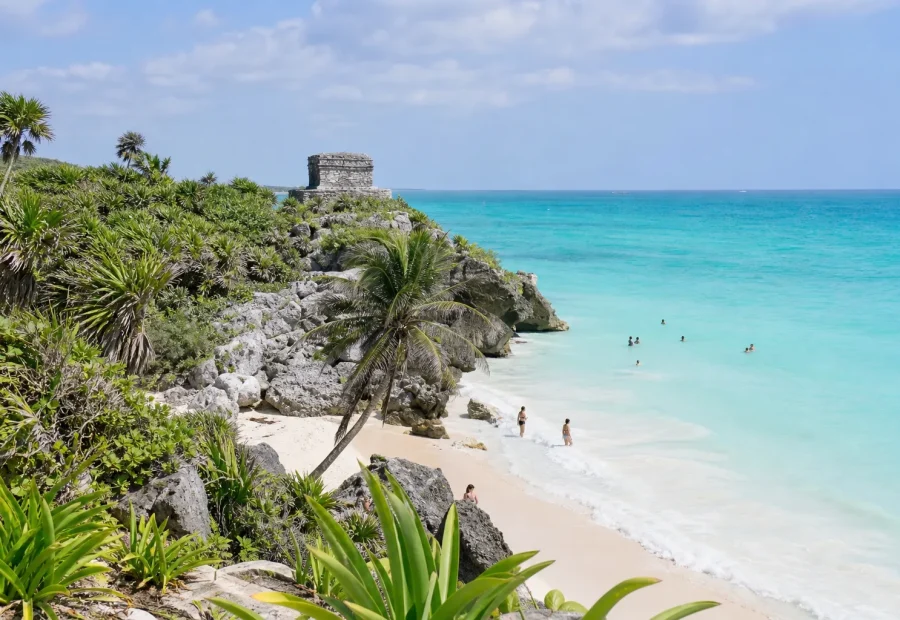
Plan a visit to Parque del Jaguar and the Tulum Archaeological Zone, checking current entry rules, admission and transport arrangements first. Playa Ruinas Tulum is the relevant planning subject if you hope to understand the beach beneath the archaeological setting, but never assume beach conditions or access are guaranteed on the day. Follow barriers, signs and staff instructions.
Tulum Ruins Guided Tour from Cancun and Riviera Maya
- Experience the ancient city of Tulum with our knowledgeable guides. - Enjoy our small group format and attention t...
Private Guided Cenotes and Underground River Exploration
Explore an underground river system and 2 cenotes at the same location. All the photos listed here you will see in p...
All-Inclusive! Tulum Ruins, Tequila Tasting + Swim in 3 Cenotes in Small Group!
At Authentic Tours Tulum we believe in giving back to our community by utilizing locations, restaurants, and employe...
Day 3: Follow the best current conditions
Leave the final day flexible. Return to the beach if current reports and flags are favorable. If seaweed, water notices or weather make the coast less appealing, choose an inland activity and save swimming for another time. Flexibility is especially valuable during the April-to-August sargassum window.
Final checks before you leave
Reconfirm accommodation access, transfers, attraction prices and any reservation. Save contact details for your hotel and transportation provider. Check current sargassum reports, official water notices and the beach flags when you arrive. Travelers with mobility needs should have written answers about every stage of the route rather than a general promise that a property is accessible.
Tulum rewards a plan that leaves breathing room. Free public access opens the coast to everyone, while changing sea conditions encourage curiosity beyond a single stretch of sand. Verify the volatile details, respect local rules and let each morning's conditions shape the day.
Frequently asked questions
Are Tulum's beaches free to access?
A federal tourism announcement dated July 17, 2026, says Tulum has 10 public beach-access points and that coastal access through them is free for national and international visitors. Parking, transportation, chairs, food and other commercial services may still cost extra.
When is sargassum most likely in Tulum?
Municipal tourism guidance identifies April through August as the period when sargassum is more likely. This does not mean every beach is covered every day. Check current local reports shortly before swimming.
Is Parque del Jaguar free?
July 2026 announcements describe free entry, but federal and state wording differs on who qualifies. Reconfirm the current rule before visiting. Do not confuse park entry with admission to the Tulum Archaeological Zone, which has a separate charge.
How much does the Tulum Archaeological Zone cost?
Under the July 2026 announcement, admission is MX$80 for Mexican nationals and MX$265 for international visitors. Mexican nationals receive free admission on Sundays. Prices are volatile, so verify them shortly before your visit.
Can I bring a dog to a Tulum beach?
Municipal visitor guidance states that pets are prohibited on Tulum beaches. Arrange suitable care rather than assuming an individual access point will make an exception.
Are Tulum beaches wheelchair accessible?
The retrieved official materials do not verify accessible beach entrances, boardwalk slopes, accessible vehicles, restrooms or archaeological-site accommodations. Travelers should obtain written confirmation from their hotel, transportation provider and each attraction before booking.
Are Tulum beaches safe for swimming?
Conditions can change. Follow posted signs and beach flags, check the latest official water-quality notices and avoid entering when restrictions are displayed. A favorable April 2025 monitoring report is historical and is not current clearance for a later visit.
Should I book an airport transfer before visiting Tulum?
Advance planning may reduce arrival-day uncertainty, but the available evidence does not verify current airport routes, schedules, fares, pickup rules or accessibility. Confirm all arrangements directly with the airport, hotel or transportation operator before departure.

Tulum Ruins, Cenote Cave, and Turtle Swimming Tour
A guided tour of the Tulum Mayan ruins, swimming with sea turtles in Akumal and a jungle oasis cenote swim in the Riviera Maya plus round-trip transpo...