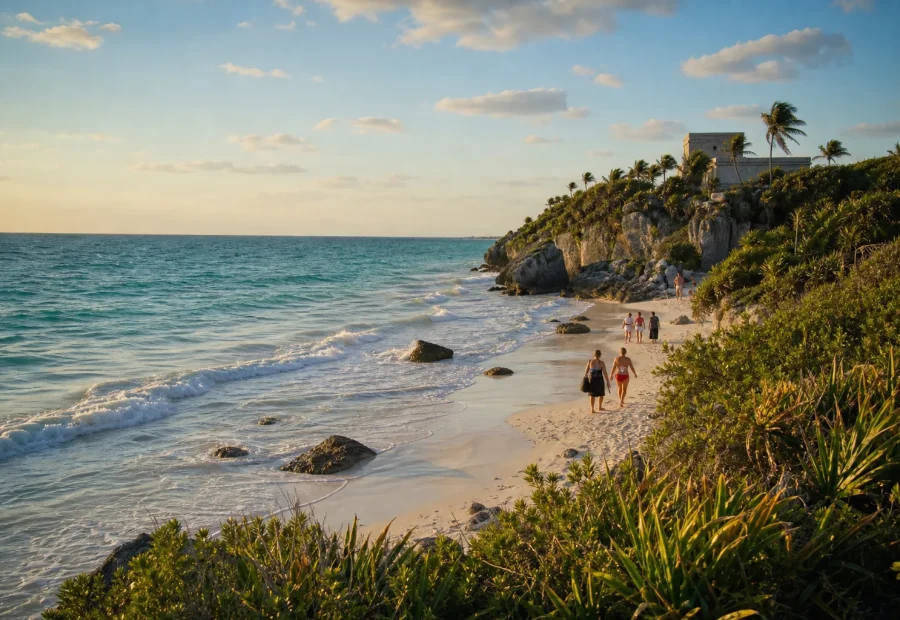
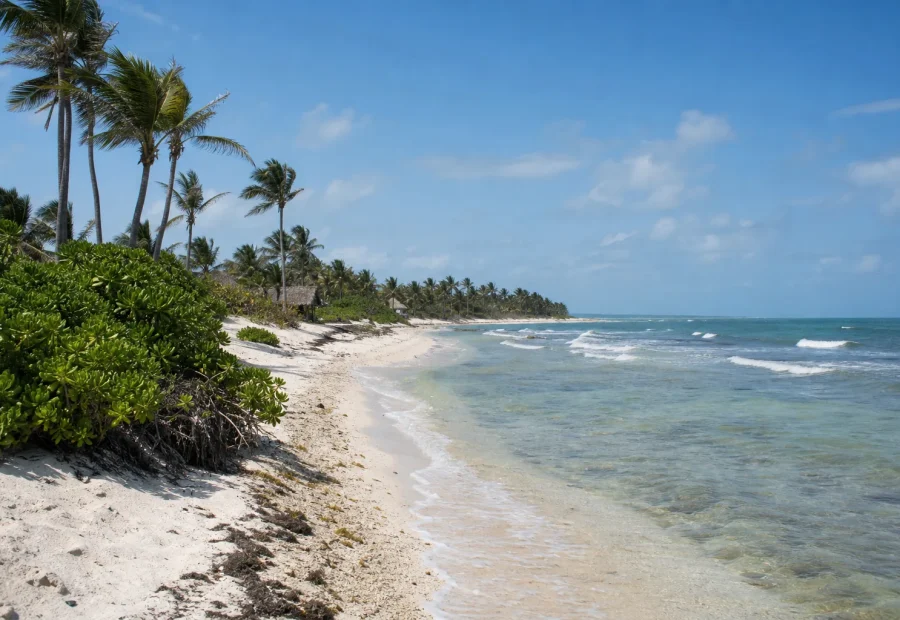
Compare Tulum’s national park beaches, free public access points, hotel-zone options, sargassum season, fees, rules, accessibility, and practical beach-day planning.
The best beaches in Tulum depend less on a single ranking than on the day you want. The protected national park shoreline suits travelers drawn to the celebrated ruins-and-beach setting. Public entrances in Parque del Jaguar and the hotel zone can help travelers reach the coast without treating a beach club as the only doorway. Conditions, access procedures, and possible facility charges can change, so confirm the details shortly before setting out.
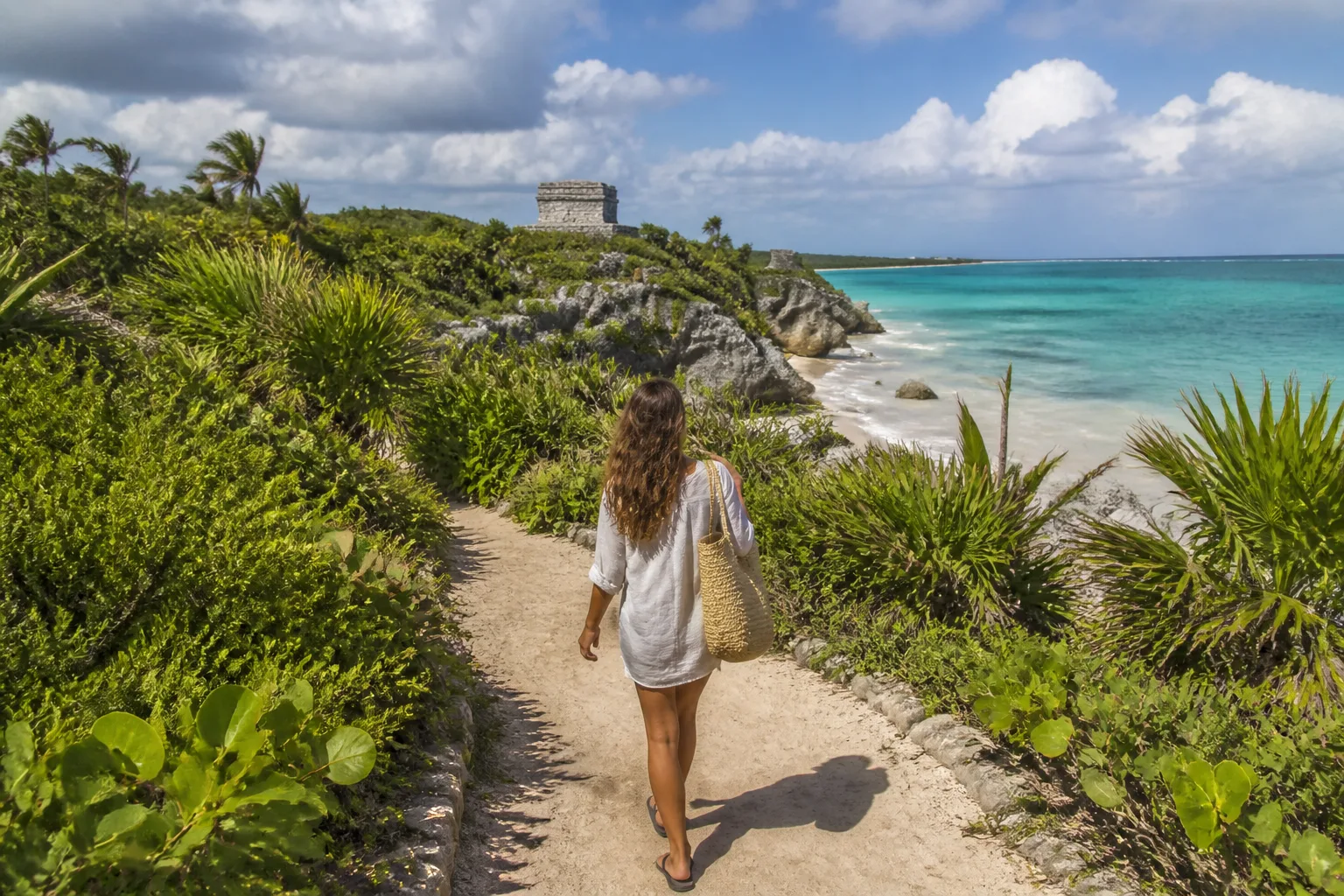
Santa Fe, Pescadores, Maya, and Mezzanine are among the named beaches along the national park shoreline. Conchitas and El Pueblo are identified public access points in the hotel zone. The right choice may shift with sargassum, posted rules, the entrance you use, and your willingness to pay for any protected-area or archaeological facilities connected with the outing.

Tulum Ruins Guided Tour from Cancun and Riviera Maya
- Experience the ancient city of Tulum with our knowledgeable guides. - Enjoy our small group format and attention to detail through the Mayan’s mos...
- Choose the national park shoreline for the classic combination of conservation landscape, named beaches, and proximity to Tulum’s archaeological setting.
- Look for designated public entrances rather than assuming a hotel or beach club purchase is required.
- Check same-day sargassum conditions, especially during the April through August season.
- Carry money for possible park or protected-area charges, even when the beach access route itself is described as free.
- Follow beach flags, signs, established paths, closing rules, and the prohibition on pets.
This guide does not quote an entrance price because the available official evidence does not provide a reliable current amount. It also does not assume that every late-2025 access arrangement is operating in exactly the same way in July 2026. Treat the named entrances as a practical shortlist, then verify the gate, access procedure, and any charge before travel.
Choose the right Tulum beach for your day
Start with priorities rather than searching for one beach that wins every category. The national park coast is the strongest match for conservation rules and the ruins-and-beach setting. Conchitas and El Pueblo offer publicly identified approaches within the hotel zone. Travelers mainly interested in loungers, food, and organized hospitality can separately compare the Tulum Beach Clubs Guide, since commercial venues and public beach access solve different planning needs.
- For the archaeological setting, begin by investigating the Parque Nacional Tulum shoreline and current access through Parque del Jaguar.
- For a hotel-zone beach day without making a beach club the default, verify Conchitas at kilometer 4.5 or El Pueblo at kilometer 5.5.
- For the best chance of avoiding a heavy sargassum patch, compare recent conditions at several beaches on the morning of your visit.
- For a conservation-focused outing, accept that paths, signs, guards, access limits, and possible charges are part of the experience.
- For an accessible visit, confirm equipment and route conditions directly before relying on the older inclusive-beach installation.
Tulum beach comparison at a glance
| Beach or area | Best fit | Access or planning note |
|---|---|---|
| Santa Fe | A named national park beach | Use established paths and confirm current park entry arrangements. |
| Pescadores | A named national park beach | Check recent sargassum conditions before committing to the day. |
| Maya | A named national park beach | Protected-area rules and possible access charges may apply. |
| Mezzanine | A named national park beach | Beach access within the protected area is limited to the official access period. |
| Conchitas | Public hotel-zone access | Officially identified at kilometer 4.5 in late 2025; verify current signs and entry conditions. |
| El Pueblo | Public hotel-zone access | Officially identified at kilometer 5.5 in late 2025; verify the exact entrance locally. |
| Playa Aventuras del DIF | A certified recreational beach option | Certification is documented, but current services and access arrangements require confirmation. |
The table is a decision tool, not a quality ranking. Municipal cleanup activity at several named beaches does not guarantee clear water, while a sustainability certification does not establish today’s facilities, access, or swimming conditions. Recent local observations should carry more weight than an old photograph or a broad seasonal assumption.
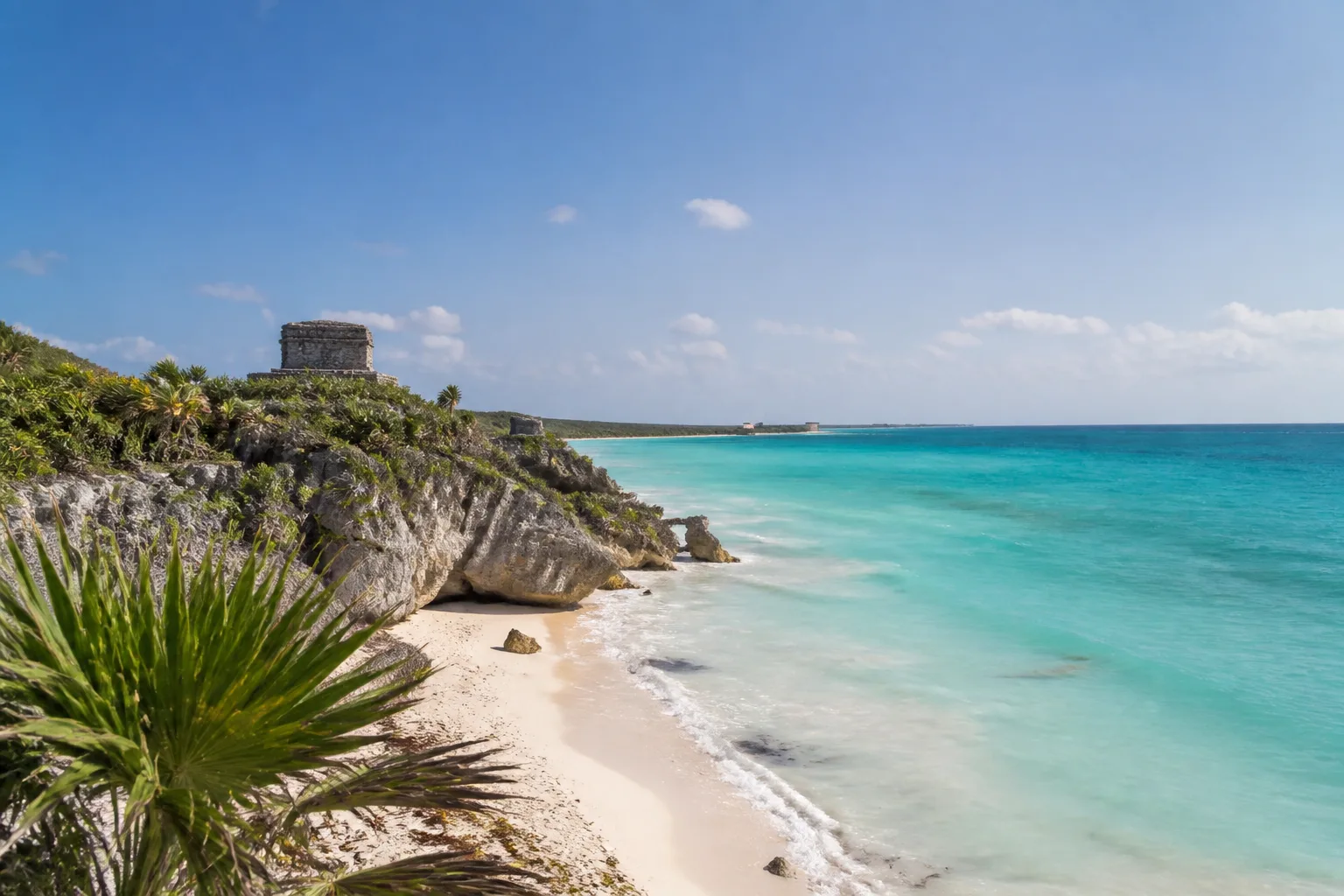
Santa Fe, Pescadores, Maya, and Mezzanine in the national park
Tulum’s municipal tourism authority names Santa Fe, Pescadores, Maya, and Mezzanine among the park beaches receiving sargassum-removal work. Together, they form the most useful official shortlist for travelers seeking the national park shoreline. Cleanup is helpful, but it is not a promise that the sand or water will be free of algae when you arrive.

Tulum Instagram Photo Experience
Discover the most Instagrammable spots in Tulum carefully selected for this unique experience. Elevate your Instagr...

All-Inclusive! Tulum Ruins, Tequila Tasting + Swim in 3 Cenotes in Small Group!
At Authentic Tours Tulum we believe in giving back to our community by utilizing locations, restaurants, and employe...
Tulum Ruins Guided Tour from Cancun and Riviera Maya
- Experience the ancient city of Tulum with our knowledgeable guides. - Enjoy our small group format and attention t...
Why choose the protected shoreline
This section of the coast is the logical choice when the setting matters as much as convenience. Official visitor rules emphasize conservation: stay on established paths, respect guards and signs, and keep pets out. The Jaguar National Park Tulum Guide can help readers understand the wider protected-area visit before combining it with time on the beach.
CONANP states that beach access in the protected area is available only until 19:00. It also says visitors must pay an access charge, although the evidence supplied for this guide does not state the current amount. Arrive with enough flexibility to handle a gate check, follow posted directions, and leave the shoreline before the official access period ends.
The nearby archaeological landscape is a major reason travelers consider this stretch. For more focused planning, the Playa Ruinas Tulum Guide covers the beach associated with the ruins, while the Tulum Ruins Guide for First Timers addresses the archaeological visit itself. Check current routing before trying to combine both, since a free beach entrance does not automatically make every connected park or archaeological facility free.
Conchitas and El Pueblo public access in the hotel zone
Federal and Quintana Roo announcements from November 2025 identified Conchitas at kilometer 4.5 and El Pueblo at kilometer 5.5 as public access points in Tulum’s hotel zone. The announcements described public beach access as free. They support using these entrances as alternatives to treating hotel-zone beach clubs as the only practical route to the coast.
Those announcements do not independently confirm exactly how each entrance operates in July 2026. Before leaving, ask locally about the correct gate, visible signs, pedestrian approach, drop-off arrangements, and any restrictions in effect that day. The Tulum Hotel Zone Guide gives useful context for this coastal district, while the Tulum Beach Road Guide can support broader route planning.
A public approach and a commercial venue are separate choices. Access to the beach may be free through a designated route, while nearby hospitality, transportation, parking, or other services may involve costs. Do not accept a purchase requirement as proof that no public entrance exists. Instead, look for the officially named access and confirm its current status.
Playa Aventuras del DIF as a secondary option
SEMARNAT’s published sustainable-beach list identifies Playa Aventuras del DIF as a 952-meter recreational beach in Tulum with Playa Limpia Sustentable recertification. That makes it worth investigating if certification context matters to your choice. The listing alone does not confirm current water conditions, public services, accessibility equipment, transportation, or entry arrangements.
Treat the certification as one useful data point rather than a guarantee about today’s experience. Verify how to enter, what facilities are functioning, and whether the beach suits your group. This is especially important for travelers who need restrooms, shade, step-free routes, mobility equipment, or reliable assistance.
How sargassum changes the beach decision
Tulum’s municipal tourism authority identifies April through August as sargassum season. That does not mean every beach is covered every day. Accumulations can vary by beach and week, making recent conditions more useful than a fixed annual prediction. During this period, keep at least two possible beaches in your plan and compare them shortly before departure.
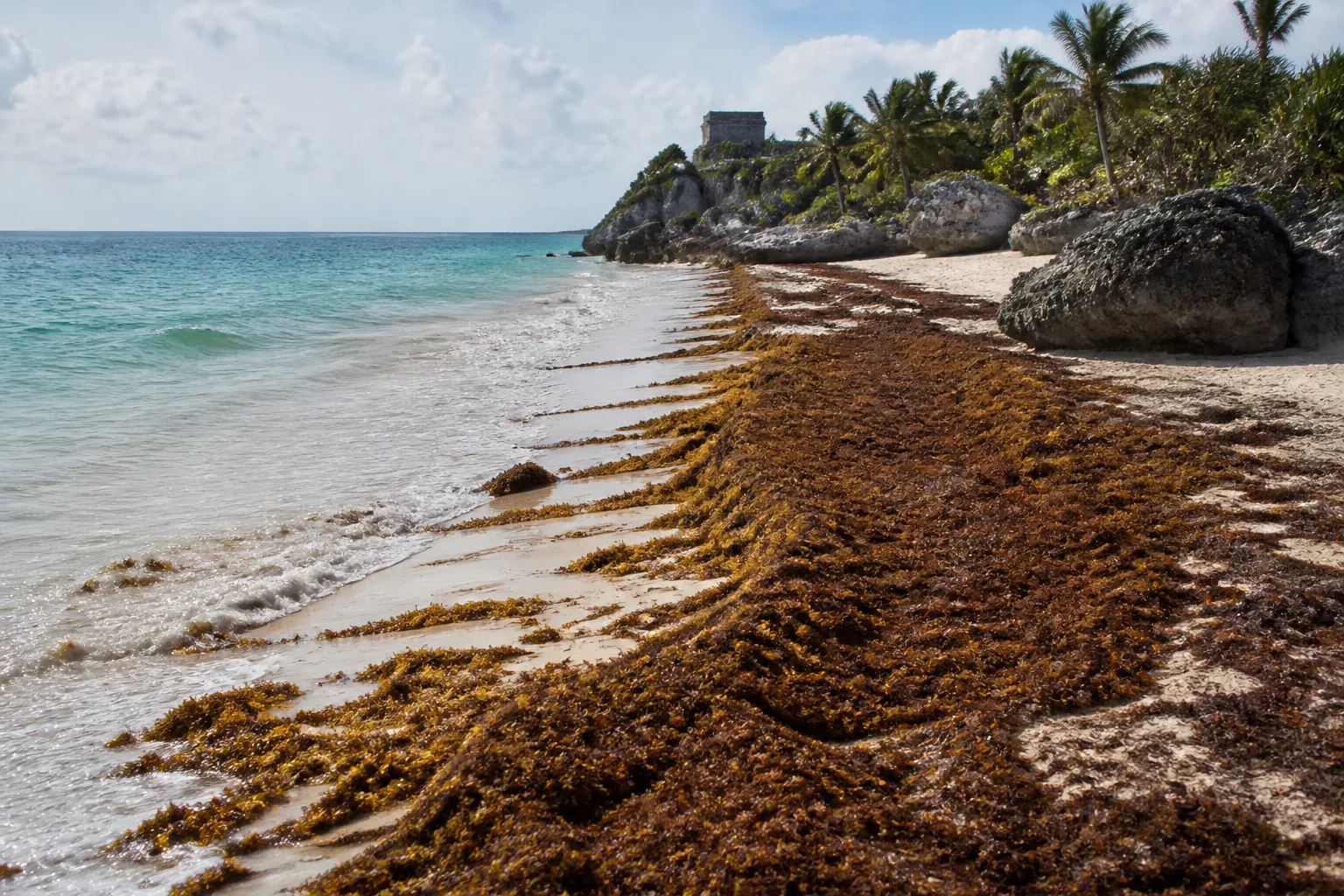
Municipal information reports cleanup activity at Santa Fe, Pescadores, Maya, Mezzanine, and Punta Piedra. Cleanup can improve the shore, but it should never be framed as a guarantee of clear sand or water. Wind, currents, fresh arrivals of algae, and the timing of removal can affect what visitors encounter, so a flexible morning plan remains the safest strategy.
Still comparing Tulum Beach Access And Beach Day Planning?
Ask for tour ideas, hotel suggestions, or a simple trip plan that combines both.
Trip Helper
A simple sargassum backup plan
- Check recent local beach conditions on the morning of the outing.
- Shortlist one national park beach and one verified public hotel-zone entrance.
- Avoid treating cleanup reports as a promise of algae-free water.
- If algae is piled along the shore, avoid prolonged direct contact.
- Keep a non-beach alternative ready rather than losing the entire day.
For a freshwater alternative, the Best Cenotes Near Tulum guide can help redirect a day when coastal conditions are disappointing. This does not mean cenotes and beaches offer the same experience. It simply gives your schedule somewhere useful to go when the shoreline does not match expectations.
Free access, park charges, and beach-day costs
The most important distinction is between a free public access route and a fully free outing. Late-2025 announcements described newly designated public beach entrances as free. CONANP’s rules separately state that an access charge applies in the protected area, and federal information refers to a unified tariff involving Parque del Jaguar, the archaeological zone, and the protected area. No reliable amount appears in the supplied evidence.
Do not build a beach-day budget around an unverified online price. Confirm which gate you will use and whether your itinerary enters a park, archaeological zone, protected facility, or commercial venue. Ask what the payment covers before paying. Travelers controlling expenses can also consult the Tulum on a Budget Travel Guide and Free Things to Do in Tulum for broader trip planning.
- Potential protected-area or archaeological access charges
- Transportation to and from the chosen entrance
- Parking or drop-off costs, where applicable
- Food, drinking water, shade, or seating purchased from a commercial venue
- Optional guided activities or organized tours
Getting to the beach and finding the correct entrance
Choose the entrance before choosing transportation. A driver, bicycle route, or walking plan is only useful if it delivers you to the correct access point. Save the beach name and access name separately, since the nearest hotel or commercial venue may not be the designated public entrance. Confirm the return plan as well, especially when visiting a protected area with an access cutoff.
For the national park, CONANP says roadside parking on the east side of the Tulum–Boca Paila road is free. Conditions and enforcement can change, so follow current signs and avoid assuming that every roadside space is valid. Do not block entrances, paths, or traffic. If using hired transportation, choose a qualified provider and agree on the correct meeting or pickup point.
In Parque del Jaguar, late-2025 state information described two free, signposted access points. The announcement supports their existence at that time but does not provide enough detail here to map each 2026 gate. Confirm the active entrance locally before relying on it, particularly if your plan also includes the ruins or another facility with separate access requirements.
What to bring for a Tulum beach day
Pack for heat, changing shoreline conditions, and an entrance that may not place you beside commercial services. A light bag makes paths and transfers easier. Keep valuables to a minimum, protect electronics from sand and water, and carry any personal medication you may need. If a specific facility is essential, verify it rather than assuming every access point has the same amenities.
- Drinking water and a refillable bottle
- Sun protection and a hat
- Swimwear, towel, and a dry layer
- Secure footwear suitable for paths and hot surfaces
- A waterproof pouch for a phone and essential documents
- Money in a practical form for confirmed charges or services
Leave pets out of the plan. Tulum’s municipal guidance says pets are prohibited on its beaches, and CONANP separately bars pets inside the protected area. This rule applies even if an animal is comfortable outdoors. Follow the signs at the entrance rather than relying on what another visitor appears to be doing.
Tulum Instagram Photo Experience
Discover the most Instagrammable spots in Tulum carefully selected for this unique experience. Elevate your Instagr...
Tulum Ruins Guided Tour from Cancun and Riviera Maya
- Experience the ancient city of Tulum with our knowledgeable guides. - Enjoy our small group format and attention t...
All-Inclusive! Tulum Ruins, Tequila Tasting + Swim in 3 Cenotes in Small Group!
At Authentic Tours Tulum we believe in giving back to our community by utilizing locations, restaurants, and employe...
Beach safety and conservation rules
Obey beach flags, lifeguard instructions where present, and all posted warnings. Sea conditions can change independently of how inviting the water looks. Stay within your ability, keep children close, and do not use a lack of visible warning signs as proof that conditions are safe. For transportation or activities, municipal guidance recommends qualified tourism and transport providers.
Tulum Ruins Guided Tour from Cancun and Riviera Maya
- Experience the ancient city of Tulum with our knowledgeable guides. - Enjoy our small group format and attention to detail through the Mayan’s mos...
Use established paths, respect guards and signs, leave pets behind, and avoid prolonged direct contact with accumulated sargassum.
The municipal authority warns that organisms within sargassum can cause dermatitis in some people. Avoid sitting or playing in large accumulations, and limit direct skin contact. If exposure causes a reaction, leave the affected area and seek appropriate medical advice. Cleanup crews working nearby are not a signal that contact with the algae is harmless.
Inside the protected area, conservation instructions are part of beach access rather than optional etiquette. Remain on established paths and respect staff directions. Carry out personal waste, avoid disturbing the surroundings, and plan enough time to leave before the beach-access limit stated by CONANP.
Accessibility requires advance confirmation
Quintana Roo announced an inclusive public-beach installation in Tulum in December 2019. It included amphibious chairs and walkers, an accessible pedestrian route, and audible crossing aids. This is valuable evidence that accessible infrastructure was installed, but the older announcement does not establish its current operating condition, location details, staffing, hours, or reservation procedure.
Travelers should verify the exact beach, equipment availability, maintenance status, assistance requirements, and route from drop-off to the sand. Ask whether an amphibious chair must be reserved and whether trained help is available. Also confirm restrooms, shade, path surfaces, gradients, and an accessible return vehicle. Do not rely on the 2019 announcement alone when accessibility is essential.
Build a flexible half-day beach plan
- Check recent sargassum reports and choose a first-choice beach plus a backup.
- Confirm the exact public entrance, current access period, and any applicable charge.
- Arrange transportation using the access name, not merely the name of a nearby hotel or venue.
- Arrive with water, sun protection, suitable footwear, and only the services you know are available.
- Follow flags, signs, guards, paths, and conservation rules throughout the visit.
- Recheck your return meeting point and leave before any protected-area access cutoff.
A beach visit can also fit into the One Day in Tulum Itinerary when you want to balance the coast with another part of the destination. Keep the schedule loose enough to change beaches or use a non-beach alternative. Sargassum, access checks, and transport logistics can all consume more time than a tidy itinerary suggests.
Which Tulum beach area should you choose?
Choose Santa Fe, Pescadores, Maya, or Mezzanine when the protected national park shoreline and archaeological setting are central to the day. Accept the conservation rules, access period, and possibility of a charge connected with protected-area facilities. Check current sargassum conditions before deciding among the named beaches.
Choose Conchitas or El Pueblo when you want to investigate a publicly identified hotel-zone access rather than automatically entering through a commercial venue. Confirm the exact signposted approach because the available official announcements date from late 2025 and do not independently prove today’s gate conditions.
Investigate Playa Aventuras del DIF when its documented sustainable-beach certification is relevant to your decision, but verify every practical detail. Travelers with mobility needs should make direct confirmation their first step. For everyone else, recent sargassum conditions should be the final tiebreaker. Tulum’s most appealing beach on paper may not be the best beach on the morning you visit.
Frequently asked questions
What are the best public beaches in Tulum?
Useful officially supported options include the national park beaches Santa Fe, Pescadores, Maya, and Mezzanine. Conchitas at kilometer 4.5 and El Pueblo at kilometer 5.5 were identified as public hotel-zone access points in late 2025. Confirm current entrances and conditions before visiting.
Can you access Tulum beaches without paying for a beach club?
Official late-2025 announcements identified free public access routes through Parque del Jaguar and at Conchitas and El Pueblo in the hotel zone. Their current gate arrangements should be verified. A free beach approach does not necessarily remove charges for protected-area, archaeological, transportation, or commercial services.
Is entry to the Tulum national park beaches free?
Do not assume the entire visit is free. CONANP’s visitor rules state that an access charge applies, while separate announcements describe designated public beach access routes as free. The available evidence does not provide a current price or clearly map every charge to every possible itinerary.
When is sargassum season in Tulum?
Tulum’s municipal tourism authority identifies April through August as sargassum season. This does not mean every beach is affected every day. Conditions vary by beach and week, so check recent local information immediately before choosing where to swim.
Which Tulum beaches receive sargassum cleanup?
Municipal information reports cleanup activity at Santa Fe, Pescadores, Maya, Mezzanine, and Punta Piedra. Cleanup does not guarantee clear sand or water because new algae can arrive and conditions vary.
Are dogs allowed on Tulum beaches?
No. Tulum’s municipal visitor guidance says pets are prohibited on its beaches. CONANP also prohibits pets within the protected area. Follow current entrance signs and staff instructions.
Are there accessible beaches in Tulum?
A 2019 Quintana Roo announcement documented an inclusive beach installation with amphibious chairs, walkers, an accessible path, and audible crossing aids. The evidence does not confirm its current condition, exact operating arrangements, or equipment availability, so verify directly before relying on it.
How late can you access beaches in Parque Nacional Tulum?
CONANP’s published visitor rules state that beach access is only until 19:00. Because operational details can change, confirm the current limit at the entrance and allow enough time to leave the protected area.