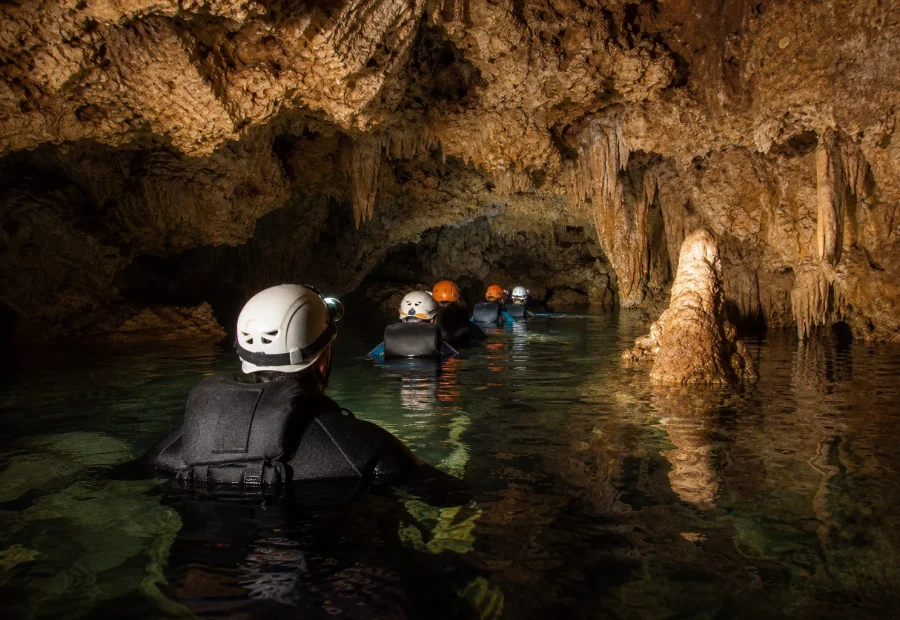
Match your skill and nerve to the best Tulum scuba diving tours, from eerie cenotes to bright reefs, before one detail changes everything.
In Tulum, you can slip into two very different underwater worlds in a single trip. One day you drift through cenotes with cool fresh water, pale rock, and light beams that look staged. The next you drop onto a reef where parrotfish crunch coral and the sea feels warm and open. The tricky part isn’t whether you should dive here. It’s which tour fits your skill level, timing, and nerve.
Key Takeaways
- Choose cenote tours for limestone caverns and dramatic light shafts, or reef tours for open-water diving with fish, rays, and occasional turtles.
- Best diving conditions in Tulum are November through May, with calmer seas, clearer visibility, and comfortable 26 to 28°C water.
- Beginners usually start with Casa Cenote or Dos Ojos, which offer shallow, clear routes and easy orientation for newer or returning divers.
- Popular tour pairings include Casa Cenote plus Carwash for easy re-entry, or Tajma-ha plus Chikin-ha for a stronger intermediate experience.
- Reef options like Cuevitas, Coquitos, and shallow Tulum ruins dives suit divers wanting relaxed profiles, arches, coral, and stingray sightings.
Cenote vs Reef Diving in Tulum
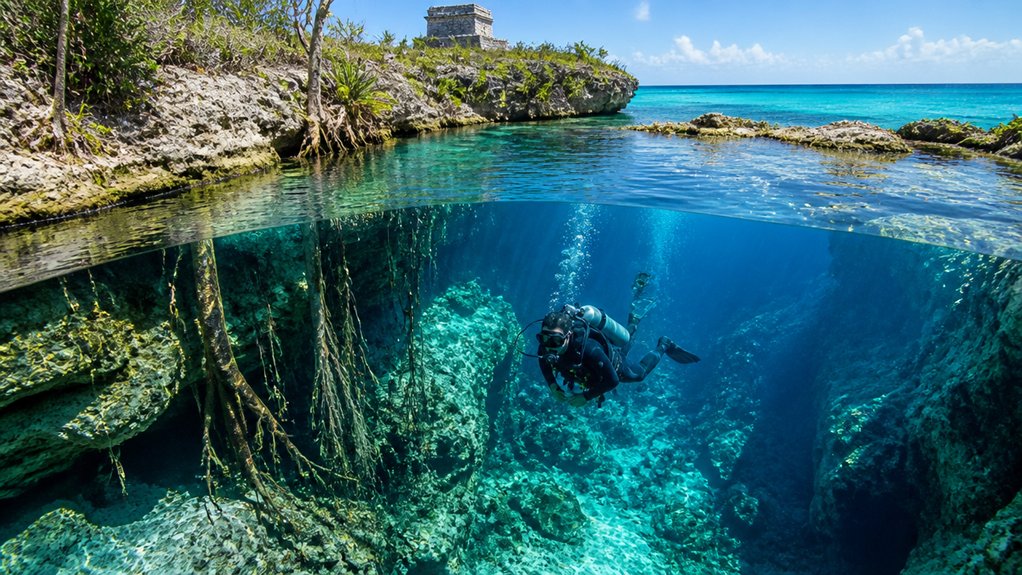
If you’re deciding between cenote and reef diving in Tulum, the choice comes down to what kind of underwater world you want to slip into. Cenote diving feels still and cinematic. You glide through fresh water past limestone walls, stalactites, and bright shafts of light at easy sites like Casa Cenote and Dos Ojos, where many dives stay around 20 to 30 feet. Dos Ojos is one of the most popular cenotes near Tulum for divers who want dramatic light effects and accessible cavern scenery. Reef dives on the Mesoamerican Reef feel saltier, busier, and more open. In Scuba Diving in Tulum, spots like Cuevitas and Coquitos usually keep you in comfortable 25 to 40 foot ranges while reef fish, stingrays, and maybe a turtle steal the show. If you want simple open water, pick reef. If you want caverns and geology, choose a cenote this trip.
Best Time to Scuba Dive in Tulum
If you want Tulum at its easiest and clearest, plan your trip from November through May when the seas stay calmer and your plans are less likely to get knocked around. You’ll usually get warm water around 26 to 28°C or 79 to 82°F, and cenotes look especially striking then as sunlight pours through the shafts like a spotlight with better manners. Reef trips can work all year, but this dry-season window often gives you the best visibility and the smoothest shot at seeing more reef life without playing weather roulette. For travelers planning a Tulum winter escape, this season also pairs especially well with beachside relaxation and adventure above the water.
Dry Season Conditions
From November through May, Tulum hits its scuba sweet spot, with calmer seas, clearer water, and the kind of easy conditions that let you enter on the dive instead of the chop. For Tulum Scuba Diving, you’ll usually get crystal clear water, stronger visibility, and smoother boat rides. This is why scuba outings rank among the best things to do in Tulum for first-time visitors. Cenotes look especially dramatic now, when sunlight drops through the openings and paints the limestone with bright beams.
| Dive type | Dry-season perk | What you notice |
|---|---|---|
| Reef | Calmer seas | Easier entries |
| Cenote | Sunlight shafts | Sharper formations |
| Both | Better visibility | More relaxed dives |
You’ll still find reef life year-round, but these months help you dodge wetter, rougher days. If you like easy planning, this window gives you reliable conditions with less day-to-day guesswork.

Chichen Itza, Cenote, and Valladolid Tour
Explore Chichen Itza, an impressive Mayan archaeological complex. Visit a sacred sinkhole and enjoy a buffet meal...

Chichen Itza, Cenote & Valladolid Tour with Tequila and Lunch
Unlock the mysteries of the Mayans with this tour to Chichén Itzá, a magical cenote & Valladolid. Start this expe...

Early morning Chichen Itza Tour: Cenote and Tequila Tasting
Embark on an exclusive journey with us to uncover the marvels of Chichen Itza, a remarkable Mayan archaeological com...
Summer Water Temperatures
In summer, Tulum’s water settles into a warm 26 to 28°C, or 79 to 82°F, and that makes long reef and cenote dives feel easy on the body. You can stay in the Water longer without feeling chilled, whether you’re drifting over shallow reef sites or dropping into Casa Cenote at 20 to 25 feet. For Tulum diving, that steady warmth softens the day’s logistics. You suit up faster, surface happier, and spend less time fussing with extra layers. Sunlight also pours into open cenotes and lights up pale limestone in a way that feels almost theatrical. Summer is also a great season to pair dives with Tulum snorkeling tours for easy time in the water between deeper outings. Just don’t confuse warm water with easier deep cenotes. If you head to places like Angelita, your comfort, skills, and training still matter more than the season.
Visibility And Marine Life
While Tulum’s reefs and cenotes stay inviting for much of the year, November through May usually gives you the clearest visibility and the calmest seas. That’s when reef dives along the Mesoamerican Barrier Reef often look crisp, with brighter coral, sharper fish patterns, and easier descents. You’ll usually get water around 26 to 28°C, so you stay comfortable and the marine life stays active. In a Cenote, dry season light can pour deeper into shafts and chambers, turning limestone walls into something almost theatrical. Good conditions also improve your odds of spotting turtles, stingrays, and busy reef fish. You can’t schedule a turtle’s social calendar, of course, but calmer water and stronger visibility help you notice more of what’s already there on every easy drift. Nearby reef areas such as Puerto Morelos are part of the Mesoamerican Barrier Reef, where divers may also encounter green sea turtles, seagrass beds, and notable elkhorn coral colonies.
Best Tulum Dives by Experience Level
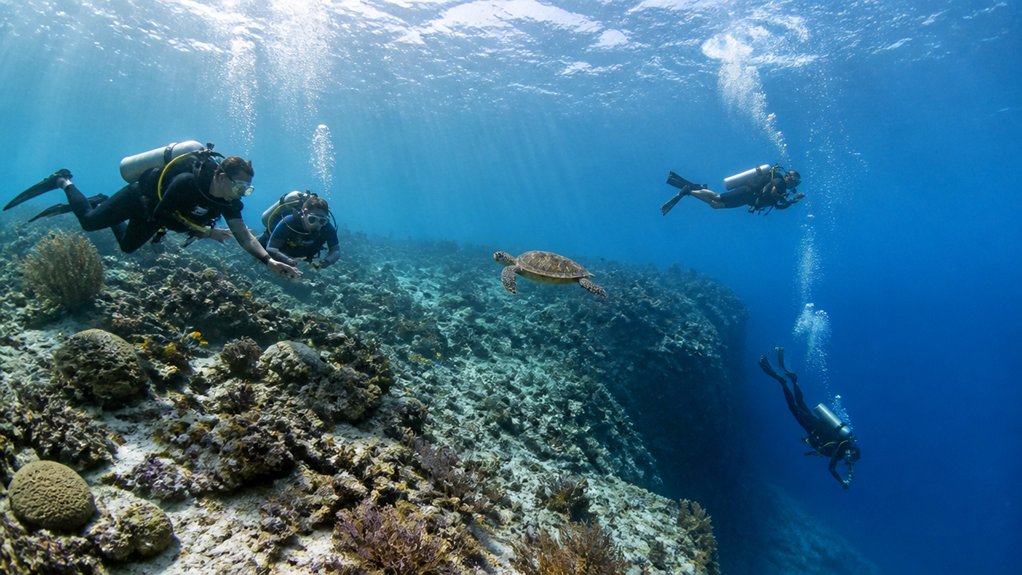
Because Tulum’s cenotes can shift quickly from bright, easy swim-throughs to darker, more demanding routes, picking the right dive for your experience level really matters. If you’re newer but already comfortable underwater after an Open Water course, Cenote Dos Ojos lets you stay near the surface and keep things around 10 m, with clear blue tunnels and easy orientation. For intermediate divers, Dream Gate raises the bar at about 9 m and rewards precise buoyancy in a maze of roots, rock, and still water. If you’ve got advanced skills, chase El Pit for cathedral-like light beams or Angelita for its eerie halocline and sulfur cloud. Want a sterner test? Calavera’s tighter, darker sections demand sharp control, calm breathing, and recent experience. No heroics here. Many of these sites also rank among the best cenotes near Tulum for travelers who want to mix world-class diving with iconic freshwater scenery.
Best Beginner Scuba Dives in Tulum
Newer divers don’t have to miss Tulum’s best underwater scenery. Start at Casa Cenote, where open air light, mangroves, and a winding passage make training feel like exploring. It’s also known for its Casa Cenote magic, with a calm setting that helps first timers feel more comfortable underwater. You’ll stay around 20 to 25 feet, so you can focus on breathing, fins, and buoyancy instead of depth. For a simple step up, try Cenote Carwash. It drops to about 45 feet and introduces cavern style diving with lily pads, small fish, and pale rock shapes. At Dos Ojos Cenotes, beginner routes like Barbie Line or Bat Line keep you near the surface, usually around 30 feet. If you want variety, book two dives in one day and tell your operator you’re new. Also, leave 12 to 18 hours before flying after your last dive.
Still comparing Sightseeing?
Ask for tour ideas, hotel suggestions, or a simple trip plan that combines both.
Trip Helper
Best Tulum Dives After a Refresher
If it’s been a while, you can ease back in at Casa Cenote, where open-air light, tangled roots, and calm water make a refresh feel simple at about 20 to 25 feet. Once you’ve found your buoyancy again, Casa Cenote plus Cenote Carwash gives you an easy two-stop plan, and a sea plus cenote option lets you test shallow reef conditions before you try anything more complex. You’ll also spot refresher-friendly two-cenote packages around $3000 MXN for ages 16 and up, which keeps the logistics tidy and your wallet only mildly dramatic. Many divers also add Cenote Carwash from Tulum as a straightforward follow-up stop when building a relaxed cenote day.
Easy Cenote Pairings
Once you’ve shaken the rust off in Casa Cenote, the smartest next move is to pair it with Cenote Carwash. Together, these Cenote dives give you a smooth progression. You begin shallow in open air at roughly 6 to 8 meters. Then you move into a beginner friendly cavern that reaches about 15 meters. Carwash greets you with lily pads, rock formations, fallen trees, and plenty of aquatic life. Tulum also offers Cenote Escondido, a hidden gem known for its quieter, more secluded atmosphere.
If you’re Open Water certified and your last dive was within a year, this pairing gets you back in comfortably. You’ll rebuild equalizing, buoyancy, and current awareness before tougher sites. Expect about $3000 MXN for two dives, with age 16 plus. It even suits fans of Agua Clara diving who want a gentler start here.
Shallow Reef Options
After a refresher, Tulum’s shallow reef dives make an easy next move, with relaxed profiles around 8 to 24 feet that give you simpler buoyancy work while still putting real Caribbean reef life in front of your mask. At Cuevitas, you slip through small arches and crawl-throughs around 25 to 30 feet, where sunlight flickers over rock and sand. In front of the Tulum ruins, a stingray-focused dive stays low and calm, often between 8 and 24 feet, with wings lifting off the bottom like kites. If you want a deeper finish, Coquitos keeps you near corals to about 40 feet. When you’re Diving Tulum, these shallow reef dives let you stay conservative, often under 30 feet, and keep the outing scenic instead of sporty for now. Many travelers pair these reef dives with Tulum Boat Tours to explore more of the coastline between water sessions.
Refresher-Friendly Dive Packages
Because the best post-refresher dives rebuild confidence step by step, Tulum’s friendliest packages keep the first entries shallow, clear, and easy to read. For the easiest re-entry, you can pick Casa Cenote plus Carwash. Those cenotes stay around 20 to 25 feet, then about 45 feet, and usually cost near $3000 MXN for two dives, age 16 and up. If your refresher dive went smoothly, try Tajma-ha plus Chikin-ha for a mid-level jump, around $3200 MXN. Want structure with more thrill? The Pit with Dos Ojos gives you one deep look and one calmer circuit on Barbie Line or Bat Line. Most operators want open-water certification and recent dives. That pairing helps you settle buoyancy, follow lines, and hear only bubbles and fin kicks. For a non-diving recovery day, Xel-Ha Park near Tulum offers an easy nature-focused outing to balance your underwater schedule.

Chichen Itza, Cenote and Valladolid Small Group Day Trip
Recently selected as one of the New World Wonders, Chichen Itza is without a doubt one of the most spectacular and i...

Tulum Ruins, Turtles in Akumal and Cenote tour
On this tour, you’ll explore the top attractions of the Riviera Maya. Begin with a visit to the ancient ruins of T...

Isla Mujeres Luxury Sailing: Adults Only or Family Friendly
Join us for the Luxury Sailing Adventure to Isla Mujeres aboard a state-of-the-art catamaran — with the option to...
Best Advanced Dives in Tulum
The advanced side of Tulum diving trades easy sightseeing for depth, darkness, and a real sense of mystery. If you want Cave diving beyond the easy sections of Dos Ojos, longer Barbie Line or Bat Line circuits push you deeper into Sac Actun. El Pit gives you a vast chamber and famous light rays, but its reported 400 foot depth suits only very experienced divers. Angelita feels stranger still. You drop through a sharp halocline into a ghostly hydrogen sulfide cloud around 130 feet. Calavera adds tighter passages and a darker route into Sac Actun. Dream Gate stays shallower at about 30 feet, yet its clear water, formations, and upstream downstream flow demand excellent buoyancy. Many of these routes are part of Tulum’s wider underground river and cave adventure landscape, which is a big reason advanced divers come here. Fins up, silt happens fast if you’re not precise.
Tulum Scuba Diving Prices by Tour
If you’re budgeting your dive days, Tulum keeps a fairly clear price ladder: most guided cenote tours run about $119 to $210, while reef dives usually hover near $150. You’ll usually see shallow reef sites in the 25 to 30 foot range at that reef price, with some easier options even shallower. Cenote pairings can be surprisingly tidy too. Casa Cenote plus Carwash often lands near 3000 MXN, and El Pit plus Dos Ojos can sit around the same mark if you meet experience rules. Discovery dives start around $124 for one dive or about $213 for two. If you’re eyeing PADI Open Water, expect roughly $550 to $638. That makes Tulum easy to compare across diving tours and courses, without needing a calculator underwater. If you’re planning a full itinerary, many divers also pair their underwater days with day trips from Tulum to round out the trip.
What’s Included in Tulum Dive Tours
On most Tulum tours, you’ll get a certified guide, full scuba gear, and site permits wrapped into the price, so your morning starts with tank checks instead of paperwork. Some packages also cover boat rides or local transport, and a few add water and snacks for that salty, happy ride back. Before you book, check the fine print so you know what’s included, what costs extra, and whether perks like nitrox or pickup save you a few pesos and a headache. Since these outings rank among the best Tulum adventure tours, inclusions can vary widely depending on the operator and dive style.
Equipment And Dive Guide
Because most Tulum dive tours bundle the essentials, you can show up with your swimsuit, certification card, and a little pre-dive excitement while the shop handles the heavy stuff. You’ll usually get a regulator, BCD, wetsuit, tank, and weights, so you won’t wrestle with bulky gear. Many dive shops also include setup, while local guides tailor each route to your experience and comfort. Certified divers may get Nitrox, plus clear briefings and close support for tricky spots like Dream Gate or Calavera. If your trip also includes a ferry connection, note that children under 1 do not pay a ticket on Ultramar, though a boarding pass is still required.
| Included gear | Guide support | Best for |
|---|---|---|
| Full kit | Briefing, buddy help | Reef beginners |
| Nitrox option | Site matched to skill | Cenote certified divers |
That means easy reefs around 8 to 12 meters or more demanding cenotes like Angelita stay within your limits safely.
Transport, Fees, And Snacks
While the jungle roads and marina runs can look like extra planning, most Tulum dive tours fold the logistics into one easy booking. From Playa del Carmen to cenotes, operators like Koox Diving usually keep things simple:
- Round-trip transport between the shop and dive site
- Entry permits handled during booking, so you skip the paperwork shuffle
- Full scuba gear and a guide, with your certification card as the main must-bring
- Water, coffee, and sometimes snacks, or even open bar perks on private boats
- Fees that often run lower for reefs than cenotes, plus safety timing like waiting 12 to 18 hours before flying
If you are arriving by Maya Train, it helps to confirm transfer timing in advance so your dive day lines up smoothly with station pickups and local road connections.
You get the useful stuff, not fluff, and that feels pleasantly smart when your only job is to breathe slow and look around.
Best Dive Shops in Tulum
If you want a dive shop that fits both your skill level and your travel style, Tulum gives you a strong mix of options. Agua Clara stands out among local dive operators for its PADI 5-star training, zero-waste focus, and small groups. You can book a reef dive around $173, or try cenote packages from about $124. Koox suits you if you want deeper adventure, with technical, cave, and multi-stop itineraries that can stretch to Playa del Carmen or Cancun. If you’re Open Water certified, ask about beginner-friendly Dos Ojos routes. More advanced divers can look toward El Pit. Most shops provide gear, keep hours like 8:00 AM to 7:00 PM, and offer English, Spanish, or French help. That makes planning pleasantly painless there. If you want a cultural stop beyond the water, El Rey in Cancún’s Hotel Zone is one of the island’s most important archaeological zones and is linked to Late Postclassic maritime trade and fishing.
La Calypso Dive Tours in Tulum
With La Calypso, you can slip into clear cenotes or head for the reef with a crew that’s spent more than 15 years guiding Tulum’s underwater world. Most travelers start with beginner-friendly Dos Ojos routes like Barbie Line or Bat Line, while confident swimmers eye El Pit for its deep blue shaft and cathedral-like light. You’ll usually see cenote trips run about $119 to $210 depending on the route, while reef outings sit near $150, so you can match the mood to your budget. If you want a break from tanks and fins, Yal-Ku Lagoon also makes an easy day trip from Tulum.
Popular Dive Excursions
Whether you’re easing back into scuba or chasing a more serious cave-style challenge, La Calypso Dive Center is one of Tulum’s popular picks for cenotes, reefs, caves, and PADI courses. You can start gently in Casa Cenote or move to Cenote Dos Ojos, where two dives keep many newer divers near the surface. Some visitors also pair dive days with a trip to Kaan Luum and nearby cenotes from Tulum for a broader look at the region’s freshwater highlights.
- Shallow training water in Casa Cenote feels calm and bright.
- Discovery Dives and refreshers suit rusty travelers.
- Cenote Dos Ojos offers clear passages and easy buoyancy checks.
- El Pit brings advanced divers huge chambers and famous light rays.
- Reef trips and PADI courses round out the menu.
Pick your pace, check your gear, and expect water so clear it feels slightly unreal. You’ll hear bubbles and fin kicks in the quiet.

Tulum Guided Tour, Magical Cenote, Lagoon Snorkeling and Beachside Lunch
Get ready to enjoy a day full of history, culture and adventure. Walk through the ruins of Tulum - one of the last c...

Hidden Cenote Swim: Snorkeling, Sea Turtles and Beachside Lunch
Delve into the wonder of a Mayan cenote, swim with graceful sea turtles, and relish a delightful beachside lunch. E...

Chichen Itza by Van: Reduced Group, Tour Guide, Fast Trip & Lunch
Discover Chichen Itza on a small group tour with comfortable van transportation — a faster, more efficient journey...
Cenote And Reef Pricing
Prices at La Calypso get easier to read once you’ve picked your water style. You’ll usually see cenote dives run from $119 to $210, while reef dive pricing sits around $150. That difference comes from depth and location. Dos Ojos, the shop’s popular two dive cenote pair, often lands on the friendlier side. El Pit pushes things upward with its advanced feel and cathedral light.
If you want variety, you can pair reef time with cenote circuits around Dos Ojos, or add a refresh style session at Casa Cenote. You’ll hear gear clink, feel the cool freshwater wrap around you, then swap to salt and current offshore. If you’re also eyeing certification, PADI Open Water is listed at $550 for longer trip planning too. Travelers building a full vacation often compare dive costs alongside Tulum food tours when planning how to split their activity budget.
Agua Clara Dive Tours in Tulum

If you like a dive shop that feels thoughtful as well as adventurous, Agua Clara Diving is an easy one to notice in Tulum. You get small groups, zero-waste habits, and guides who match sites to your comfort level nicely.
- Reef dives run about $173, a solid pick if you want color, current, and an easy boat morning.
- Discovery options start near $124 for one dive or $213 for two, so beginners can test the water.
- You can dive in Cenote settings like Casa Cenote, Calavera, Carwash, Dos Ojos, or Dreamgate.
- Cenote packages hover around $170 for two dives and $240 for three, depending on the plan.
- If you’re training, PADI Open Water with e-learning has been listed near $638, which beats guessing underwater.
Koox Dive Tours in Tulum
Since opening in 2011, Koox Diving has carved out a strong niche in Tulum with cenote-focused scuba trips, plus cavern and cave options for divers who want the Yucatán’s darker blue magic. If you want variety, Koox Dive Tours can move you along the Caribbean coast, from Tulum to Playa del Carmen and Cancun, and even pair a day with Cozumel. Beginners can test the water with discovery dives, usually priced around $154 to $214 per person depending on the package. If you’re ready to train, the shop also offers PADI e-learning for Open Water Certification at about $564. Reviews stay strong, with roughly 4.8 on Google and 5 on TripAdvisor, so you can book expecting guidance, clear logistics, and glowing stone halls below.
Eco-Friendly Dive Shops in Tulum
You’ll want operators like Agua Clara, where reusable bottles clink in the rinse bins and small groups keep the boat calm instead of chaotic. When a shop cuts single-use plastic and plans cenote and reef trips with smart guided logistics, you get Tulum’s best underwater sights with less impact and fewer fin kicks in your face. Before you book, check that they coach you to respect coral and wildlife and actively back plastic-free habits, because a cleaner ocean is the best souvenir.
Zero-Waste Dive Practices
While Tulum’s water steals the show, the best dive shops also pay close attention to what they leave behind. Choose zero-waste, eco-responsible operators and ask smart questions before you book.
- Bring a refillable bottle and top up at the shop.
- Skip single-use plastic snacks and cups on the boat.
- Confirm wildlife-friendly rules around reefs, caves, and cenotes.
- Check that staff handle tanks, hoses, and weights with care.
- Before cenote entry, leave sunscreen and bug spray off your skin.
Those details matter. Fresh limestone water stays clearer, reefs stay calmer, and your gear works better when shops maintain it well. You won’t notice a dramatic speech. You’ll notice quiet habits, cold refill stations, and guides who protect the places you’re there to see up close.

Xcaret Park Day Trip, transportation and Cultural Night Show
*** This is an officIal product of Grupo Xcaret *** Spend a day in paradise at Xcaret, an eco-archaeological park l...

Cancun Best ATV Tour, Ziplines and Cenote Swim with Lunch
Dare to be part of one of the most enigmatic activities in Cancun and Mexico. We pick you up in vans equipped with a...

Horseback Riding plus ATV, Cenote, Ziplines, and Lunch
This is a mandatory activity for all tourists who arrive in Cancun and Riviera Maya. This activity takes place in th...
Small-Group Tour Benefits
Often, the best eco-friendly dive shops in Tulum keep groups small, and that changes the whole day. You get more attention, easier logistics, and a calmer ride to the reef or cenote. Shops like Agua Clara Diving use small-group tours to match the dive to your level, so you won’t end up over your fins. If you’re newer, your guide can steer you toward Open Water-friendly Casa Cenote, where depths stay around 6 to 8 meters. Smaller groups also make zero-waste practices simpler. It’s easier to refill a reusable bottle at the shop, keep gear organized, and avoid plastic clutter on the boat. Highly rated operators like Koox show how service feels even better when fewer bubbles, fewer elbows, and more space surround you.
Marine Conservation Standards
Because Tulum’s best dives depend on healthy water, marine conservation standards matter as much as price or boat size. When you book, look past the photos and ask how a shop protects reefs and cenotes.
- Choose an eco-friendly dive operator with plastic-free or zero-waste habits.
- Bring a bottle and use refill stations at the dive center.
- Ask about conservation minded practices around turtles, coral, and cenote walls.
- Confirm safety-focused guidance for buoyancy and low-impact cave navigation.
- Verify PADI, SSI, IANTD, or full cave credentials before you pay.
These details shape what you see underwater. Clear water stays glassy. Sediment stays down. Wildlife acts natural. And your fins avoid becoming tiny wrecking balls. That’s good karma, and it keeps tomorrow’s dive just as magical too.
Best Small-Group Scuba Tours in Tulum
If you want the best mix of calm logistics and memorable underwater scenery, book a small-group scuba tour in Tulum with no more than four to six divers. The best small-group scuba tours keep supervision tight, gear handling easy, and the mood relaxed. You can choose shallow reef sites around 25 to 30 feet like Cuevitas, where classic reef life and possible stingrays near the ruins keep things lively. If you want cenotes to dive, pick trips that match your certification and recent experience instead of chasing bragging rights. Many operators include all gear and guides in English, Spanish, or French. Just remember the unglamorous but important rule: wait 12 to 18 hours after your last dive before flying for safety and smoother travel.
Best Cenote Diving Tours in Tulum
While reef dives bring color and current, Tulum’s cenote tours pull you into a quieter world of glass-clear water, pale limestone chambers, and sunbeams that look almost staged.
Diving in a cenote feels calm, but each site shifts the mood and challenge. The Best cenotes near Tulum include:
- Dos Ojos keeps you shallow on Barbie or Bat Line, often under 30 feet.
- Carwash offers an easy cavern gateway and lovely light, topping out near 45 feet.
- Dream Gate brings tighter cave style passages and demands sharp buoyancy.
- Angelita drops you into a dark halocline and eerie hydrogen sulfide cloud.
- Pick by comfort, certification, and how much spooky beauty you want.
Book early, bring trim control, and expect silence so complete your bubbles sound like applause.
Casa Cenote for First-Time Cenote Divers
For a softer first step into cenote diving, Casa Cenote makes the whole idea feel welcoming instead of mysterious.
| Depth | Scene | Why |
|---|---|---|
| 20-25ft | Mangroves | Comfort |
| Shallow | Fish | Refresh |
You stay in open air, drift through a long, snake-like ribbon of water, and settle into the mangroves without pressure. The depth tops out around 20 to 25 feet, so you can keep things calm and dial in buoyancy. Look for fish, soft algae gardens, and that neat mix of fresh and salt water. If you’ve been out of practice, Casa Cenote works well as a refresher because nothing here feels rushed. Keep your first plan simple. Enter smoothly, breathe slowly, and enjoy the color, light, and gentle silence. That’s why Casa Cenote is one of the best starts in Tulum.
Carwash Cenote for Easy Cavern Dives
At Carwash, you start in a calm lagoon under lily pads and pass fallen trees and pale rock, so the place feels more like a secret garden than a hard-core cave site. The route then carries you into simple flooded caverns, often after a warm-up at Casa Cenote, and you can build line awareness and confidence without the darker, tighter feel of El Pit or Angelita. With a max depth around 45 feet and clear water full of small fish, you get a first real cavern experience that feels approachable and still a little thrilling.
Lagoon Entrance Features
Because the dive starts in what looks more like a broad lagoon than a cave entrance, Cenote Carwash feels inviting from the moment you gear up.
These lagoon entrance features make Cenote Carwash memorable:
- Lily pads drift overhead and soften the entry, so you ease in with sunlight, color, and a pond-like calm.
- Small fish flicker past submerged branches, and fallen trees give the shoreline a wild look before caverns begin.
- At about 45 feet max, the site stays approachable while still letting you sense real cavern drama.
- Rock formations add texture below you, and the water stays calm enough to notice light, shadow, and detail.
- Even before the overhead sections, you get why divers use Carwash to build buoyancy confidence for tougher sites.
Beginner Cavern Route
While Carwash looks mellow from the surface, it gives new cavern divers a real taste of overhead diving without dropping you into anything too dark or deep. At Cenote Carwash, you ease in from a calm lagoon and follow a scenic route framed by rock formations, lily pads, and fallen trees. The layout works beautifully for beginner cavern-style dives because you can practice neutral buoyancy and steady line awareness without feeling rushed. Go with a guide, keep your plan conservative, and treat the dive like a skills reset with scenery. You’ll move through passages, watch the light shift across stone, and learn how to stay relaxed in a cavern setting. It’s the kind of gateway dive that makes you curious for what comes next.
Depth And Wildlife
Once you slip below the lily pads, Carwash keeps the pressure low with a maximum depth of about 45 feet, so you can focus on clean trim and steady depth control instead of chasing numbers on your gauge. In Cenote Carwash, the lagoon surface quickly gives way to shallow cavern rooms where you can practice buoyancy without feeling rushed.
- Lily pads shade the entry and calm your breathing.
- Fish flick through plants above pale limestone and roots.
- Fallen trees add texture like driftwood with better stories.
- Rock formations frame the cavern without the deeper cenote intensity.
- You won’t find sea turtles but the freshwater life stays busy.
That easy depth makes every fin kick count and the chamber atmosphere feels adventurous, not pool predictable.
Dos Ojos Cenote Tour Guide
At Dos Ojos, you’re not just dropping into a pretty cenote. You’re entering part of the vast Sac Atun system, where guided routes like the Barbie Line and Bat Cave give the same site different moods. One feels open and glowing. Another turns darker, echoier, and a little batty in the best way.
Your dive masters keep the plan matched to your comfort and training. Intro circuits usually stay shallow, often near the surface and around 30 feet or less. That lets you enjoy the glassy water, pale limestone, and shafts of light without feeling rushed. A standard Dos Ojos outing often takes about six hours for two dives, so bring patience, good buoyancy, and a snack for the ride back to town afterward.

Tulum Ruins Guided Tour from Cancun and Riviera Maya
- Experience the ancient city of Tulum with our knowledgeable guides. - Enjoy our small group format and attention t...

Private Tour to Tulum, Cenote and Swimming with Turtles
Explore the Mayan ruins of Tulum, snorkel with majestic Turtles in Akumal and discover the underground cenote. Do al...

Riviera Maya Luxury Snorkeling Cruise with Lunch and Drinks
This is Riviera Maya's ultimate day-sailing adventure. Aboard a luxurious sailing catamaran, you'll explore some of...
El Pit Cenote for Advanced Divers
Because El Pit opens into a vast underwater chamber instead of a tighter cave corridor, it feels less like a tunnel and more like a cathedral with no roof. If you’re advanced, you’ll love the giant space and famous light rays cutting into the dark.
El Pit feels like an underwater cathedral, where advanced divers drift through giant space and watch light rays slice the dark.
- Big open water that rewards calm buoyancy and depth control.
- Around 400 feet of depth below you, which demands respect.
- Sunbeams drop through El Pit and fade into blue black.
- Guides often pair it with Dos Ojos on advanced days.
- Training and planning matter here, because this isn’t a casual splash.
You’ll hear bubbles crack upward in the chamber, then settle into silence. For experienced divers, El Pit feels huge, moody, and unforgettable without ever squeezing you tight below.
Angelita Cenote and the Halocline
At Angelita Cenote, you descend into an advanced site where fresh and salt water meet, and a thick hydrogen sulfide cloud hangs like an underwater fog bank. If you pass through the halocline, the water shifts around you and the cenote turns deeper, darker, and strangely quiet. With a max depth near 130 feet, you’ll want solid experience before you chase this eerie signature scene.
Hydrogen Sulfide Cloud
When you descend into Cenote Angelita, the water seems to split in two as freshwater meets saltwater along a sharp halocline. Then you spot the eerie cloud, a drifting layer of hydrogen sulfide gas formed by decaying trees and plants. Below it, the cenote turns darker, which heightens the drama without changing your calm, steady focus.
What draws you in most:
- It looks like underwater fog.
- Light dims fast around it.
- Your buoyancy skills matter here.
- Good trim keeps you oriented.
- Experienced guides make it safer.
Cenote Angelita is an advanced dive, often reaching 130 feet, so you need solid control and an experienced team. It’s spooky, beautiful, and oddly peaceful, like swimming through a ghost story that still respects your dive checklist too.
Halocline Depth Experience
That ghostly cloud is only part of Angelita’s appeal. At Angelita Cenote, you descend from bright, clear freshwater to the halocline, where fresh and salt water collide in a sharp, shimmering boundary. Then you drop below it, and the world turns darker, deeper, and wonderfully strange. Because the site reaches about 130 feet, you’ll want solid buoyancy, calm breathing, and real comfort in the water. Many divers pair this intense dive with Carwash afterward for an easier cavern reset. Think of it as mystery first, exhale later.
| Zone | What you see | Why it matters |
|---|---|---|
| Upper layer | Light shafts, clear water | Easy orientation |
| Below halocline | Sulfide haze, dim trunks | Dramatic mood shift |
It’s a moody plunge, but the payoff feels like visiting another planet briefly.
Dreamgate Cenote for Strong Buoyancy
Slip into Dreamgate Cenote and you’ll see why divers talk about it with a little extra respect. At roughly 30 feet, Cenote Dreamgate isn’t about depth. It’s about calm finning, sharp buoyancy control, and enjoying a cave that feels polished by silence.
- Crystal-clear water turns stalactites and columns into floating sculpture, so every light beam feels staged for you.
- Choose an upstream route for a different flow, or go downstream and watch the cave shift.
- You should already be Open Water certified, because narrow darker sections punish sloppy trim fast.
- This is a smart step-in cave dive, but only if your movements stay small and tidy.
- Pair it with an easier cenote nearby, since the challenge here is precision, not macho depth.

Chichén Itzá, Cenote & Valladolid from Playa del Carmen
Visit Chichen Itza, one of the New Seven Wonders of the World, with a certified bilingual guide who brings Mayan his...

Tulum Ruins Tour (Private, Half Day)
On this private tour you will explore the amazing Tulum Ruins, located on the beautiful Tulum beach! Located in Tulu...

Tulum, Snorkeling with Sea Turtles, Cenote and Beachside Lunch
Experience an extraordinary journey to Tulum, swim with majestic sea turtles and explore an ancient Mayan cenote. U...
Calavera Cenote for Experienced Divers
At Calavera, you enter a skull-shaped cenote where dark, narrow passages quickly tell you this site plays harder than most. You follow flooded cave routes into Sac Actun, and at about 50 feet the halocline can turn the water milky, so light and visibility matter more than big open views. If your buoyancy is sharp and your cave awareness is solid, you’ll enjoy the challenge here, because this one doesn’t forgive sloppy fin kicks.
Dark Passages And Halocline
If you like cenote dives that feel a little wilder and more technical, Calavera quickly gets your attention. In Calavera Cenote, you drop through one big opening beside two smaller holes, then follow darker passages into Sac Actun. Light fades fast, walls feel close, and the route keeps you alert.
- One dramatic entry with three openings
- Darker tunnels and tighter sightlines
- A halocline that blurs the water like smudged glass
- Around 50 feet deep, with a deeper feel
- Quiet cavern mood with echo, shadow, and suspense
You notice the water shift as the halocline rolls in, and the scene turns milky for a moment before sharpening again. It feels moody, strange, and a little otherworldly, like the cenote is changing its mind underwater somehow.
Advanced Skills Required
That moody blur is exactly why Calavera suits seasoned divers, not first-timers. In calavera cenote, you don’t get a simple splash-and-float tour. You enter a true cave environment tied to Sac Actun, with dark passages, tight sections, and that skull-shaped layout that can test your navigation and line work. Dos Ojos is one famous option nearby, but this site asks for sharper focus. A cloudy halocline can turn the water milky, so you need calm buoyancy and precise body position to avoid stirring silt or drifting off task. At about 50 feet maximum depth, solid gas management matters too. Hire a professional guide. You’ll enjoy the eerie openings, hear your bubbles drum overhead, and keep the adventure smart, not sloppy, for the full route.
Tajma-Ha and Chikin-Ha Cenote Package
While many Tulum cenote tours ease you into cavern diving, the Tajma-Ha and Chikin-Ha package raises the bar with a ⭐⭐⭐ difficulty and a more advanced feel. If you’ve explored cenotes and reefs before, you’ll appreciate how this guided pair lets you compare two limestone worlds in one outing.
- One dive in Tajma-Ha
- One dive in Chikin-Ha
- Open Water cert required
- Recent cenote dive needed
- About $3200 MXN total
You must usually be 16 or older, and operators match each route to your buoyancy and experience. That means you get a safer, sharper look at clear freshwater passages, rock textures, and that cave quiet every diver remembers. It’s a smart step up when basic Tulum dives and easy cenotes stop feeling new to you.
Nicte-Ha Cenote Dive
Nicte-Ha gives you a gentler way to keep the cenote adventure going inside the Dos Ojos park. At Nicte-Ha Cenote, you get two moods in one stop: an open water underwater garden and a cavern line with classic rock formations. The route stays shallow, topping out around 25 feet, so you can focus on light, texture, and navigation instead of depth. It feels calmer than the busiest Dos Ojos entries, yet it still delivers that cool cave diver thrill. If you’re diving Barbie Line or Bat Line, this makes an easy add on. Your guide leads circuits through the cenote environment, and the swim stays memorable without getting intense. Think of it as the follow up after a dive in Casa, minus bragging rights.
Best Reef Diving Tours in Tulum
If the cenotes feel hushed and otherworldly, Tulum’s reef dives flip the mood as soon as your boat reaches the Mesoamerican Barrier Reef just offshore. You descend into bright blue water where coral reefs, easy depths, and quick boat runs make this a Best Dive for variety.
- Most reef dives stay around 25 to 30 feet, with some shallow options from 8 to 24 feet.
- At Coquitos, you cruise beside coral at about 40 feet on an easy scenic swim.
- You’ll spot reef fish weaving through fans, plus crabs and lobsters tucked into cracks.
- Keep watch for turtles and stingrays, especially near the stop in front of the ruins.
- On the right day, even bull sharks might pass by, which wakes up your fins.
Cuevitas Reef Dive
Because Cuevitas sits in a comfortable 25 to 30 feet of water, you don’t have to go deep to get a fun, active reef dive. At cuevitas, you weave through little arches and reef pockets that give the site its name, “Little Caves.” The diving experience feels playful and easygoing, with most of the action near the top of the reef. In clear, warm water, you can watch reef fish flicker past coral and spot crabs tucked into rough ledges. You stay shallow, so the dive suits many comfort levels while still keeping you busy. If you want light adventure instead of a deep descent, this Tulum reef delivers. Many operators pair Cuevitas with another nearby reef stop for a morning on the water.
Stingray Dive Near the Tulum Ruins
Just offshore from the Tulum Ruins, this stingray-focused reef dive keeps things shallow and rewarding, usually in about 8 to 24 feet of water. You glide over sandy reef edges on the Mesoamerican Barrier Reef, where guides stretch bottom time and help you spot rays cruising by.
- Easy depth for many divers
- Good odds of seeing stingrays
- Reef fish flicker through coral patches
- Iconic views near the Tulum Ruins
- Great paired with a cenote day
If you want a relaxed stingray dive with memorable scenery, this one delivers. Keep your eyes low, move slowly, and let the reef reveal its quiet traffic. You’ll hear your bubbles, notice rippled sand, and appreciate how the shallow profile keeps the whole experience unhurried, calm, and surprisingly rich.
Coquitos Reef Dive
From the stingray shallows near the ruins, Coquitos shifts the scene to coral gardens framed by beachside coconut palms. You start by the sand, gear up with a local guide, and slip into warm water where reef fish flicker over coral heads. Coquitos usually bottoms out around 40 feet, so you get easy, colorful exploring without the deeper feel of Tulum’s more demanding dives. Keep an eye under ledges for crabs and lobsters. They’re the neighborhood introverts.
| Depth | What you’ll spot | Vibe |
|---|---|---|
| 25 to 40 ft | Reef fish, crabs | Bright, easy |
| Coral gardens | Lobsters, clear water | Tropical, relaxed |
You get full gear, good visibility, and a reef that rewards slow looking. Even the surface swim feels scenic with palms rustling and sunlight stitching below.
Open Water Courses in Tulum
If Tulum is where you want to earn your first certification, local PADI-accredited shops like Agua Clara make the process feel smooth instead of intimidating. You’ll usually blend e-learning with on-site immersions, and pricing often lands around $550 to $638. Training in Casa Cenote feels calm and bright, with shallow 20 to 25 foot depths that help you dial in buoyancy.
In Tulum, first-time certification feels approachable, with cenote training, blended learning, and calm shallow water building confidence fast.
- Pick a dive shop in Tulum with strong reviews
- Expect a 3-day path to your PADI certified dive
- Practice basic skills in open-air cenotes
- Add Dos Ojos or reef dives after clearance
- Wait 12 to 18 hours before flying, and buy dive insurance
You’ll hear birds overhead, see roots in clear water, and finish feeling ready for the next chapter underwater with confidence.
Discovery Scuba Dives in Tulum
Because Tulum’s water stays so clear and calm, a discovery scuba dive feels less like a hard lesson and more like a guided first look into another world. You’ll usually begin in Casa Cenote, where shallow water around 20 to 25 feet lets you practice buoyancy, mask clearing, and easy navigation without feeling rushed. Many operators then add Carwash, an approachable cavern topping out near 45 feet, so you get a wider taste of Discovery Scuba Diving in one outing. If you’ve been away from diving, that first session can work like a refresher. Prices for cenote plans often run about $119 to $210, while reef discovery trips hover near $150 at 25 to 30 feet. Compared with cenote snorkeling, scuba feels stranger underwater.
Tulum Scuba Safety and Flying After Dives
Easy cenote training can make scuba in Tulum feel wonderfully relaxed, but your safest move often happens after you peel off the wetsuit. Whether you book a certified dive or a beginner outing, keep these post-dive rules close:
In Tulum, the smartest scuba safety step often starts after the dive ends.
- Wait 12–18 hours before flying.
- Drink plenty of water before and after diving.
- Hydration supports circulation and sinus equalization.
- Watch for weakness, tingling, vertigo, or unusual fatigue.
- Carry scuba diving insurance and verify coverage.
Standard travel policies often skip diving, which is a nasty surprise at check-in for travelers. If symptoms appear, think decompression sickness and get a doctor immediately. If you flew too soon, don’t wait it out. Treat it as urgent medical advice. Tulum’s bright reefs deserve a clear-headed goodbye, not a rushed airport dash.
Frequently Asked Questions
Do Tulum Dive Tours Offer Hotel Pickup From Playa Del Carmen or Cancun?
Yes, you’ll often get pickups from Playa del Carmen while Cancun transfers usually cost extra or require private booking. Check Hotel pickup logistics and Tulum meeting points first, so you don’t miss departures or fees.
Can Non-Diving Companions Join Tulum Scuba Tours as Snorkelers or Boat Passengers?
Yes—despite the myth that only divers belong, you can often bring non-diving companions as snorkelers or riders. Ask operators about Snorkel companion options, Boat passenger comfort, age limits, gear, fees, and sea conditions beforehand first.
What Payment Methods and Cancellation Policies Are Common for Tulum Dive Operators?
You’ll usually pay by credit card, online transfer, or cash; many operators offer Cashless booking. You can often cancel 24–48 hours ahead for full refunds, while weather issues typically earn flexible reschedules instead of penalties.
Should I Bring My Own Underwater Camera, or Can I Rent One?
You can do either: bring your own underwater camera if you trust it, or rent one for simplicity. Bring rental gear concerns to operators, and ask for underwater photo tips so you’ll get sharper shots.
Are Gratuities Expected for Dive Guides and Boat Crews in Tulum?
Yes, coincidentally, you’ll usually tip guides and boat crews in Tulum. Show tipping etiquette by giving 10–15% or a few dollars per tank, depending on service. You’ll meet dive crew expectations and reward attentive help.
Conclusion
Maybe the real theory is this: Tulum changes how you see water. You test it the moment you drop into a cenote and hear only bubbles. Sunbeams cut the dark limestone like stage lights. Then a reef drift shows you turtles, fans, and that soft hiss of current. You finish salty, a little wrinkled, and fully convinced. Pick the right tour, watch your surface interval, and let the tanks prove the point for yourself today.